All Categories
WhatsApp AI for Re-Engaging Dormant Leads: A Playbook
Learn how to use WhatsApp AI to re-engage dormant leads, revive stalled conversations, boost conversions, and turn missed opportunities into revenue..
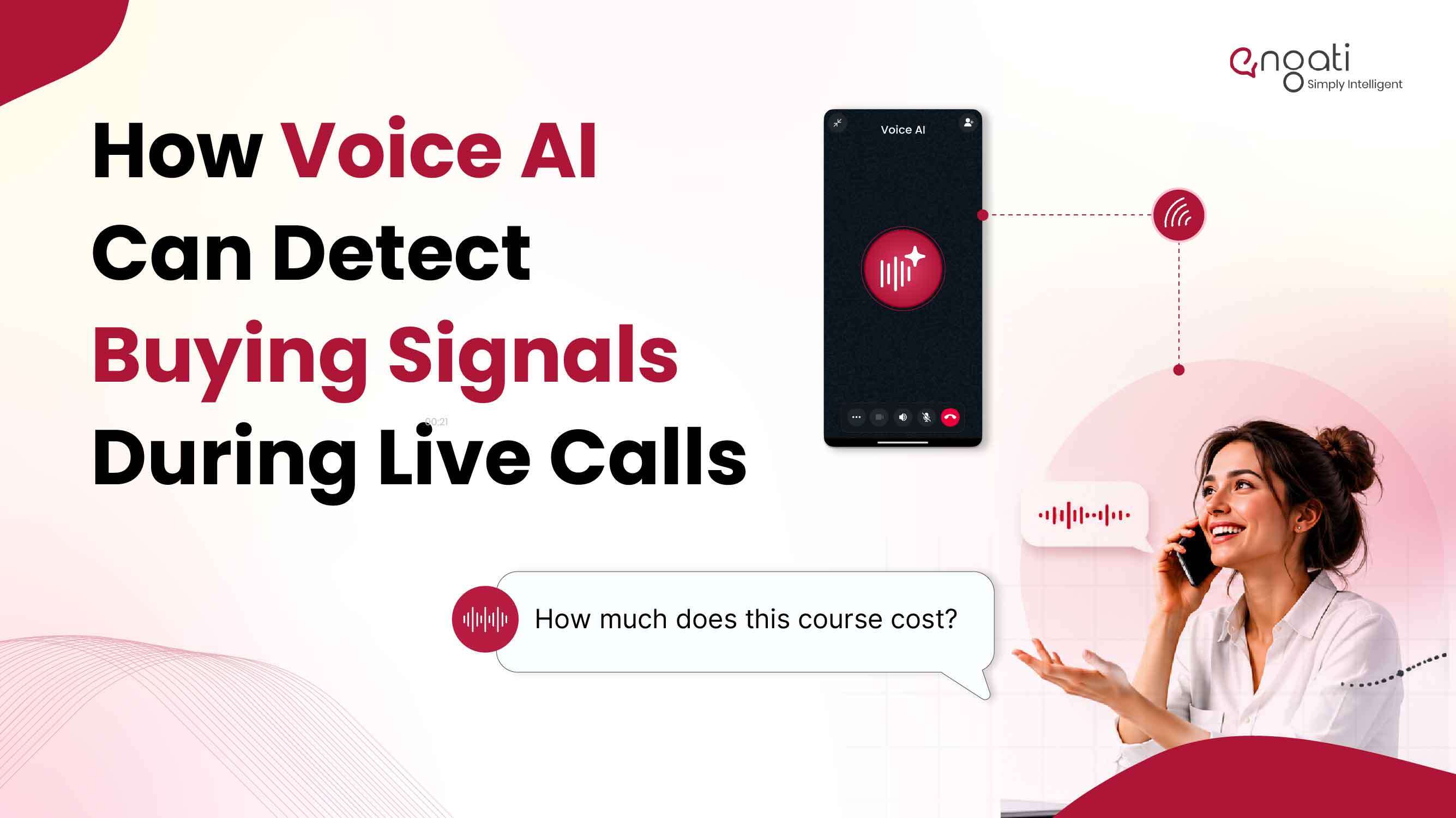
Every sales team is searching for the same thing: certainty.
Which leads are genuinely interested? Which prospects are ready to buy? Which conversations deserve immediate follow-up?
Traditionally, sales representatives have relied on instinct, experience, and manual note-taking to answer these questions. A good salesperson can often sense when a prospect is moving closer to a purchasing decision. However, as businesses scale and customer conversations multiply across channels, relying solely on human judgment becomes increasingly difficult.
This is where Voice AI is changing the game.
Modern Voice AI is no longer limited to answering questions or automating customer interactions. It is becoming an intelligent sales intelligence layer capable of identifying buying signals, analyzing customer intent, and helping businesses prioritize opportunities in real time.
As AI automation continues to reshape customer engagement, organizations are discovering that some of the most valuable insights are hidden within everyday conversations. The challenge is capturing and acting on those insights before opportunities are lost.
Buying signals are verbal or behavioral indicators that suggest a prospect is moving closer to a purchasing decision.
They often appear naturally during conversations and can reveal a prospect's level of interest, urgency, budget readiness, or decision-making timeline.
Common buying signals include:
For sales teams, these signals provide valuable clues about where prospects are in the buying journey.
The challenge is that buying signals are often scattered throughout conversations and can be easy to miss, especially when agents handle dozens of calls every day.
Voice AI helps solve this problem by continuously analyzing conversations and identifying patterns that indicate purchase intent.
Many organizations still rely on forms, surveys, CRM fields, and manual sales notes to assess lead quality.
While these methods provide useful information, they often fail to capture the nuances of live conversations.
Consider two prospects who submit identical lead forms.
Both work at enterprise companies.
Both request a demo.
Both appear equally qualified.
However, during their calls, the differences become clear.
Prospect A says:
"We're researching options for next year."
Prospect B says:
"Our current contract expires in 60 days and we're looking to implement a solution before then."
The second prospect demonstrates significantly stronger buying intent.
Without analyzing the conversation itself, this insight could easily be overlooked.
Voice AI allows businesses to move beyond static lead data and evaluate real customer intent as it emerges.
At its core, Voice AI combines natural language understanding, intent recognition, conversation analysis, and machine learning to identify meaningful patterns within customer interactions.
Instead of simply processing words, the system analyzes context.
For example, when a prospect asks:
"How long does implementation typically take?"
Voice AI recognizes this as more than a simple question.
It may indicate:
Similarly, when a prospect says:
"Can this integrate with Salesforce?"
the AI identifies a technical evaluation signal often associated with serious buyers.
Modern Voice AI systems can identify:
Examples include:
These statements indicate urgency.
Examples include:
Budget discussions often indicate advanced-stage buying intent.
Examples include:
These statements reveal organizational buying processes.
Examples include:
This indicates active vendor consideration.
Voice AI can automatically capture and categorize these signals without requiring manual intervention.
Imagine a SaaS company running inbound demo requests.
A prospect joins a qualification call and begins asking questions about:
As the conversation progresses, Voice AI identifies multiple high-intent signals.
Instead of waiting for a sales representative to manually update the CRM after the call, the system can:
By the time the conversation ends, the organization already knows how to prioritize the opportunity.
This transforms sales intelligence from a reactive process into a proactive one.
Not all buying signals are expressed directly.
Sometimes intent is revealed through tone, context, or conversational patterns.
For example:
"This sounds promising, but we're concerned about deployment timelines."
The prospect is expressing interest while highlighting a potential objection.
Voice AI can identify both elements simultaneously.
This provides a more complete understanding of customer intent.
Strong indicators often include:
The deeper prospects engage, the more likely they are to be evaluating a purchase seriously.
Rather than focusing solely on keywords, advanced Voice AI systems analyze the broader context of the conversation to understand intent more accurately.
Traditional lead scoring models often rely on digital actions such as:
While useful, these actions only tell part of the story.
Voice AI introduces conversational intelligence into the scoring process.
For example:
A prospect who downloads a whitepaper may receive five points.
A prospect who says:
"We're planning to purchase a solution within the next 90 days."
might receive significantly more.
This creates a more accurate representation of actual purchase readiness.
By combining behavioral and conversational data, organizations can build stronger lead-scoring models and allocate resources more effectively.
One of the biggest benefits of AI sales intelligence is efficiency.
Sales representatives spend significant time:
Voice AI can automate much of this work.
After a call, the system can automatically generate:
This allows sales teams to focus on selling rather than administration.
The result is faster response times, improved productivity, and higher conversion potential.
The most powerful AI sales intelligence strategies extend beyond phone conversations.
Today's buyers interact across multiple channels.
A customer might:
Each interaction generates valuable intent signals.
Organizations that unify these signals across channels gain a more complete view of the buyer journey.
Voice AI becomes one part of a broader conversational intelligence ecosystem that helps businesses understand customers at every stage of the decision-making process.
As Voice AI technology continues to evolve, buying signal detection will become increasingly sophisticated.
Future capabilities are likely to include:
Rather than simply automating conversations, Voice AI will help businesses understand which conversations matter most.
The organizations that leverage these insights effectively will gain a significant competitive advantage.
Every customer conversation contains valuable information, but identifying buying signals at scale has traditionally been difficult.
Voice AI changes this by transforming conversations into actionable sales intelligence.
By detecting intent, identifying opportunities, analyzing context, and automating lead qualification, businesses can make faster, smarter decisions about where to focus their efforts.
As AI automation continues to reshape customer engagement, Voice AI is emerging as more than a communication channel. It is becoming a critical intelligence layer that helps organizations understand their buyers and accelerate revenue growth.
The future of sales is not simply about having more conversations. It is about understanding the right conversations at the right time.
Discover how conversational AI and Voice AI solutions can help your business identify buying signals, qualify leads automatically, and create smarter customer engagement strategies across voice, WhatsApp, RCS, and beyond. Book a demo.

All Categories
Learn how to use WhatsApp AI to re-engage dormant leads, revive stalled conversations, boost conversions, and turn missed opportunities into revenue..
All Categories
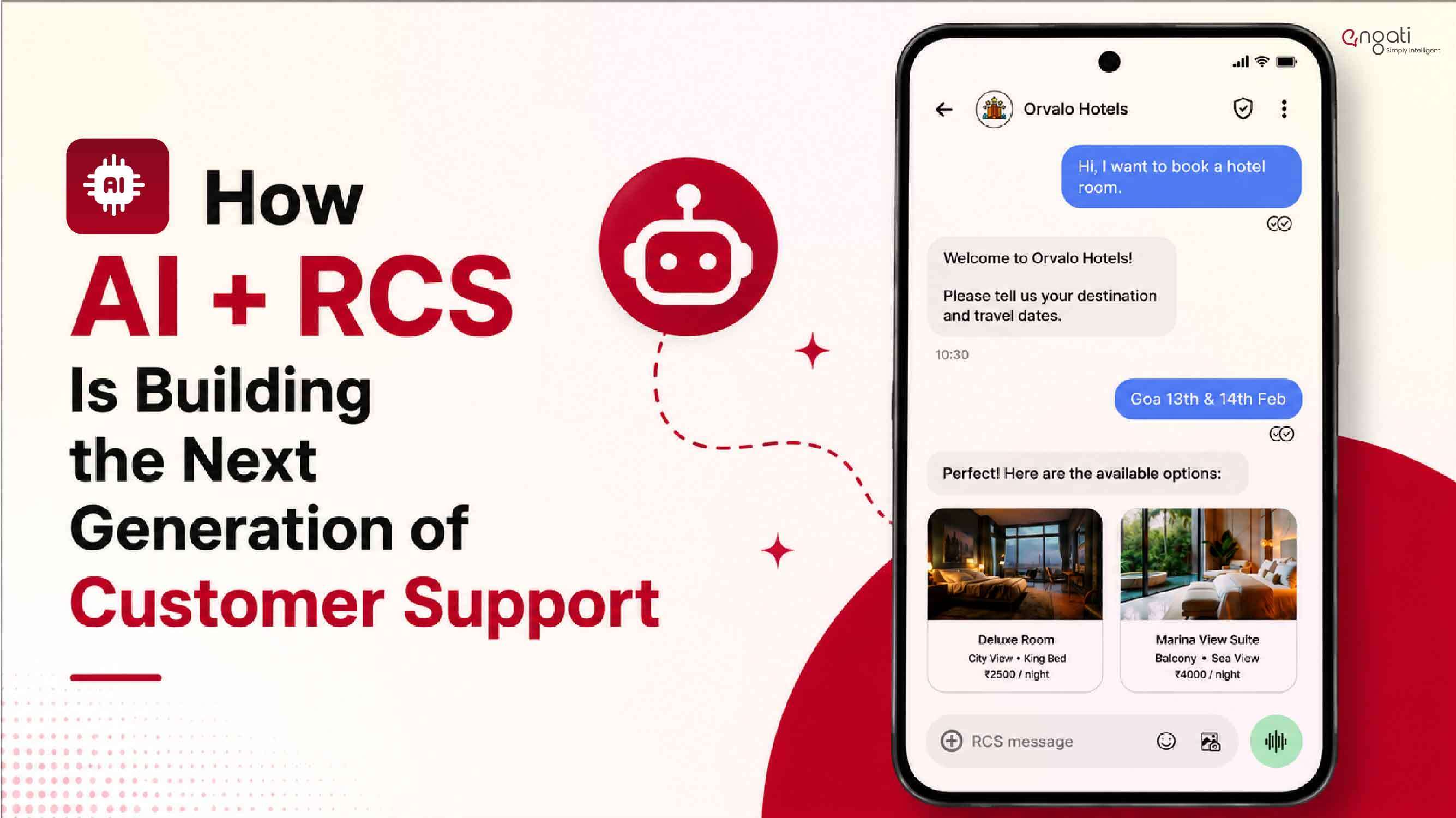
Discover how AI-powered conversational platforms and RCS messaging are transforming customer support with instant, scalable, and personalized engagement across
All Categories
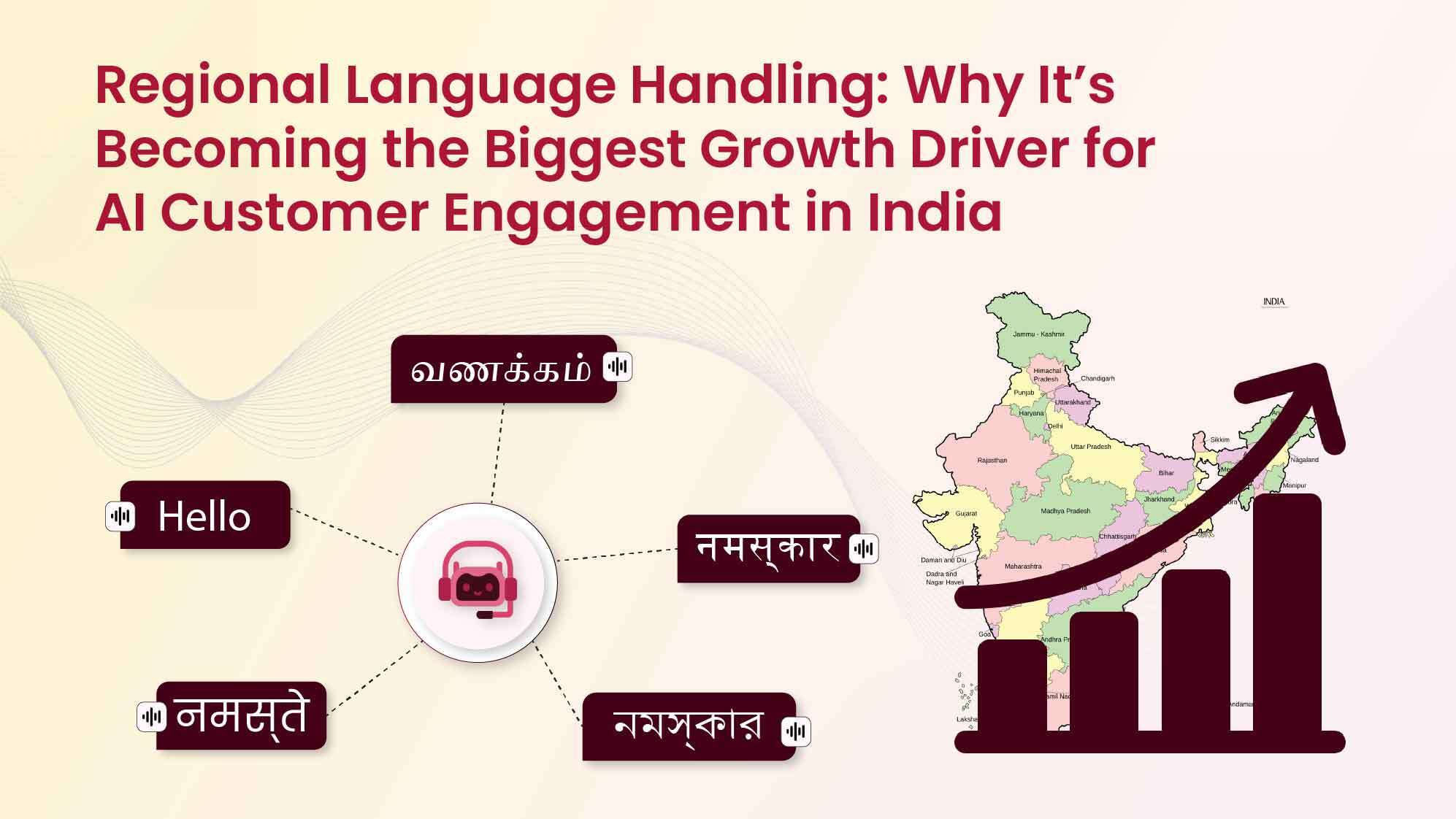
Regional language AI is reshaping customer engagement in India by enabling natural, multilingual conversations that drive growth nationwide for all!!.