Drive to Reimagine
10 hacks to step up your logistics company's customer experience
Just delivering orders on time isn't good enough anymore. Your logistics company needs to deliver amazing customer experiences too. Here are 10 hacks for you!
Absorption costing is a costing method that incorporates all the manufacturing costs — direct materials, direct labor, as well as both variable and fixed manufacturing overheads in the cost of a unit of product. This costing method is also known as the full cost method due to the fact that absorption costing counts the total cost of production in the product costs.
It is a conventional costing method that is important for external financial reporting and tax reporting. Public companies are required to employ the absorption costing method in cost accounting management for their COGS. It is also used by a lot of private companies since it is required under GAAP (Generally Accepted Accounting Practices).
Under absorption costing, the cost per unit stays constant only when the level of output remains unchanged. As soon as the level of output changes, the cost per unit also changes due to the presence of fixed cost which is divided across all the units produced. This change in cost per unit that comes with a change in the level of output in the absorption costing technique can be problematic when managerial decisions need to be made.
Absorption costing is rather useful when there is only one product, there is no inventory, and the overhead recovery rate is based on normal capacity and not the actual level of inventory.
Absorption costing accounts for all the direct costs associated with manufacturing a product to COGS. It also counts all variable costs directly associated with the manufacturing process like:
It also accounts for all direct and fixed costs like:
If you’re following the absorption costing method, you’d calculate the cost of product using this formula:
Cost of production = Direct material + Direct labor + Direct expense + variable factory overhead + Fixed factory overhead
Absorption costing essentially treats all manufacturing costs as product costs, irrespective of whether they’re fixed or variable. It essentially allocates a portion of fixed manufacturing overhead cost to each unit of product, in addition to the variable manufacturing costs.
Here are some of the main advantages and benefits of the absorption costing technique:
In absorption costing, you get to figure out the actual cost of production because the fixed factory costs are also counted as product costs.
This costing technique is used for external reporting. By following this costing technique companies can ensure that they’re complying with the several rules and regulations of GAAP (Generally Accepted Accounting Practices), and the tax authorities. The absorption costing technique is acceptable to tax authorities, investors, creditors, and other external parties and stakeholders.
Absorption costing gives a company a much better idea of its profitability than variable costing, especially if all of the products that are produced are not sold during the same accounting period in which they were manufactured.
Under the absorption costing method, inventories are valued on the basis of actual production cost. This means that the balance sheet is true and fair.
The features of absorption costing are:
The most distinguishing feature of absorption costing is that fixed factory expenses are counted as part of the unit cost as well as the inventory value.
The main limitations and disadvantages of absorption costing are that it can’t help with analysis designed to improve operational and financial efficiency, it’s basically useless for comparing product lines, and it could skew the picture of a company's profitability.
Absorption costing does not give you as good an analysis of cost and volume as variable costing. If fixed costs make up a large portion of the total production costs, it’s tough to identify variations in costs that take place at different production levels. This makes it hard for management to make good decisions for operational efficiency.
If the company wants to compare the potential profitability of various product lines, variable costing would be a better choice than absorption costing. It’s much easier to get a clear picture of the differences in profits from producing one product over another by looking purely at the variable costs which are directly linked to production.
Absorption costing can make a company’s profits look better than they actually are for an accounting period. This happens because, under absorption costing, all the costs aren’t deducted from revenues until all of the products manufactured by the company are sold. This could cause the company to have a skewed profit and loss statement and might mislead the company’s management team as well as its investors.

Drive to Reimagine
Just delivering orders on time isn't good enough anymore. Your logistics company needs to deliver amazing customer experiences too. Here are 10 hacks for you!

Drive to Reimagine
An eCommerce platform needs to be mobile-friendly if you want to attract more customers, retain them and gain customer loyalty. Check out the article now!
Drive to Reimagine
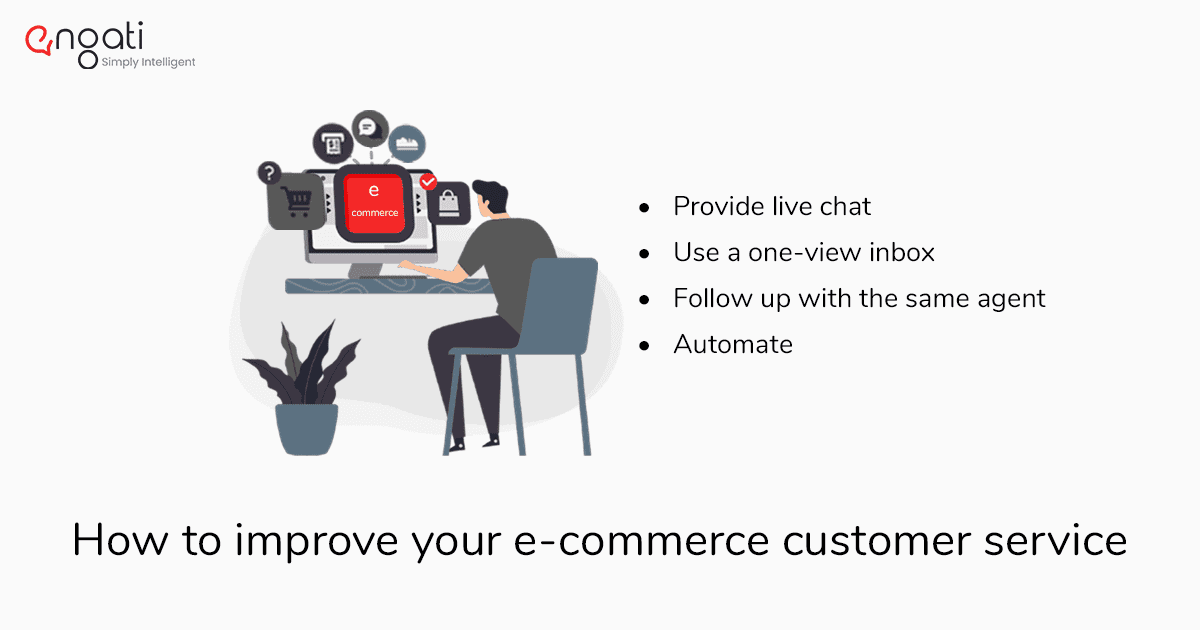
Differentiate your business by winning at eCommerce customer service. Understand all the benefits, techniques, and best practices here for better results!