Tech Corner
Stay ahead of the Machine Learning curve
In this blog, we’ll see what machine learning is all about. How is it growing big globally. How are businesses stepping up their game with machine learning.
Machine Learning (ML) is a subset of artificial intelligence (AI) that empowers computers to learn and improve their performance on a task without explicit programming.
Below is a glossary of 16 Machine Learning applications and examples:
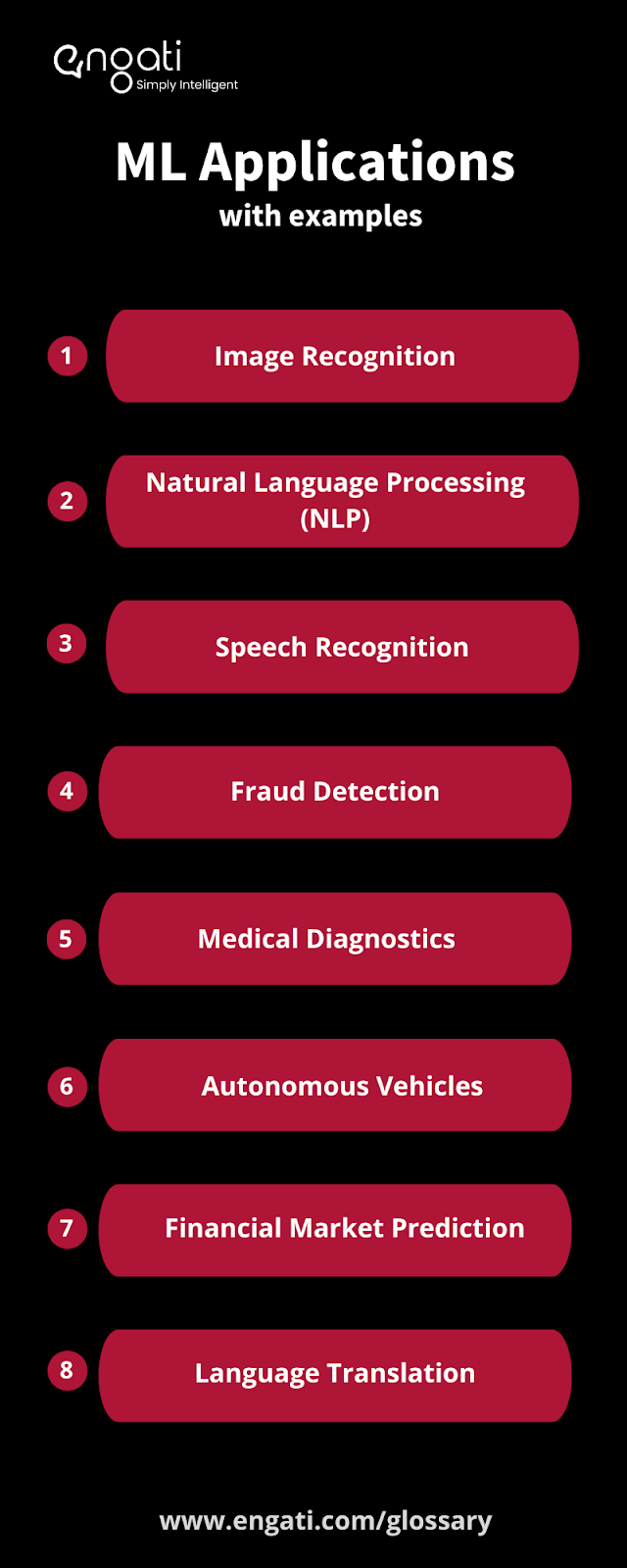
Identifying and classifying objects or patterns in images used in various fields like surveillance, healthcare, and autonomous vehicles.
Example: Classifying animals in wildlife photos or recognizing digits in handwritten characters.
Processing and understanding human language for tasks such as sentiment analysis, chatbots, and language translation.
Example: Sentiment analysis of customer reviews or chatbots for customer support.
Converting spoken language into written text, enabling voice assistants and transcription services.
Example: Voice assistants like Siri or transcribing speech to text.
Identifying fraudulent transactions or activities in financial systems and online transactions.
Example: Banks detecting fraudulent credit card transactions.
Assisting in disease diagnosis and medical image analysis, aiding healthcare professionals in detecting abnormalities.
Example: Detecting tumours in medical scans like MRI or CT.
Enabling self-driving cars and vehicles with minimal human intervention, potentially revolutionizing transportation.
Example: Autonomous taxis navigating city streets.
Predicting stock prices or market trends using historical data for investment decisions.
Example: Forecasting stock market movements based on historical data.
Translating text from one language to another, facilitating global communication.
Example: Google Translate or language localization in software.
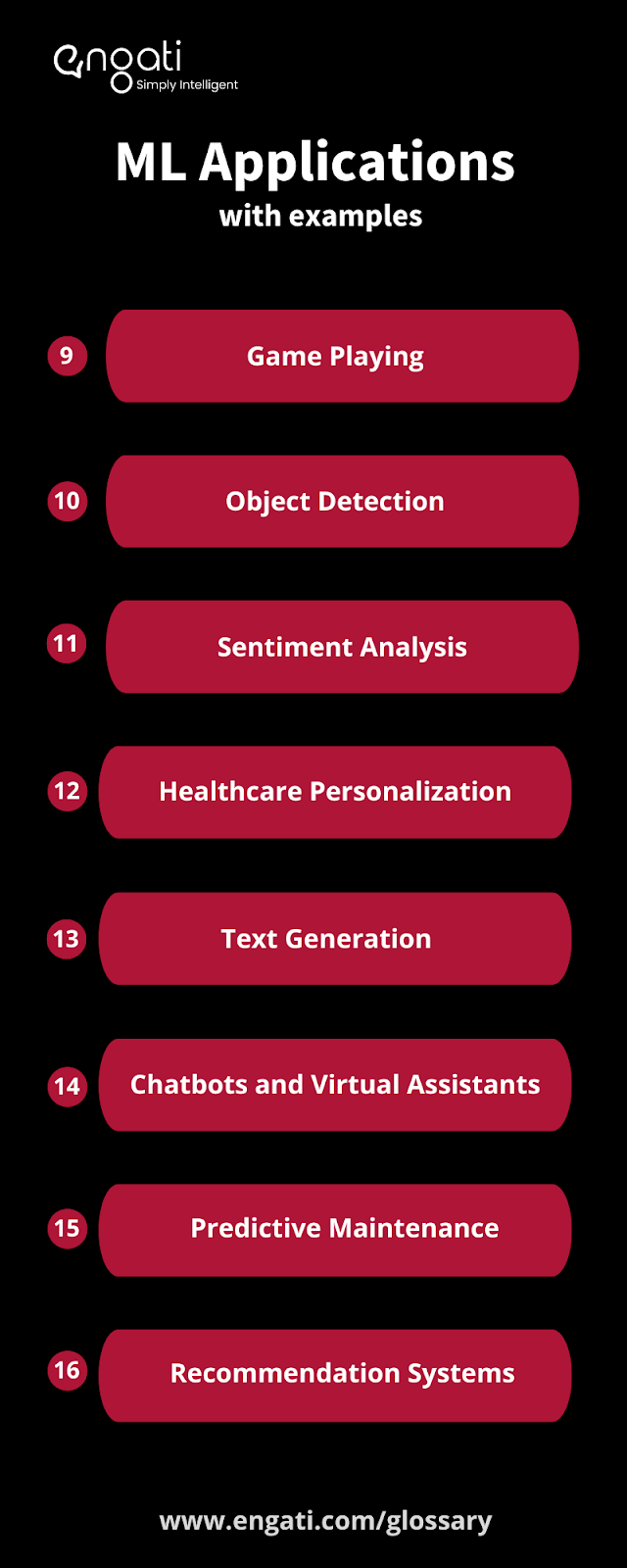
Developing AI agents that can play and excel at games, showcasing AI capabilities and strategies.
Example: Chess-playing AI like Deep Blue or AlphaGo for the board game Go.
Identifying and locating multiple objects in images or videos, useful in surveillance and robotics.
Example: Surveillance systems detecting people or vehicles.
Determining the sentiment or emotion expressed in text data, valuable for understanding customer feedback and social media trends.
Example: Analyzing social media posts for positive or negative sentiment.
Tailoring treatments and medical advice to individual patients, enhancing patient care.
Example: Recommending personalized diet plans or exercise routines.
Creating human-like text based on given prompts, applicable in content generation and creative writing.
Example: AI-generated articles, stories, or poetry.
Simulating human conversation to provide assistance or information, enhancing customer support and user interactions.
Example: Amazon Alexa or customer support chatbots.
Anticipating equipment failures and optimizing maintenance schedules, minimizing downtime and maintenance costs.
Example: Predicting when a machine will likely malfunction in an industrial setting.
Suggesting products, movies, or content based on user preferences is common in e-commerce and content platforms.
Example: Netflix recommends movies based on viewing history.
Machine Learning is a rapidly evolving field, and these applications and examples only scratch the surface of its potential. As technology advances, new and exciting applications emerge in various domains.

Tech Corner
In this blog, we’ll see what machine learning is all about. How is it growing big globally. How are businesses stepping up their game with machine learning.
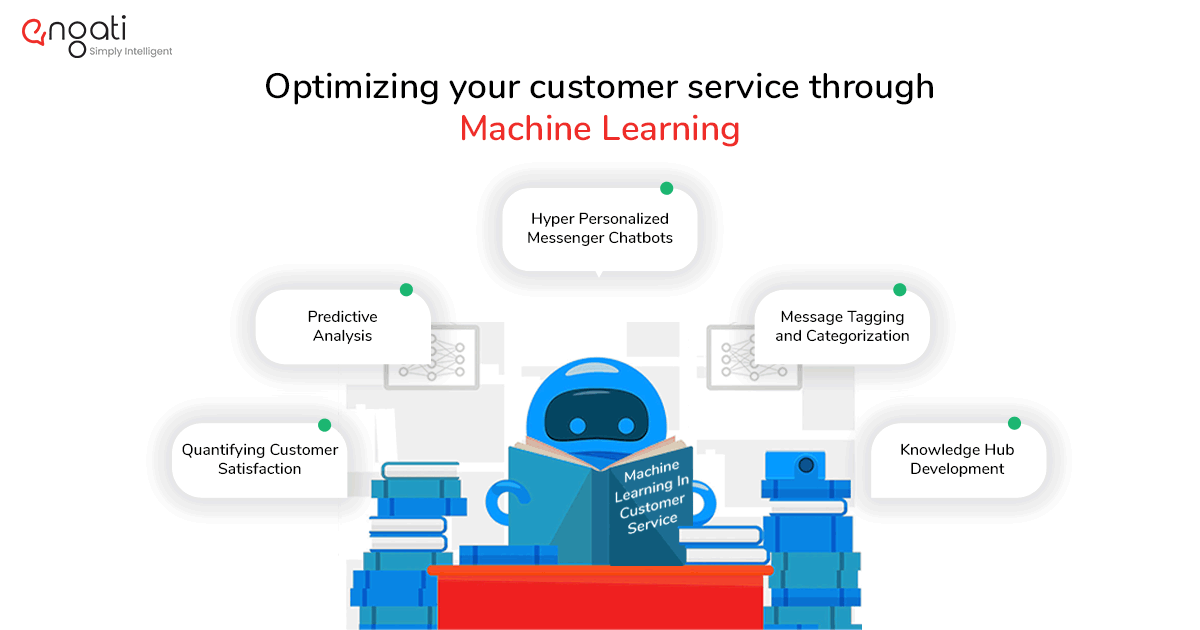
Future of CX
The use of machine learning is increasing as businesses explore new ways to optimize customer service. Here are a couple of ways to use it in your business.

Tech Corner
Looking for machine learning books to introduce you to the subject or help you expand your knowledge of it? This list has great books for beginners and experts.