Tech Corner
A walkthrough on partitions in MySQL
In this article, you're going to learn about the types of partitions that are supported by MySQL, and how to use them. This is handy with large-sized tables.
Biometric recognition (also known as biometrics) refers to the automated recognition of individuals based on their biological and behavioral traits. It is based on hardware systems for data acquisition that integrate the software components that allow, through mathematical algorithms, to perform data analysis and reconstruct the identity of a person and recognize it.
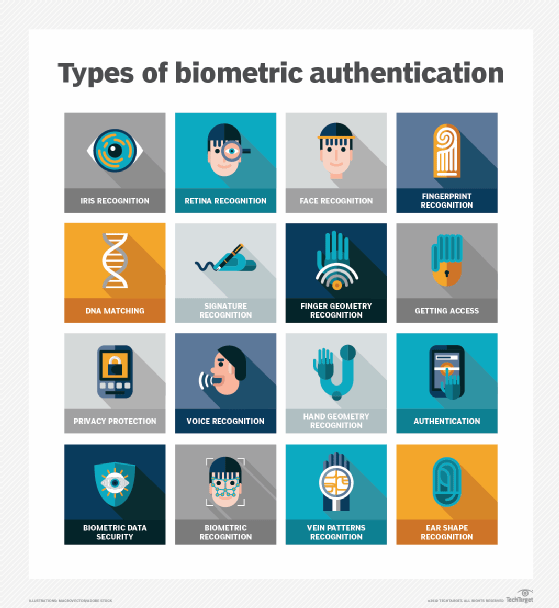
Instead of using something you have (like a key) or something you know (like a password), biometrics uses who you are to identify you. Biometrics can use physical characteristics, like your face, fingerprints, irises or veins, or behavioral characteristics like your voice, handwriting or typing rhythm. Unlike keys and passwords, your personal traits are extremely difficult to lose or forget. They can also be very difficult to copy. For this reason, many people consider them to be safer and more secure than keys or passwords.
Biometric systems can seem complicated, but they all use the same three steps:
The first time you use a biometric system, it records basic information about you, like your name or an identification number. It then captures an image or recording of your specific trait.
Contrary to what you may see in movies, most systems don't store the complete image or recording. They instead analyze your trait and translate it into a code or graph. Some systems also record this data onto a smart card that you carry with you.
The next time you use the system, it compares the trait you present to the information on file. Then, it either accepts or rejects that you are who you claim to be.
Systems also use the same three components:
The functioning of the biometric recognition systems varies according to the objective, which can be the verification or identification of a person:
A person declares his identity so his recognition becomes a verification process (one by one) that requires a match between the detected image (or the acquired data) in real-time from the sensors and that present in an archive;
The biometric recognition is done by matching the image, the data, the information acquired in real-time with all the images and information present in an archive (one to many verifications). The biometric recognition system will associate identity by comparing and identifying the most similar and consistent physiological and behavioral characteristics between those in the archive and those collected in real-time.
The biometric system is showing its full potential not only because it reaches higher levels of protection than the password method, but above all, because it opens the door to new services that are able to integrate security and a better user experience for users.
Once the biometric verification system is integrated, there’s no need to invest in additional capital. This significantly cuts upfront and ongoing investment costs. These systems are also critical to preventing loss due to fraud and illegal entries. That benefit alone saves money and drives profitability.
Managing, fitting, and even analyzing biometric verification is very user-friendly – providing technological and accurate results with minimal need for intervention. New data can be entered quickly and logs analyzed fast. Once the table of entries and exits is created, it’s easy to study and manage.
Every company demands highly efficient security systems. Biometric verification systems not only enhance security but make it is easier and more efficient to manage key functions such as attendance tracking for payroll. It is even helpful for employees as they don't need to carry cards everywhere.
One key advantage of a biometric verification system is convenience. There’s just no need to reset the passwords. Once the biometric test is activated, all fingerprints, iris, and facial recognition are done - and employees are good to go. It is even convenient to log the data and audit it accordingly.
Using passwords and codes for security access is pretty straightforward but generic. Anyone with a card or pass can gain access. But biometric security technology refers to the biological passcodes that cannot be forged - meaning accurate identification and authentication of the specific individual. Iris or facial recognition is more often becoming integrated as part of the security process, as scanning is a quick and easy process.
This menu allows you to set up answers to probable queries by setting up FAQs, defining Entities, uploading questions, and responses in a Tabular Input format or uploading relevant documents in Document Lookup. Engati NLP engine has been set up and has the intelligence to search across the four types and match the most relevant response according to the query asked, further users, have the control to change most of the settings and search preference according to their requirements.
Biometric characteristics are typically divided into two categories: physiological biometrics and behavioral biometrics.
These are features that can be notably identified through the five senses and could be processed finite calculable differences: sight (the colour of a person’s hair and eyes, their teeth, their facial features, etc.), sound (the pitch of a person’s voice), smell (their odor or scent), taste (the composition of a person’s saliva or DNA), and touch (like the person’s fingerprints or handprints).
These are all about the manner in which people behave and conduct themselves. This could include their gait, walking rhythm, writing style, typing speed, etc.
For any of these biometric characteristics to be used for identification encryption and recognition purposes, they need to be reliable, unique, collectable, convenient, long term, universal, and acceptable.
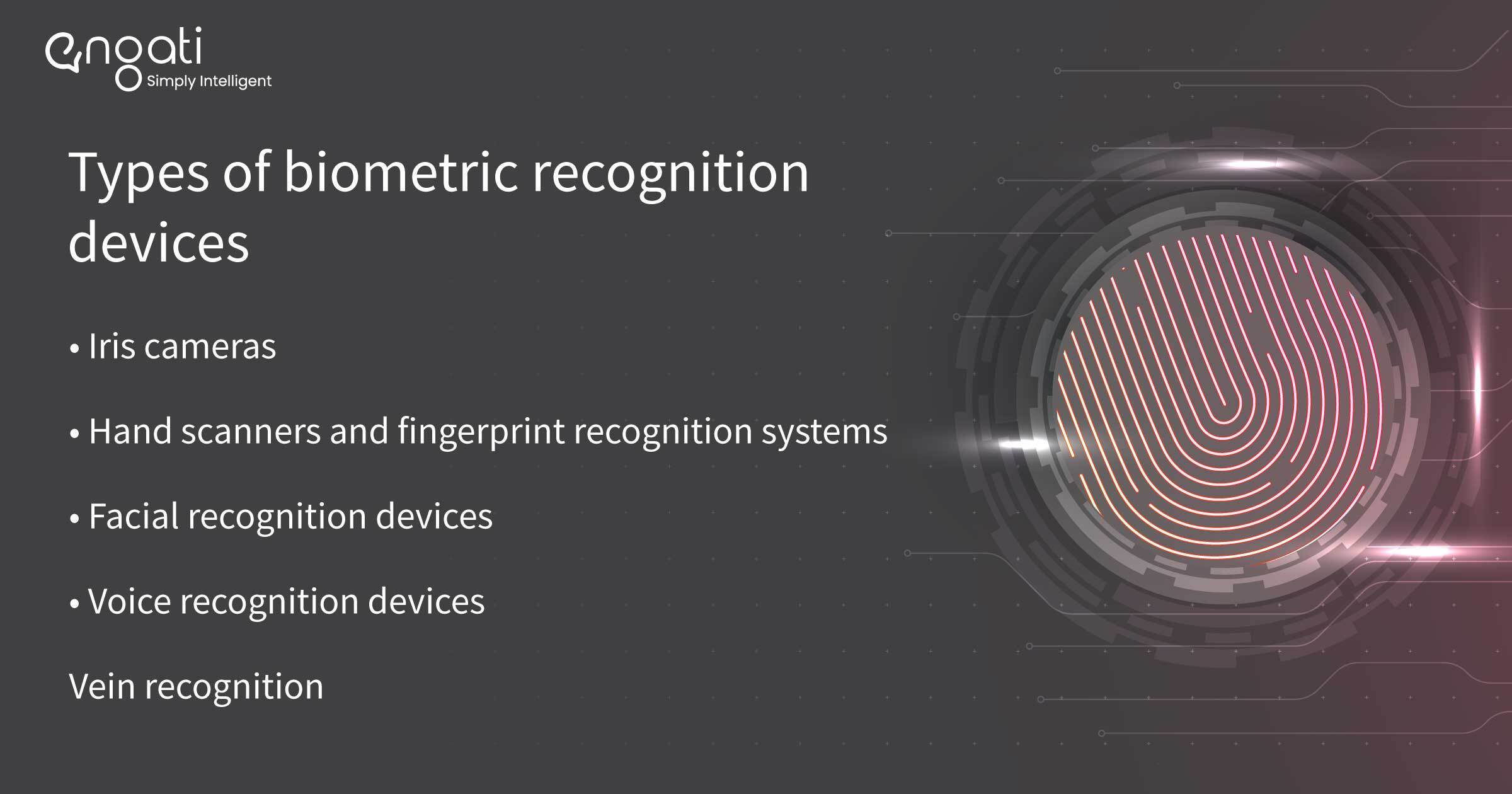
There are several types of biometric recognition devices. Here are some of these devices:
They perform mathematical analysis of the random patterns that are visible within the iris of an eye from some distance. They make use of computer vision, pattern recognition, statistical inference, and optics.
They measure the structure, shape, and proportions of the hand like the length, width, and thickness of the hand, fingers, and joints, and features of the skin surface like creases and ridges.
They compare images or videos of a person’s face with those stored in the database. Facial recognition devices check the structure, shape, and proportions of the person’s face, the distance between their eyes, nose, mouth & jaw, the upper outlines of their eye sockets, the sides of their mouth, the location of their nose and eyes, as well as the area surrounding the person’s cheek bones.
Different people’s voices create different shapes on the spectrogram graph, which are used to verify the person’s identity.
Vein recognition devices are employed to identify people on the basis of the vein patterns in their fingers.
Tech Corner
In this article, you're going to learn about the types of partitions that are supported by MySQL, and how to use them. This is handy with large-sized tables.
Tech Corner
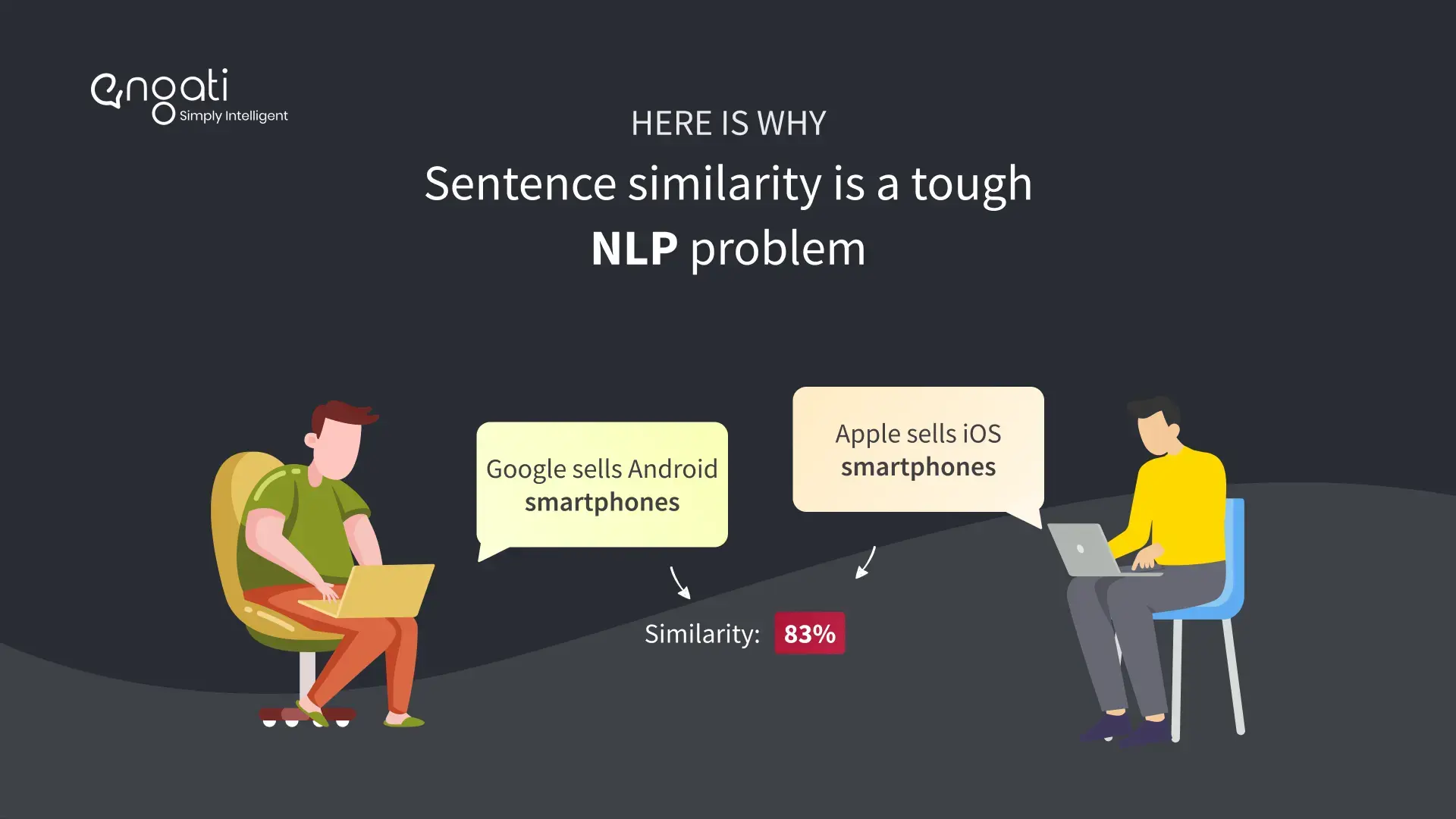
Find out why sentence similarity is a challenging NLP problem and why training computers to read, understand and write language has become a big business.
Tech Corner
Disambiguation simply means removing any ambiguities and confusions to make something very clear. In the context of NLP/NLU, ambiguities can be of various kinds