Business Transformation
Top 20 influencers revolutionizing the eCommerce industry
Engati has compiled a handbook of insights by influencers that can be applied to eCommerce, leading to a meaningful impact in the eCommerce industry in 2021.
The Bullwhip Effect is a logistics and supply chain phenomenon that illustrates the way in which tiny fluctuations in demand at the retail level can result in progressively larger fluctuations in demand at the wholesale, distributor, manufacturer, and raw material supplier levels.
This effect is named after the physics involved in cracking a whip. When the person wielding the whip snaps their wrist, the relatively small movement provokes the whip's wave patterns to progressively amplify in a chain reaction.
In logistics management, the customers, suppliers, manufacturers, and salespeople all only possess a partial understanding of the demand and they only have direct control over parts of the supply chain. But in spite of this, each of them impacts the supply chain with their forecasting inaccuracies when they order too much or too little of something.
A change in any link along the supply chain can have a rather significant effect on the rest of the supply chain. There are several possible causes of the bullwhip effect in supply chain management. The bullwhip effect is also known as the Forrester effect.
The bullwhip effect occurs in the supply chain when in consumer demand cause the companies (links) in a supply chain to order more goods to meet the new demand. Those links work together to meet consumer demand for a product, each focusing on their own specific processes and functions. But supply chains might stumble when market conditions change and there is a shift in consumer demand.
The occurrence of the bullwhip effect may be due to demand forecasting errors made by members of the supply chain, the management behavior of the companies at the front-end of the supply chain (retail management placing higher orders from your wholesalers because they don’t want to stock out on a popular product and the extra inventory starting to vary when the normal fluctuations in demand and supply occur), and operational causes like changes demand forecasts from individual companies in the supply chain. This could be because of companies not sending information about the current market conditions up the supply chain, leading to improper levels of inventory.
The bullwhip effect impacts the way in which managers evaluate the supply chain. Understanding this concept is very important because it can aid managers and business owners in avoiding expensive pitfalls and maintaining a high-quality, seamless supply chain.
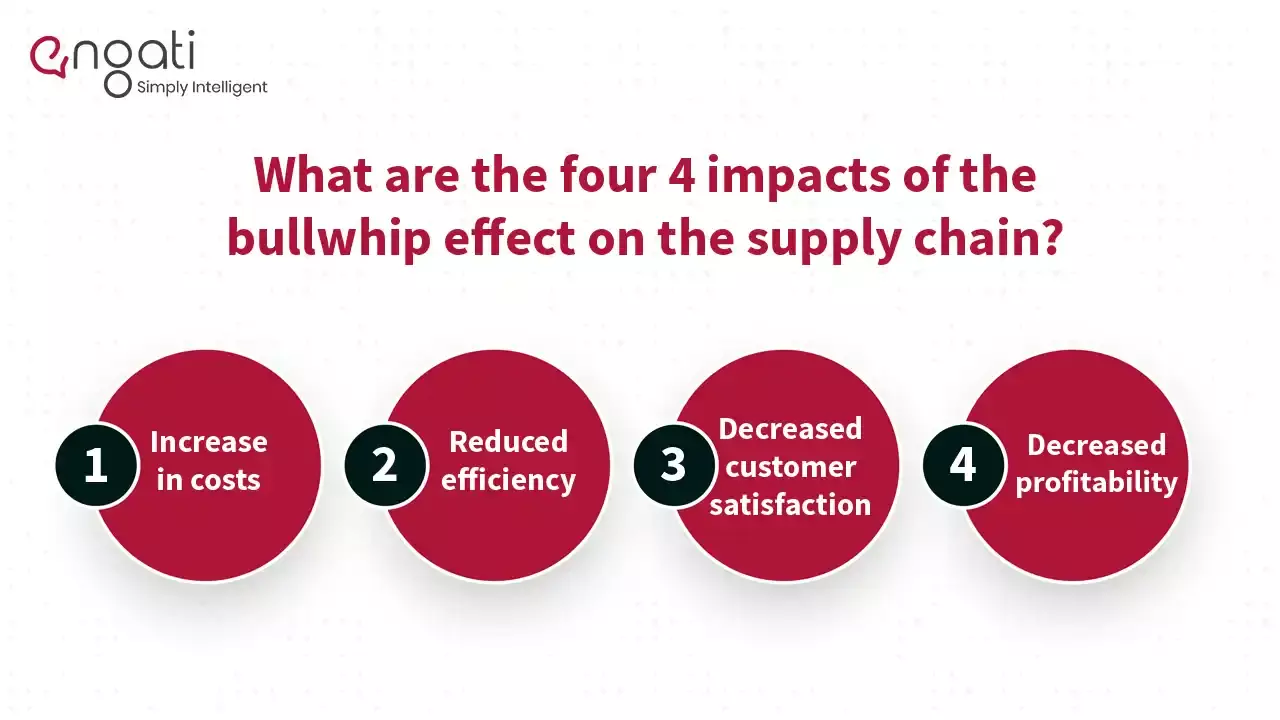
The Bullwhip Effect has several negative impacts on a supply chain, including:
It is important for businesses to try to minimize the Bullwhip Effect in order to avoid these negative impacts on the supply chain. This can be done by improving communication and coordination within the supply chain and using more accurate forecasting methods.
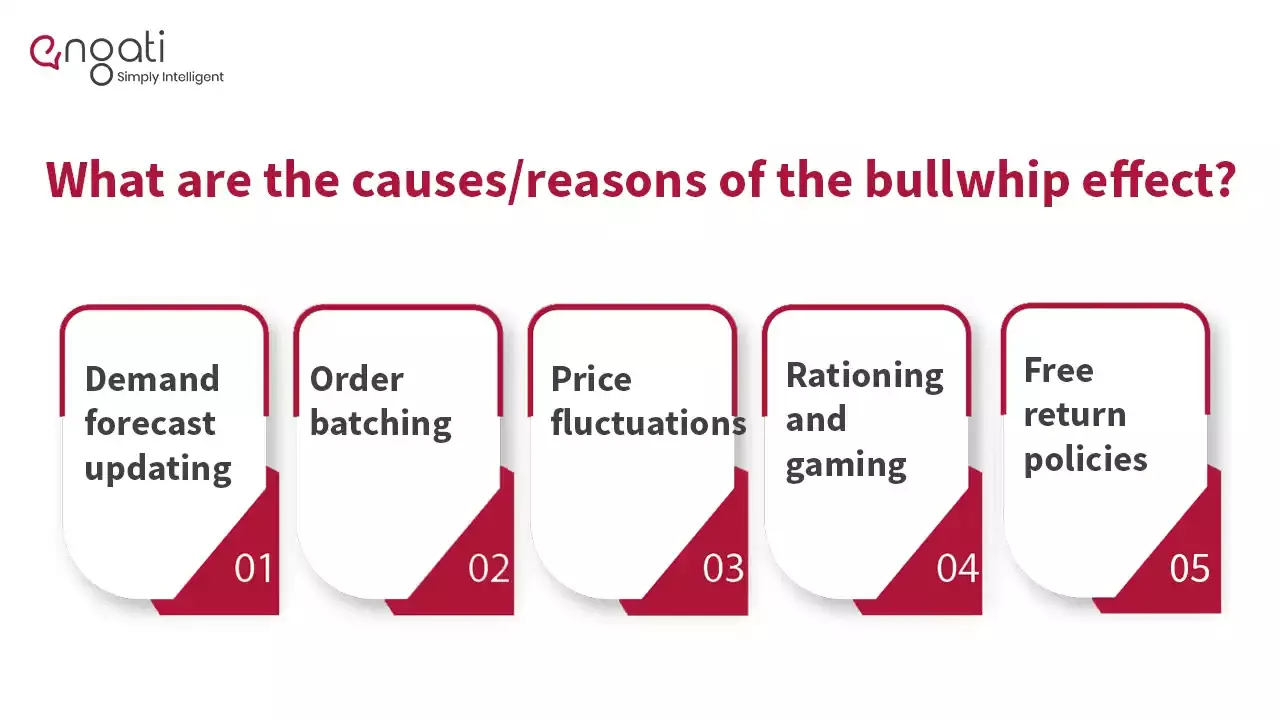
Here are some of the causes of the bullwhip effect in supply chain:
Variables associated with lead time like delays in manufacturing, shipping, and transmitting information throughout the supply chain influence the supply chain. Human behavior and management can also cause the bullwhip effect. Managers can make erroneous decisions that have a negative impact on other leaders in the supply chain. Some of the supply chain errors that could cause the bullwhip effect are lack of communication & coordination, batch ordering, price fluctuations, overreaction to backlogs, errors in forecasting, inflated orders, and product promotions.
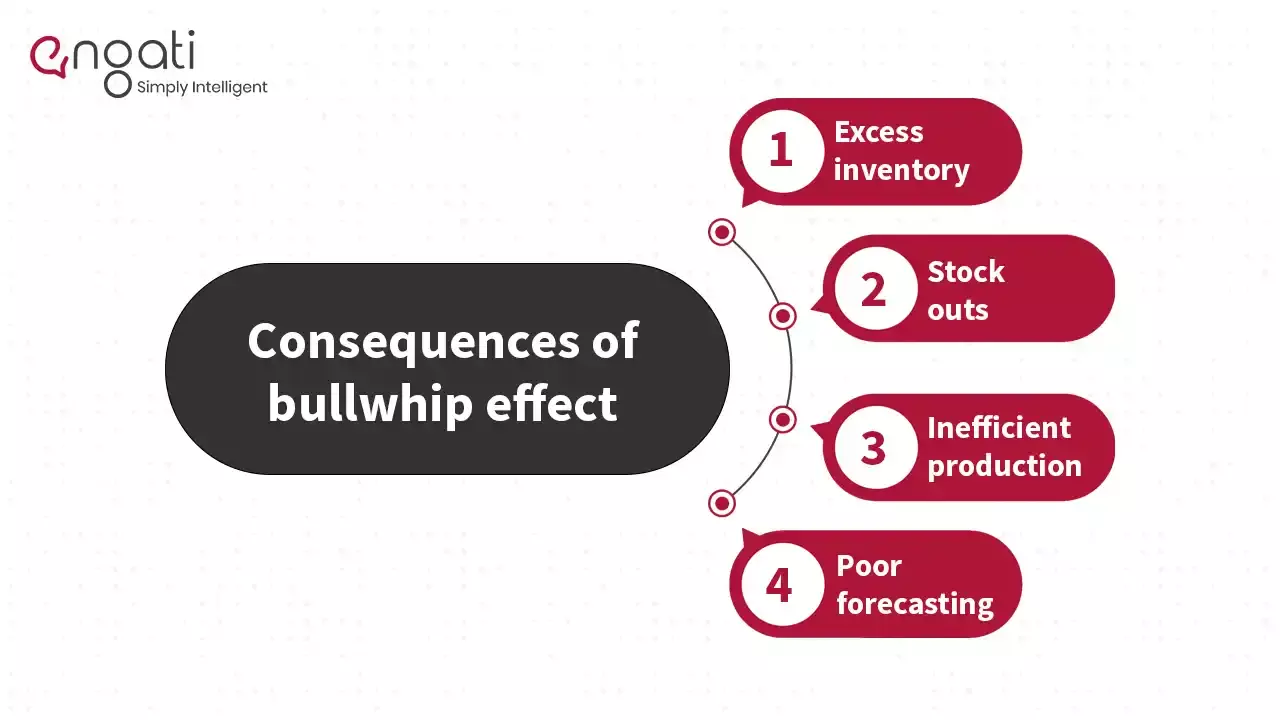
The bullwhip effect is a phenomenon that occurs in a supply chain whereby small fluctuations in demand at the retail level can lead to increasingly large fluctuations in demand at the wholesale, distributor, and raw material levels. This can have a number of negative consequences for the supply chain, including:
Overall, the bullwhip effect can disrupt the smooth functioning of a supply chain and lead to higher costs and lower profits for the companies involved.
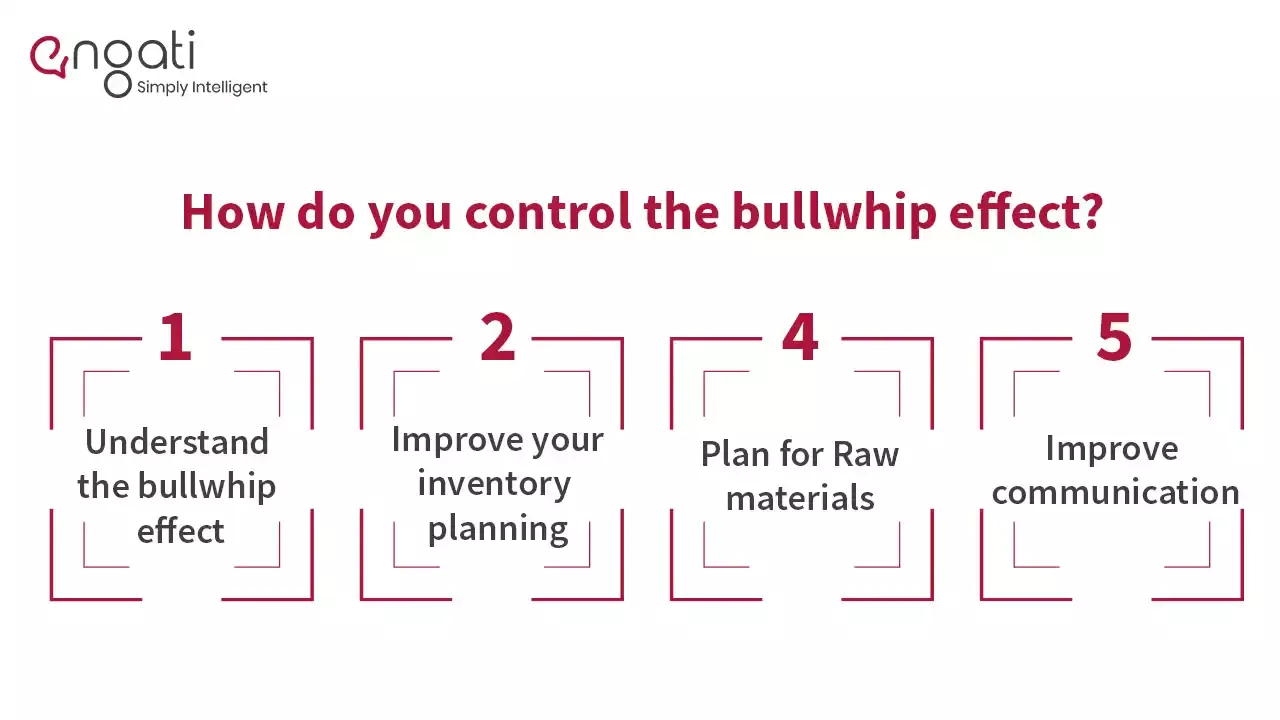
When you understand the bullwhip effect and take corrective action, you can reduce your inventories by 10 to 30% and you can also reduce the chances of having to deal with stock out situations and missed customer orders by 15 to 35%.
Here are some of the techniques that can be used to control and minimize the bullwhip effect.
You’ve got to be cognizant of the bullwhip effect and acknowledge the fact that high buffer inventories exist throughout your supply chain. Consider carrying out a detailed stock analysis of the inventory points from stores to raw material suppliers for the purpose of uncovering idle excess inventories. As a supply chain manager, you can then conduct a deeper analysis to identify the reasons for excess inventories so that you can figure out what corrective actions can be taken.
Inventory planning involves carefully looking at historical trends, for seasonal demand, forward-looking demand, new product launches as well as the discontinuation of older products. You need to have an early warning system in place to avoid having major deviations from the set inventory norms.
Instead of keeping an extremely high buffer for raw materials, you should link raw material planning to the production plan.
Improve the communication among your purchasing managers, production managers, logistics managers and sales managers. You’d also want to make sure that all these people have their goals properly aligned.
The beer game is a business simulation game that illustrates the Bullwhip Effect. The Bullwhip Effect refers to the amplification of fluctuations in demand as they move upstream in a supply chain.
In the beer game, players represent different parts of a supply chain: a supplier, a distributor, a wholesaler, and a retailer. Each player tries to meet the demand for beer by placing orders with the player upstream in the supply chain. However, because each player only has partial information about the true demand for beer and must rely on forecasts, they may make orders that are larger or smaller than necessary. This can lead to discrepancies between the actual demand for beer and the amount of beer that is being produced, which can result in shortages or excess inventory.
The Bullwhip Effect can have serious consequences for businesses, including increased costs, reduced efficiency, and decreased customer satisfaction. It is important for businesses to try to minimize the Bullwhip Effect by improving communication and coordination within the supply chain and using more accurate forecasting methods.

Business Transformation
Engati has compiled a handbook of insights by influencers that can be applied to eCommerce, leading to a meaningful impact in the eCommerce industry in 2021.

Business Transformation
The ever-increasing expectations of the customers can be met with the implementation of an artificial intelligent chatbot in e-commerce websites.......

Drive to Reimagine
eCommerce Chatbots are making online shopping easier than ever before. They help customers buy products & make payments without opening your website or app