Drive to Reimagine
How can small businesses survive COVID crisis?
Small Businesses are taking massive hits due to the lockdowns triggered by the novel coronavirus. Here are some tips for small business survival. Check it out.
Business Process Improvement is an exercise conducted for increasing the effectiveness, efficiency, and accuracy of an organization’s processes.
This management exercise involves using a range of methods to analyze the existing processes, find places that have scope for improvement, and going ahead to optimize these processes.
The improvements made from this practice are not just limited to processes. It can even involve improving employee skills.
This exercise is conducted to streamline the organization’s processes and even improve customer and user experience. It aims to reduce friction in the processes, minimize the wastage of resources, speed up the processes, and improve the outcome of these processes. It can even be done to help meet customers’ demands or to improve compliance with rules and regulations.
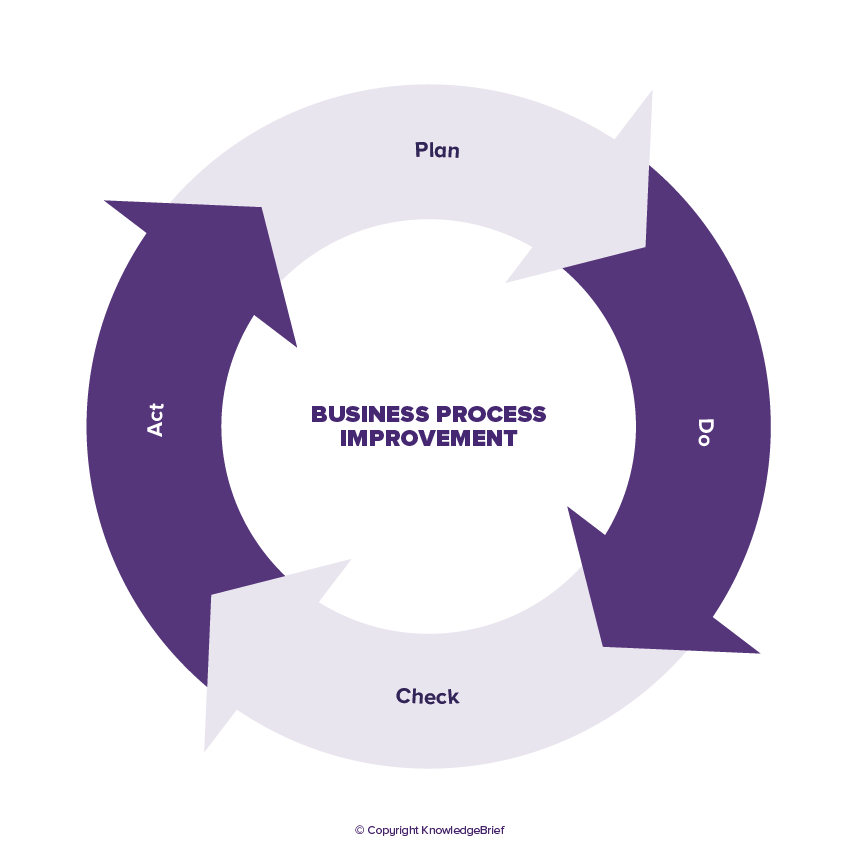
Business Process Improvement helps reduce friction in organizational processes and streamline them, improving business process efficiency . It helps minimize errors and improve the quality of the output.
BPI helps you make processes more effective and efficient, reducing wastage of both: materials and manpower. It helps reduce costs and even allows you to direct the resources to other processes and allow employees to focus on other tasks that actually require their attention. It can’t just be a one-time activity, you should focus on continuous business improvement.
Business Process Improvement (BPI) starts with leaders identifying processes in the organization or in their respective functions.
After that, the processes are analyzed. Leaders look for gaps in the processes and other areas that can be improved. They identify areas where friction exists and where resources are wasted.
Now, they hypothesize methods of improving the processes, prioritize which changes are most important, and figure out which would be the most effective.
Then they proceed to test their hypotheses, learn from their experiments and implement their improvements.
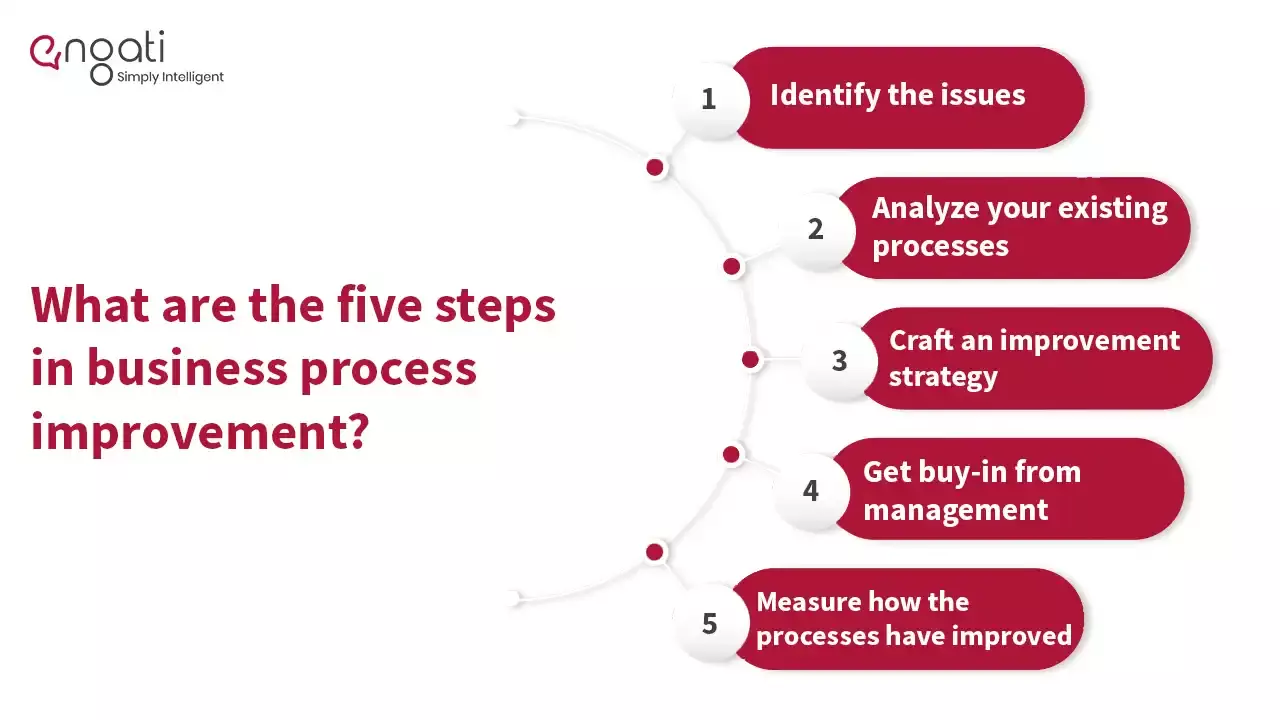
Various business process improvement methods follow different sets of steps. Here’s a basic run-through on the steps involved in business process improvement:
Figure out what issues or risks your company faces and detect the need for change. You can undertake a process audit to detect these gaps, issues, and risks. It will help you understand how to prioritize your areas for business improvement. While you’re at this step, you should also understand what impact the processes have on your company, resources, employees, customers, partners, resellers, investors, and other stakeholders.
After your pick which processes you need to improve and enhance, you need to analyze and evaluate the current processes. Take a close look at the processes that you intend to improve and ask yourself (and your team) these questions:
Once you figure out how needs to be improved and are done analyzing the processes, you need to come up with a strategy to fix the broken process. While framing your strategy, you should mention which steps are broken why you need to improve them, and what you can do to improve them. You should also include the financial and resource implications that would arise from taking action to improve the process. You should also include the improvement objectives in your strategy, making sure that they are measurable and realizible. Your business process improvement strategy is very important when you pitch the improvement exercise to senior management. Without a clear improvement strategy, you cannot really expect to get your management to approve your business process improvement initiative.
This might be the most important step in the entire business process improvement exercise. Here’s when you show your senior management why change is necessary and the effects that the changes would have on your organization. You need to be extremely effective and persuasive with your pitch, otherwise all your prior efforts would be wasted and your business process improvement exercise would just fall flat. If you don’t manage to win their support, you wouldn’t be able to get great results even if you do initiate the business process improvement activities. The exercise tends to be time and resource intensive, so you might end up getting resources pulled away if you can’t convince senior management about the value that would be gained by improving the process.
This step involves tracking the performance of the improved process to ensure that it is meeting the desired objectives and making any necessary adjustments. Once you’ve implemented the changes, you need to review the changes. You need to keep a check on whether the change has been worked out correctly or not. Then track its impact on other activities within the company. In case any problems are verified you will have to set a new process in motion.
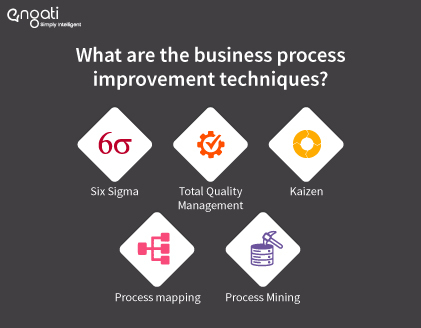
Here are three very widely-used BPI techniques:
This is an extremely popular technique in which practitioners progress through ranks that are defined using Karate belts. A six sigma novice starts off as a green belt and progresses to become a black belt.
There are two ways to breakdown BPI steps according to Six Sigma:
Total Quality Management (TQM) concentrates on getting long-term success by focusing on increasing customer satisfaction. It involves creating a work culture in which your entire organization is focused on continuous improvement.
Kaizen promotes agile and lean practices. It concentrates on continuous improvement in efficiency, productivity, and quality. It involves creating a work environment in which people are not punished for making mistakes but are encouraged to learn from them and prevent them from reoccurring. Kaizen is about making a big impact through small changes in work and processes.
This helps visualize processes and map out plans to improve them. It involves charting out a flow diagram that can provide critical information about an entire process workflow, all the way from the beginning to the end.
This technique focuses on the use event log data generated from ERP, CRM, Service Management, BPM and a huge range of other workflow systems. Algorithms are used to map the sequence of activities and resources that involved in a process flow, thus mining this data.
Motorola is one of the most famous examples of BPI implementation. They were the ones who came up with the six sigmas, to improve the quality of their products and to standardize defect measurement. Motorola pioneered the Six Sigma brand and the system of "belts" that practitioners use to denote their level of training. The belts resemble karate belts and start from green and go up to black belt.
Drive to Reimagine
Small Businesses are taking massive hits due to the lockdowns triggered by the novel coronavirus. Here are some tips for small business survival. Check it out.

Drive to Reimagine
A chatbot is a designed tool powered by the rules of Artificial Intelligence (AI), acts as a simulator of human conversation for the purpose of automating a bus
Drive to Reimagine
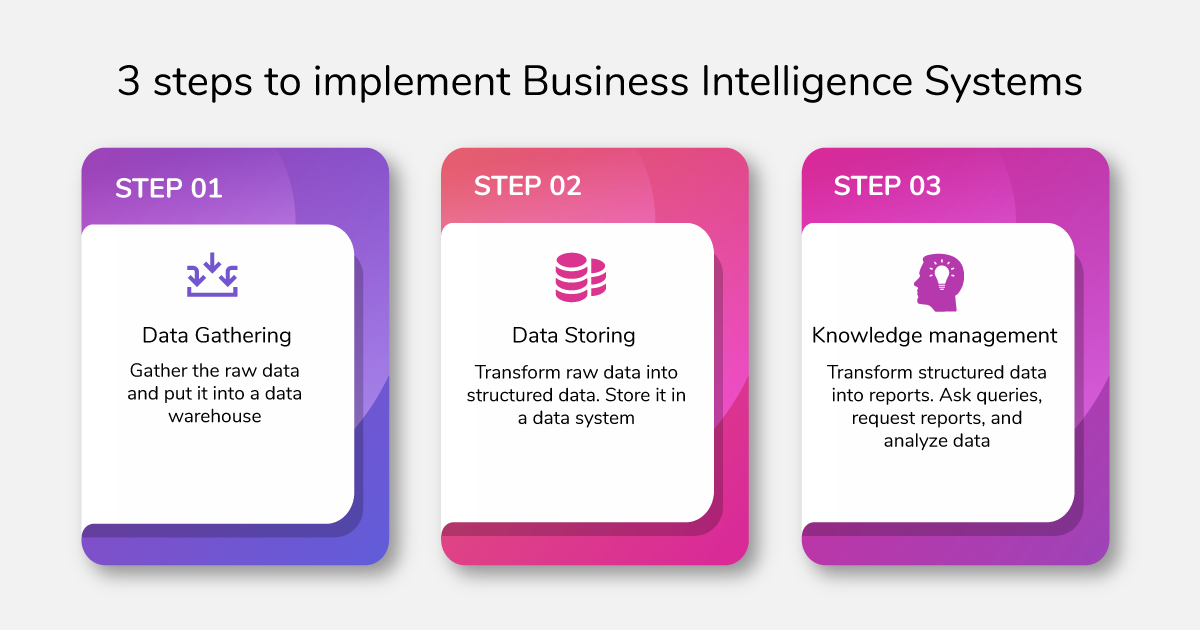
Real-time data is the need of the hour for Business Intelligence. But are your systems holding you back? Here’s how to empower your organization with chatbots.