Future of CX
Customer experience for 2023 [Webinar]
Shep Hyken, Colin Shaw, Dan Gingiss and Elise Quevedo talk about customer experience for the future in a free virtual panel discussion. Start reading now!
Customer onboarding includes all the activities involved in getting new customers familiar with your products or services. It involves nurturing and guiding customers to help them become comfortable with your offerings and get the most value out of them.
Since it is at the start of their relationship with your company, it can define their attitude towards your offerings and your organization. A good client onboarding process is vital in order to establish a healthy long-term relationship with your customers and reduce your customer churn rate.
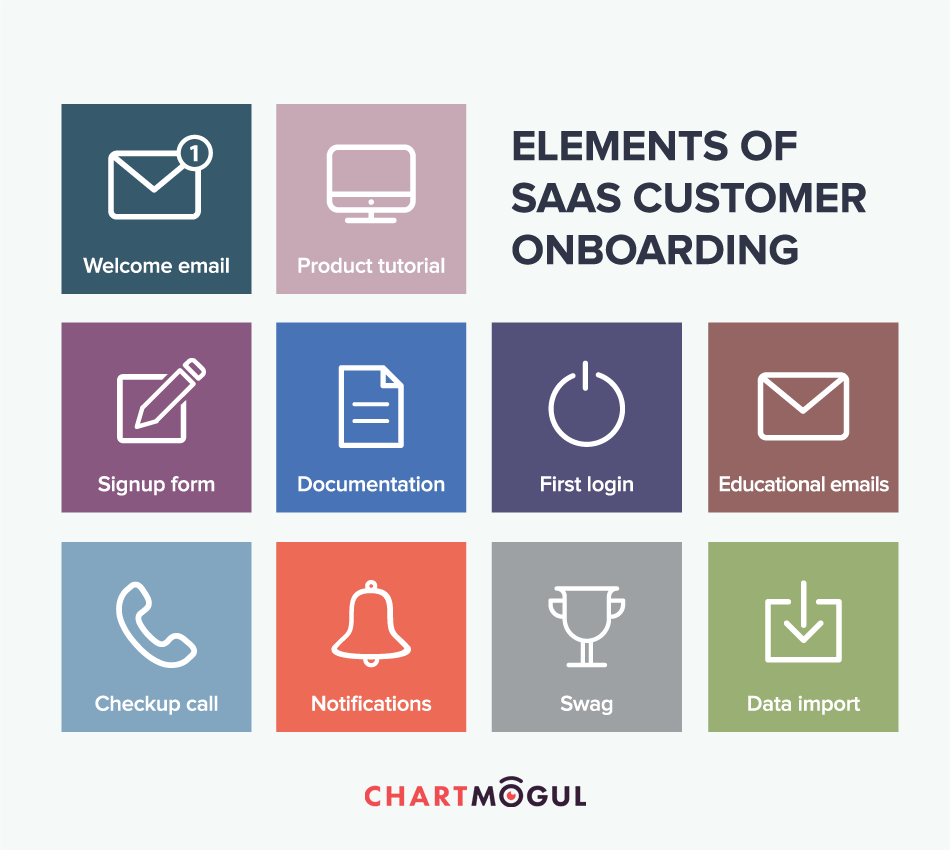
To find an answer to this question, you would need to answer two other questions:
A good new customer onboarding process is all about giving customers what you promised them and more. It’s about setting them up for success with your solutions, which would earn you many happy customers and have a positive impact on customer loyalty.
Without a proper onboarding process, you’re pretty much saying, “Thanks for signing up with us. Now, do whatever you want on the platform, we aren’t going to help you.”
How do you think your customers will feel about that?
Now if your solution has a learning curve to it, you definitely do not want to leave your customers to survive on their own wits. You need to onboard them, show them what they need to do to achieve their goals, and make it as easy as possible for them to succeed.
Thinking is tiring. You need to have a new customer onboarding process flow that minimizes the need for them to actually think and figure things out on their own.
The easier you make it for your customers to do something, the more likely they are to do it. So, a good onboarding process increases your chances of retaining customers.
Onboarding your customers well and set them up for success brings your business many benefits. The most obvious benefit is that it reduces churn, earns you more loyal customers, and increases your customer lifetime value.
Here are 3 other benefits that an effective new customer onboarding process flow would afford you:
Customer onboarding includes the entire process till the time your customers get set up and can begin using your offerings. It includes the initial sign-up, customer training, and the first use. Customer onboarding aims to help you give as much value to your customers as soon as possible, preferably in the very first use of your product.
This is essentially the process that you follow to help your new clients get acquainted with your product and all its features. You will have to vary your customer onboarding process according to the individual customer’s specific needs, not all your customers will want to go through every step in the process, but those steps should be available for them to access and go through if they wish to do so.
A customer onboarding process is not something that you should wait to create after hitting a certain milestone or reaching a particular threshold. Every single one of your customers deserves a good onboarding experience, and yes, that includes your very first customer as well.
That does not mean that you need to create an extremely sophisticated, complex process right at the start of your venture. Put a simple one in place in the beginning and allow it to evolve over time.
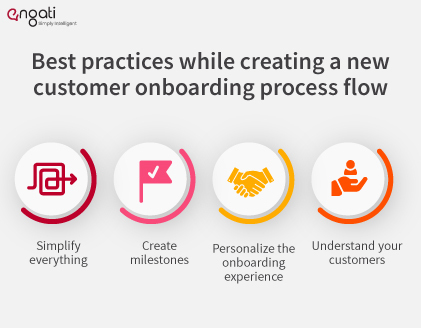
Here are some best practices that you can use to enhance your customer onboarding, improve your customer service, and increase your customer retention.
Explain everything as easily as possible. Don’t try to push all the information they need in one go. Break it down into smaller segments, allowing them to understand each part, and accomplish a small task before moving on to the next segment.
Especially when done in a product or platform tutorial, this adds a flair of gamification to your customer onboarding process and keeps your customers more engaged.
Try to tailor your customer onboarding process to the individual customer’s goals and requirements. When you incorporate a personal touch into your onboarding strategy, you aren’t just showing them how to use your product, you are setting them up to achieve their definition of success with your solutions.
You can’t personalize your onboarding process if you don’t understand your customers in the first place. In addition to understanding personas, take the time to understand the obstacles that individual customers face and the goals that they seek to achieve.

Future of CX
Shep Hyken, Colin Shaw, Dan Gingiss and Elise Quevedo talk about customer experience for the future in a free virtual panel discussion. Start reading now!

Future of CX
Steven Van Belleghem, co-founder and board member of Nexxworks, presents a rule that makes it easy to take decisions on implementation of CX innovations.

Future of CX
Customer Satisfaction Score, or CSAT, is a metric used by companies and marketers to navigate through a customer’s feelings through the customer lifecycle.