Tech Corner
19 software development principles you need to know!
Whether you're just getting started in the world of software design or you're a veteran, you need to know and understand these software design principles.
The cyclomatic complexity of a section of code is the quantitative measurement of the number of linearly independent paths that are in it. This software metric is used for the purpose of indicating the complexity of a program.
The metric was developed by Thomas McCabe to determine the stability and level of confidence in a program. Essentially, programs that have a lower cyclomatic complexity tend to be easier to understand and less risky to modify.
The cyclomatic complexity can be computed by making use of the Control Flow Graph of the program. The nodes in the graph represent the smallest group of commands of a program, and a directed edge in it connects the two nodes i.e. if second command might immediately follow the first command.
As an example, if the source code does not contain a control flow statement then its cyclomatic complexity is 1 and the source code contains a single path in it. In a similar manner, in case the source code contains one if condition then cyclomatic complexity will be 2 since there will be two paths, one will be for true and the other will be for false.
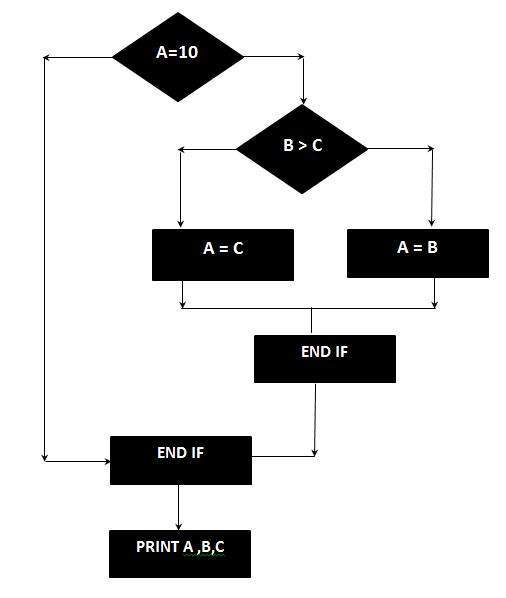
Basically, cyclomatic complexity is important because it can help you understand how complex your code is. Looking at the numbers given per method in the source code, you can figure out whether your code is particularly complex or not. This metric even affects other software metrics such as the code maintainability index.
Some of the metrics that can be used to measure the complexity of code include:
It isn’t easy to measure the complexity of code and different developers will assign different levels of importance to each of these metrics and factors.
Mathematically, for a structured program, the directed graph inside control flow is the edge that joins two basic blocks of the program as control might pass from the first to the second.
So, this is what the formula for cyclomatic complexity (M) would look like:
M = E – N + 2P
where,
E = the no. of edges in the control flow graph
N = the no. of nodes in the control flow graph
P = the no. of connected components
Here are the steps that you should follow when you are calculating cyclomatic complexity and test cases design:
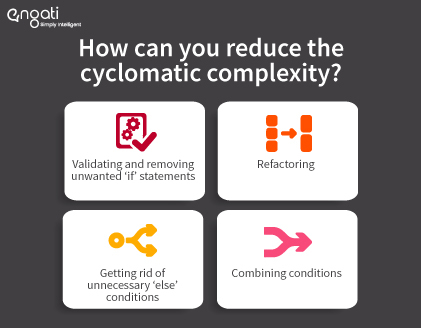
Here are some of ways through which you can reduce cyclomatic complexity:
More conditional statements lead to more code complexities. You could validate and check which ‘if’ statements can be removed in order to reduce your code complexity.
Refactoring bigger methods into smaller methods can be very helpful in reducing code complexity. You can use the single responsibility principle to break bigger classes into smaller one, thereby reducing the dependency on a single class performing multiple functions.
In case the if.Else block is performing some logic or returning something based on some condition, it would be better to just have a single ‘if’ statement. The ‘else’ in this statement would be redundant.
Quite often, complexity is introduced into otherwise simple code because of the presence of conditional statements. But if those conditional statements are rewritten with simple LINQ conditions, you would be able to reduce the count.
The cyclomatic complexity does have it’s own uses and advantages, but it also has some disadvantages. Let’s understand all of these.
Here are some of the purposes for which cyclomatic complexity is utilized:
As we said earlier, this metric also has its disadvantages. Let’s see what those are:
In answer to the question about how good of a metric cyclomatic complexity is, let’s just say that it isn’t exactly a perfect way to measure how complex or good a piece of code is, but it still is an important metric that you should understand and keep in mind.

Tech Corner
Whether you're just getting started in the world of software design or you're a veteran, you need to know and understand these software design principles.

Drive to Reimagine
key design principles is important to understand why you’re creating that software, what your users and business will accomplish with it, and more! Check it now
Tech Corner
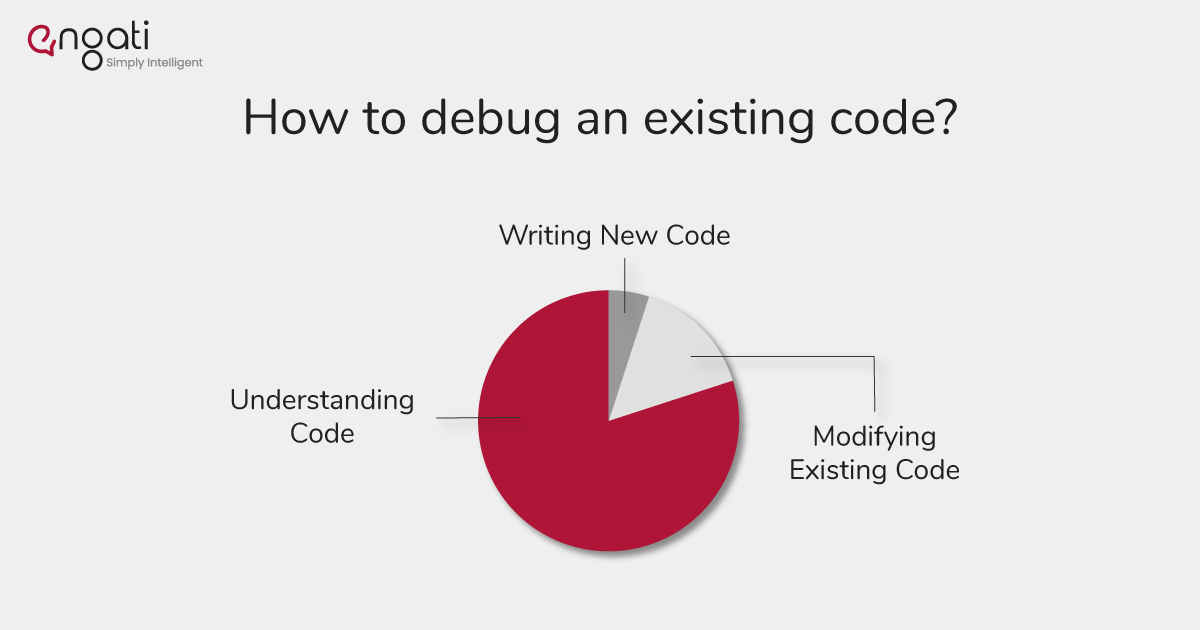
If you are new to a project, here is what you could do before you ask your colleagues for assistance and try to increase your skills to debug existing code.