Tech Corner
Stay ahead of the Machine Learning curve
In this blog, we’ll see what machine learning is all about. How is it growing big globally. How are businesses stepping up their game with machine learning.
Lazy learning refers to machine learning processes in which generalization of the training data is delayed until a query is made to the system. This type of learning is also known as Instance-based Learning. Lazy classifiers are very useful when working with large datasets that have a few attributes.
Learning systems have computation occurring at two different times: training time and consultation times.
Training time is the time before the consultation time. During training time, the system derives inferences from training data to prepare for the consultation time.
Consultation time is the time between the moment when an object is presented to a system so that the system can make an inference and the moment when the system finishes making the inference.
In a lazy learning algorithm, most of the computation is done during consultation time. Essentially, a lazy algorithm defers the processing of examples till it receives an explicit request for information.
The main purpose behind using lazy learning is that (like in the K-nearest neighbors algorithm which is employed in online recommendation engines like those of Netflix and Amazon) the dataset gets updated with new entries on a continuous basis. Due to these continuous updates, the training data becomes obsolete in a short period of time. So there really is no time to have an actual training phase of some sort.
These lazy algorithms are very beneficial while working with vast, perpetually changing datasets that have a few attributes that are queried quite commonly.
Even if there is an enormous set of attributes available, recommendation queries tend to rely on a relatively smaller set of attributes.
Instance-based learning, local regression, K-Nearest Neighbors (K-NN), and Lazy Bayesian Rules are some examples of lazy learning.
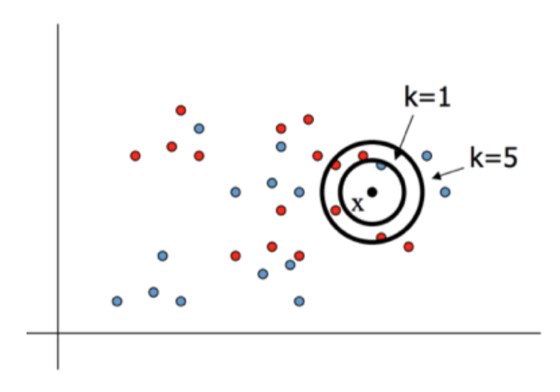
Lazy learning and eager learning are very different methods. Here are some of the differences:
Lazy learning systems just store training data or conduct minor processing upon it. They wait until test tuples are given to them.
Eager learning systems, on the other hand, take the training data and construct a classification layer before receiving test data.
So while lazy learning systems have a low or non-existent training time and a high consultation time, eager learning systems have a high training time and a low consultation time.
In eager learning, the system needs to commit to a single hypothesis that covers the entire instance space, while in lazy learning, systems can make use of a richer hypothesis space because it employs multiple local linear functions to form its implicit global approximation to the target function.
Essentially, eager learning methods create a general, explicit description of the target function, based on the training examples provided. Lazy learning essentially postpones generalizing beyond the data stored until an explicit request is made.
In eager learning, the same approximation is used to the target function which needs to be learned based on the training data and before the input queries are observed. In lazy learning, however, you’d see the algorithm constructing a different approximation to the target function for every query instance that it encounters.
Lazy learning is rather beneficial for complex and incomplete problem domains in which complex target functions could be represented by a collection of less complex local approximations.
Here are the most significant advantages of the lazy learning method:
Here are the most significant disadvantages of lazy learning:

Tech Corner
In this blog, we’ll see what machine learning is all about. How is it growing big globally. How are businesses stepping up their game with machine learning.
Future of CX
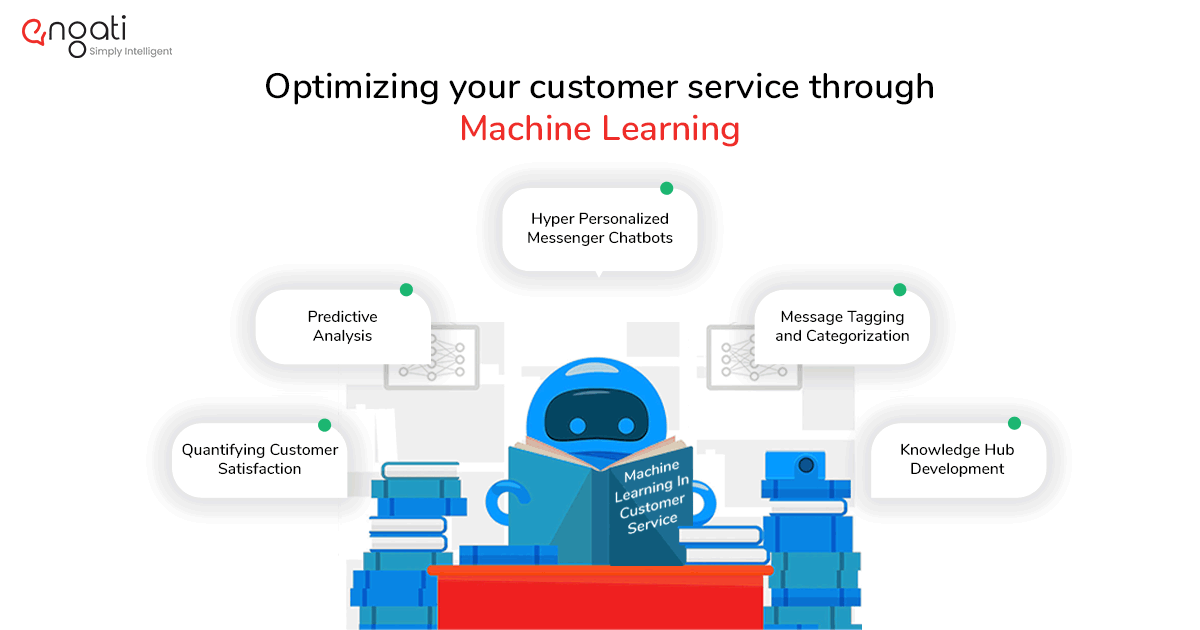
The use of machine learning is increasing as businesses explore new ways to optimize customer service. Here are a couple of ways to use it in your business.
Tech Corner
Looking for a cheatsheet to tune your Hyper-Parameters in Machine Learning and Neural Network Algorithms? We've got you covered! Click here to learn more.