Drive to Reimagine
7 Effective E-commerce Lead Generation tactics
The hardest part of eCommerce business is all about acquiring new leads, here are the 7 interesting way to generate leads for your eCommerce business
A lead generation process is a process that is used for the purpose of generating interest from prospective customers or getting them to inquire about your company’s products and/or services.
The nature of the lead generation process is dependent on several factors. This can include the type of product or service, the target market, whether it’s a B2B, B2C, B2G, or another kind of offering,
Having an effective lead generation process is useful for you and also for your customers. You get the opportunity to reach and engage a potential customer that is interested in your offerings, and your prospects get the chance to learn more about the product or service that they are looking for and thus make an informed decision.
In addition to filling your sales pipeline with qualified leads, a well-defined lead generation process will also help you learn more about the market and about its demand for the products and services that you offer.
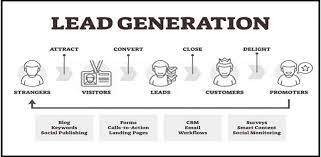
There are two types of lead generation. These are:
Here are a few questions that will help you figure out whether to focus more of your attention and budgets on outbound or inbound lead generation.
If they are actively searching for you and your offerings online, prioritizing an inbound lead generation approach makes more sense. However, if they aren’t searching for you, your products, or services online, it may be a good idea to focus on outbound lead generation.
Do you have the resources available to create content and/or invest in PPC campaigns? If you do, you can consider inbound lead generation. The outbound lead generation process just requires you to directly reach out to prospective customers, so it does not require the kind of investment needed for inbound lead generation.
However, inbound lead generation could be more cost-effective in the long term.
Inbound lead generation might take more time. Creating content takes time, and getting ranked highly for a large number of keywords and search queries is not something that tends to happen instantly.
A PPC campaign could speed things up to some extent, but you still need a high-quality landing page to direct your prospects to, and building one can take a bit of time.
Outbound lead generation could be beneficial for you if you happen to be in a hurry. Once you have a list of prospects that show promise, you could start cold calling or emailing them on that very same day. Outbound sales tools can be helpful at this point since they allow you to personalize your emails and stand out from the crowd.
Get your WhatsApp chatbot at just $5 a day
Start now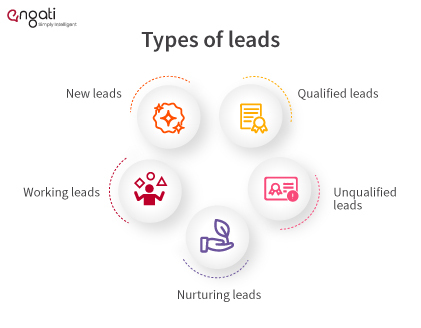
You can classify your leads into five types:
A new lead is a lead that you just acquired. Chances are that you only have their contact information, and maybe a bit of information with regard to their industry, use case, etc.
Working leads are leads that your organization has active conversations with. They’ve engaged in chat, email, or phone conversations with your team members. You and your working leads both get to know a little more about each other.
Nurturing leads are prospects who, for whatever reason, do not have an immediate interest in making a purchase from your organization. However, these leads have displayed interest in potentially making a purchase in the future.
These are leads that you should be sending extra information to, both about the product as well as industry insights that they would benefit from. You need to keep them engaged and interested.
Unqualified leads are people who have absolutely no interest in your business’s offerings. These are leads that you have reached out to and they have expressed disinterest in your products or services.
These are the leads that you want more of. There are two types of qualified leads:
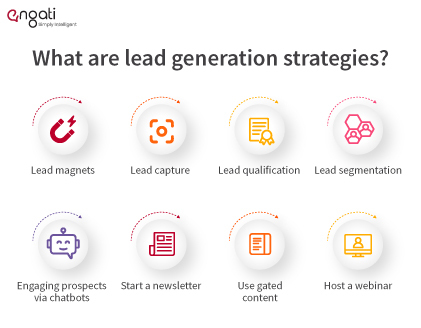
Lead generation strategies are plans that are built for the purpose of attracting prospects that are interested in your business’s offerings. It includes processes and tactics that you can use to reel your leads in, nurture them, and even convert them into customers.
The four primary components of lead generation strategies are:
Some effective lead generation strategies include:
Chatbots help you answer all the questions that your customers may have about your offerings, policies, etc. They can be use to collect information about your prospective customers and then use that information to deliver personalized product recommendations to them.
Bots can even be used to converse with your leads over channels like WhatsApp and Facebook Messenger, drive sales, and even collect payments over those channels.
A newsletter can be a great way to deliver an enormous amount of value to your leads and keep them engaged and interested. It helps you collect leads who sign up for the newsletter and then nurture them, guiding them down the sales funnel.
High-value gated content can be a great way to collect leads. The content can be in the form of e-books, reports, whitepapers, or even free tools.
Webinars, panel discussions, workshops, and other events are a great way to interact with your prospects, answer their questions, and collect their contact information and other qualifying details.
Drive to Reimagine
The hardest part of eCommerce business is all about acquiring new leads, here are the 7 interesting way to generate leads for your eCommerce business
Drive to Reimagine
Learn how to build a lead generation funnel with chatbots and live chat. You'll also get insights on how to use them to nurture your leads and drive sales.
Drive to Reimagine
eCommerce Chatbots are making online shopping easier than ever before. They help customers buy products & make payments without opening your website or app