Whatsapp Marketing
Create WhatsApp Bot for Free in 5 Mins With No Code (2025)
Learn how to create a WhatsApp bot in 5 minutes with easy steps. Discover WhatsApp integration tips, explore use cases & get a chatbot demo with free trail.
Natural Language Processing (NLP), a subfield of machine learning (ML), uses ML and artificial intelligence (AI) to process input consisting of text or audio to derive meaning, intent and sentiment and form an appropriate response for output.
Computers can't understand or interpret text and words the way humans do, as they communicate in 1s and 0s. And neither do we, humans understand their language as easily.
Hence, NLP enables computers to communicate i.e. understand, emulate and respond intelligently to humans.
This isn’t a new science, NLP has been advancing at a fast pace due to
The primary reason why Natural Language Processing is extremely important is that it helps analyze and make sense of vast volumes of data.
It helps process text as well as voice data, understands sentiments and intents and even helps derive critical insights.
To summarise, we need NLP today to
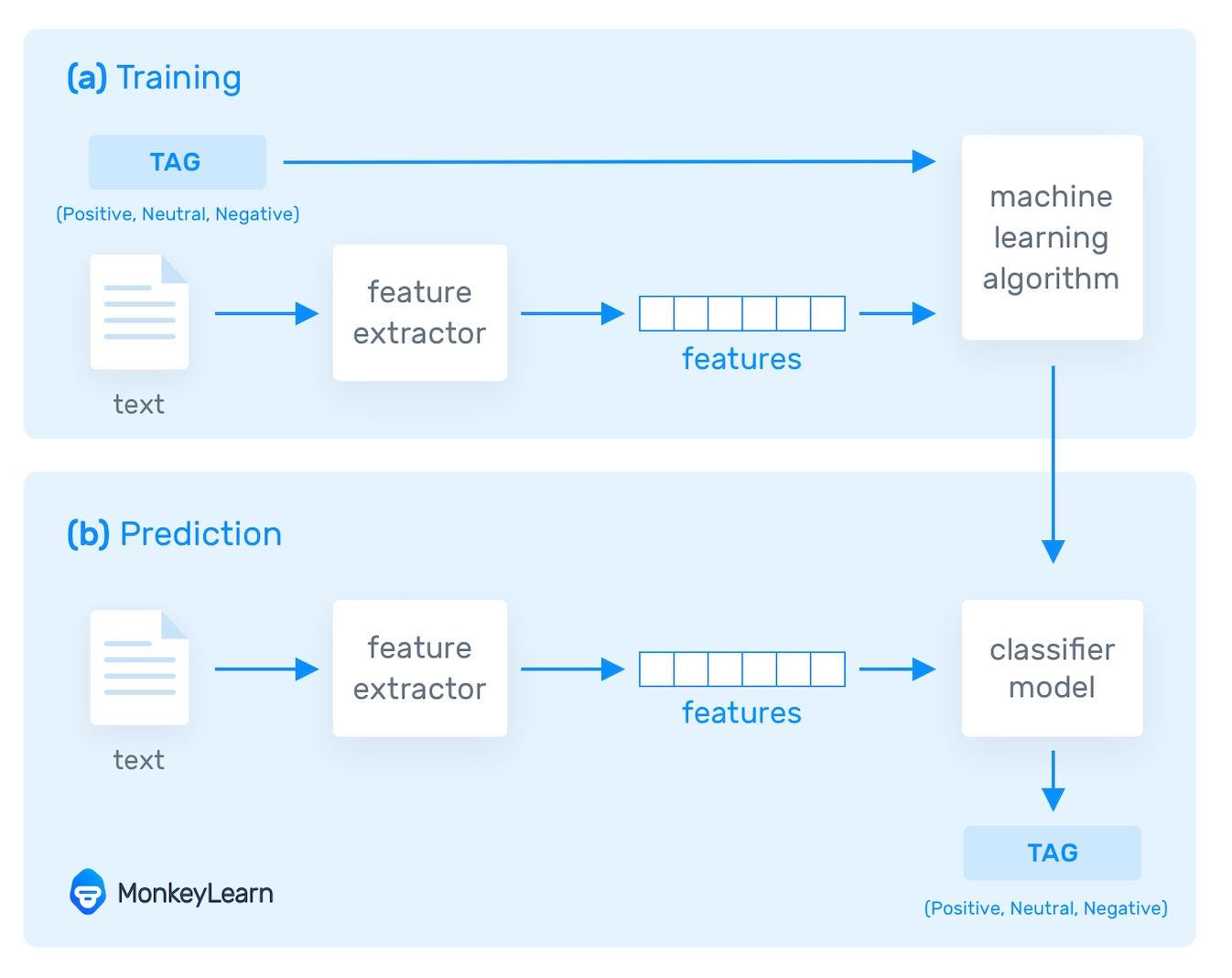
NLP tools convert text into something a machine can understand using text vectorization, and then ML algorithms are fed training data and expected outputs (tags) to train machines to make associations between a specific input and its corresponding output. Before making predictions for unseen data, machines use statistical analysis methods to build their own "knowledge bank" and determine which features best represent the texts.
The more data fed to these NLP algorithms, the more accurate the text analysis models will be in the end.
The ability of machine learning models to learn on their own, without the need for manual rules, is their most significant advantage. All you need is a set of relevant training data with a few examples for the tags you want to look at.
Data preprocessing is an important step in building a Machine Learning model, and the results are dependent on how well the data has been preprocessed.
Text preprocessing is the first step in the NLP model-building process.
The following are the various text preprocessing steps:
You must first break down the entire document into individual sentences. This can be accomplished by segmenting the article and its punctuation, such as full stops and commas. We can suppose that each English sentence represents a distinct thinking or idea. Writing a program to understand a single sentence will be far easier than understanding a whole paragraph. Splitting sentences apart anytime you see a punctuation mark is a straightforward way to code a Sentence Segmentation model. Modern NLP pipelines, on the other hand, frequently employ more advanced algorithms that operate even when a page isn't well-formatted.
For example:
You must get the terms in a sentence and explain them individually to our system for the algorithm to grasp them. As a result, you deconstruct your statement into its constituent words and save them. This is referred to as tokenizing, and each world is referred to as a token. We may now process each sentence individually after splitting our document into sentences.
Breaking this statement into individual words or tokens is the next stage in our pipeline. This is referred to as tokenization. The result is as follows:
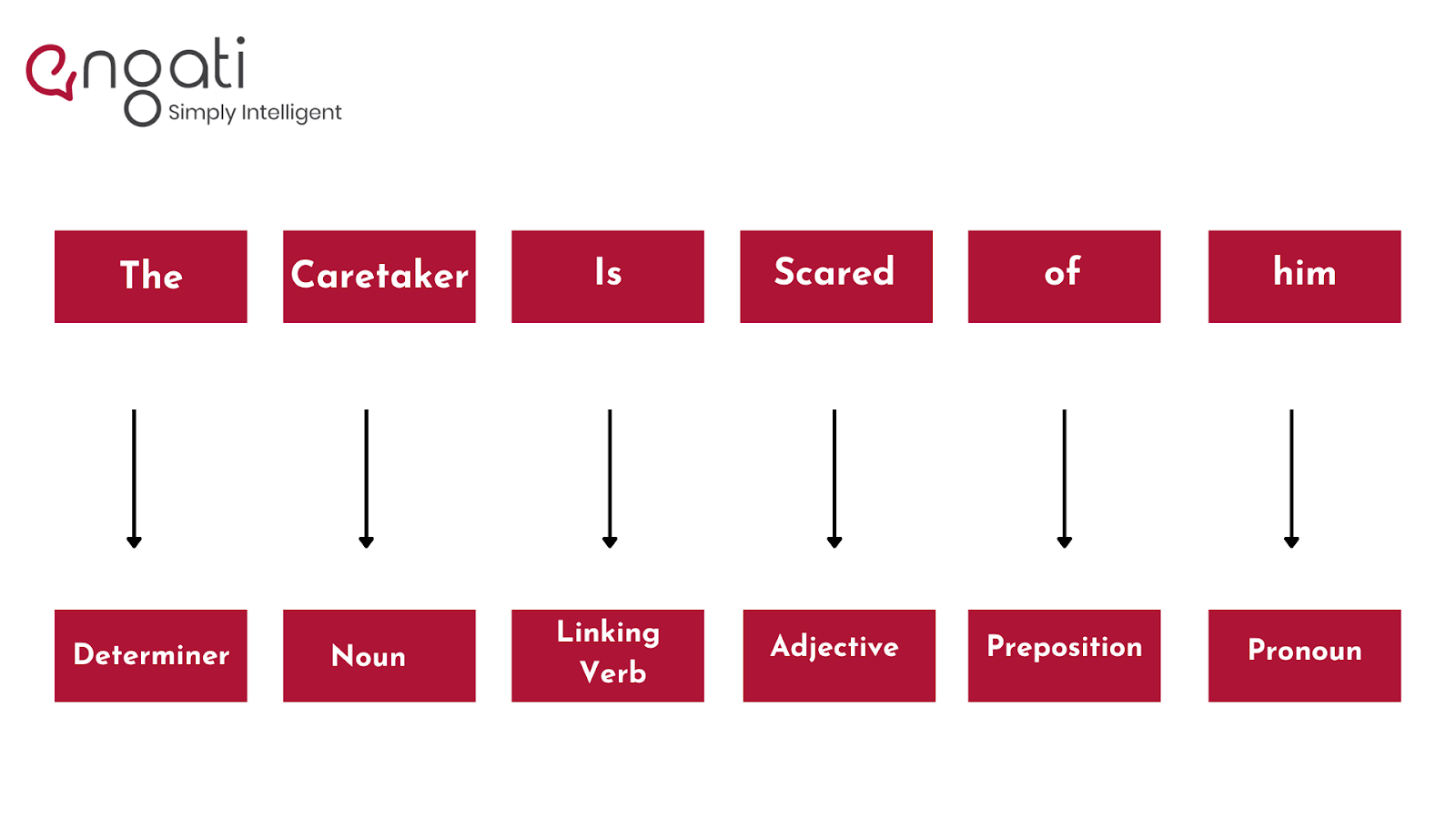
Then we'll examine each symbol to see which part of speech corresponds to which noun, verb, adjective, and so on. Knowing what each word in the sentence does will help us figure out what the sentence is about.
Stemming is the process of determining a word's Word Stem. When you add affixes to existing words, Word Stem generates new ones.
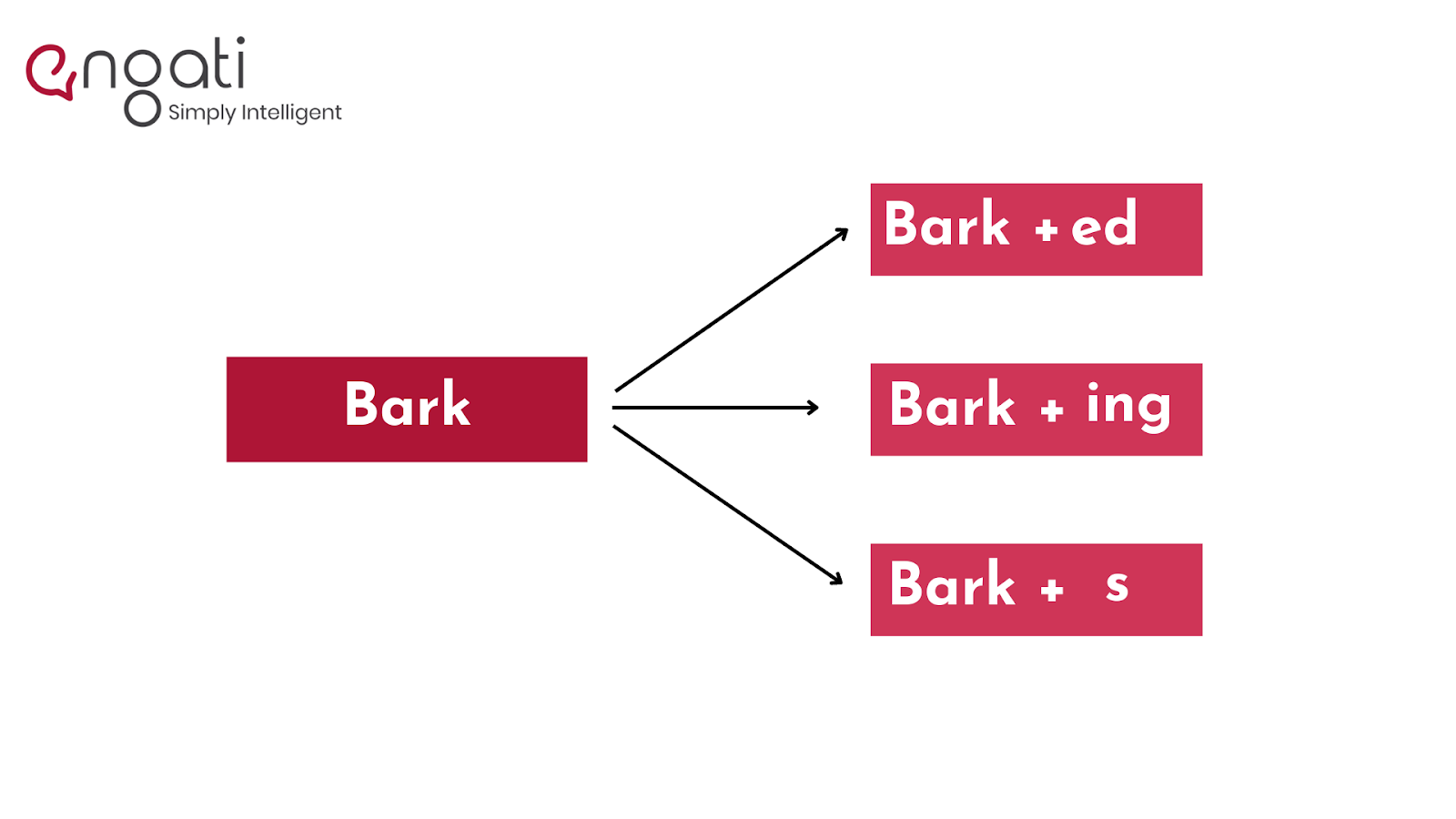
Lemmatization is usually accomplished by using a look-up table containing lemma forms of words depending on their part of speech, as well as some unique rules to deal with terms you've never seen before. The procedure for obtaining a word's Root Stem. The new base form of a word that is in the dictionary and from which the word is developed is given by Root Stem. You may also determine the root words for other terms based on tense, mood, gender, and other factors.
By adding these tags to our words, you must now explain the concept of nouns, verbs, articles, and other parts of speech to the machine. This is known as 'part of.'
Next, teach your machine to recognize pop-culture allusions and ordinary names by highlighting movie titles, important people or places, and so on that may appear in the document. This is accomplished by dividing the words into subcategories. This aids in the discovery of any keywords within a sentence. Person, place, monetary value, amount, organization, and movie are the subcategories.
After you've completed the preprocessing procedures, you'll use a machine learning method such as Naive Bayes to develop your NLP application.
The following step is to determine how all of the words in our phrases are related to one another. Dependency parsing is the term for this.
The goal is to create a tree that gives each word in the text a single parent word. The key verb in the phrase will be the tree's root.
NLP is one of the methods for humanizing robots and reducing the demand for manpower. Speech-related tasks and human contact have been automated as a result. NLP has a variety of applications, including:
Tools like Google Translate and Amazon Translate use natural language processing to translate sentences from one language to another.
Autocorrect will correct any spelling errors you make; in addition, grammar checkers will assist you in writing properly.
Chatbots are automated responses to popular questions that may be found on most websites.
Virtual assistants such as Siri, Cortana, Google Home, Alexa, and others can not only converse with you but also understand your requests.
Have you ever discussed a product or service with a friend or just googled something and then started seeing advertisements for it? This is known as tailored advertising, and it may help merchants earn a lot of money by allowing them to contact niche audiences at the perfect time.
Whatsapp Marketing
Learn how to create a WhatsApp bot in 5 minutes with easy steps. Discover WhatsApp integration tips, explore use cases & get a chatbot demo with free trail.
Product
Engati launches an All-in-one engagement app for Shopify stores that transforms conversations to conversions powered by Conversational Automation & Intelligence
Business Transformation
25 best free Shopify apps to increase sales and be a successful owner, or If you're just getting started with a new or looking to enhance your existing store.