Drive to Reimagine
8 ways chatbots in banking can improve customer engagement
HDFC, TMNF & 100 others have deployed banking chatbots that give customers financial advice on how to invest, provide info on nearest ATM, account balance
Pattern matching is the technique that identifies specific patterns or sequences or a combination of characters within a larger piece of information.
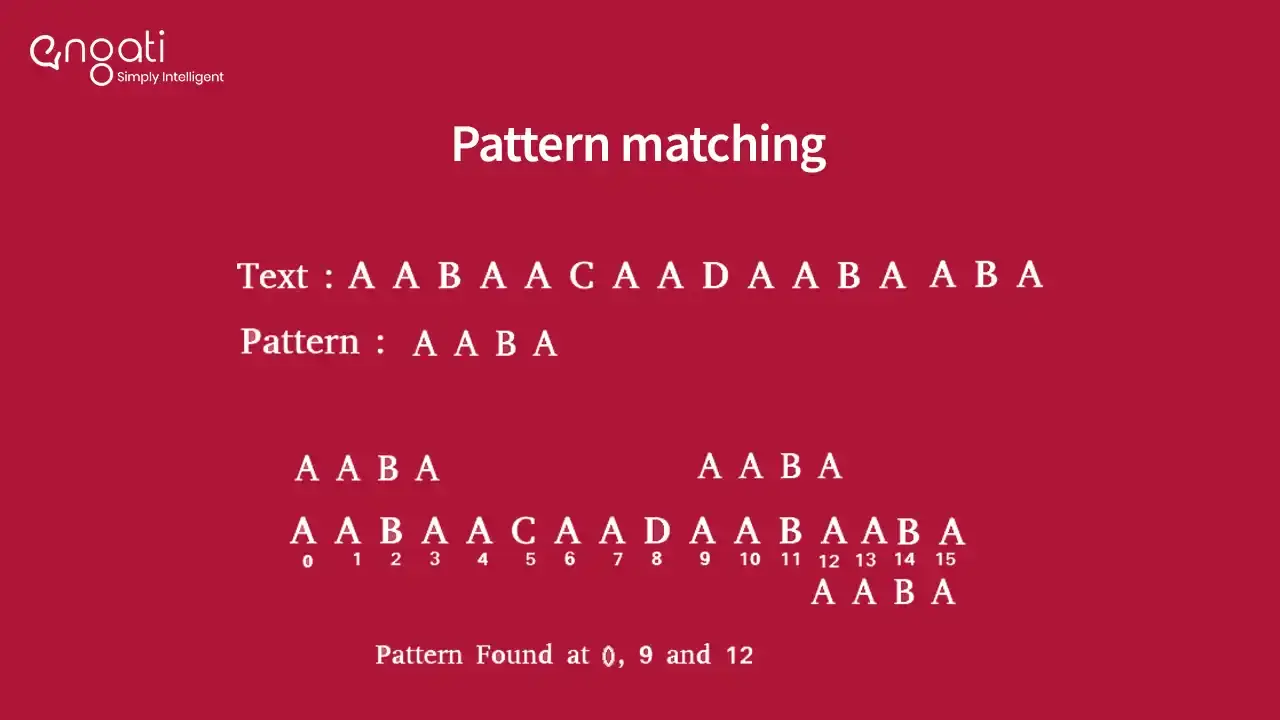
Take an example of searching for a specific word in the book. You can use pattern matching to find all instances of that word present in the book.
Applications of pattern matching include identification of phrases within the larger text, finding specific shapes within an image, distinguish sound patterns in the spoken language, search all instances of a particular gene within the larger set of DNA sequences, etc.
Basically, pattern matching helps us in information retrieval from complex datasets, for implementing in fields such as data science, machine learning, & bioinformatics.
A regular expression (rational expression) is a sequence of characters that defines a search pattern that is used to match patterns of characters within a larger piece of text.
For example - if you want to search "Voila" in a piece of text, you can use the regular expression /voila/ to define the search pattern.
Regular expressions can also be used to match the patterns of characters based on some specific rules or constraints - for e.g. - characters that occur within parentheses, or the characters that are followed by a punctuation mark.
Regular expressions are used in many programming languages & text editors, as they allow for sophisticated searches & manipulations of text data. Common applications include text processing, programming, data mining, data validation & natural language processing.
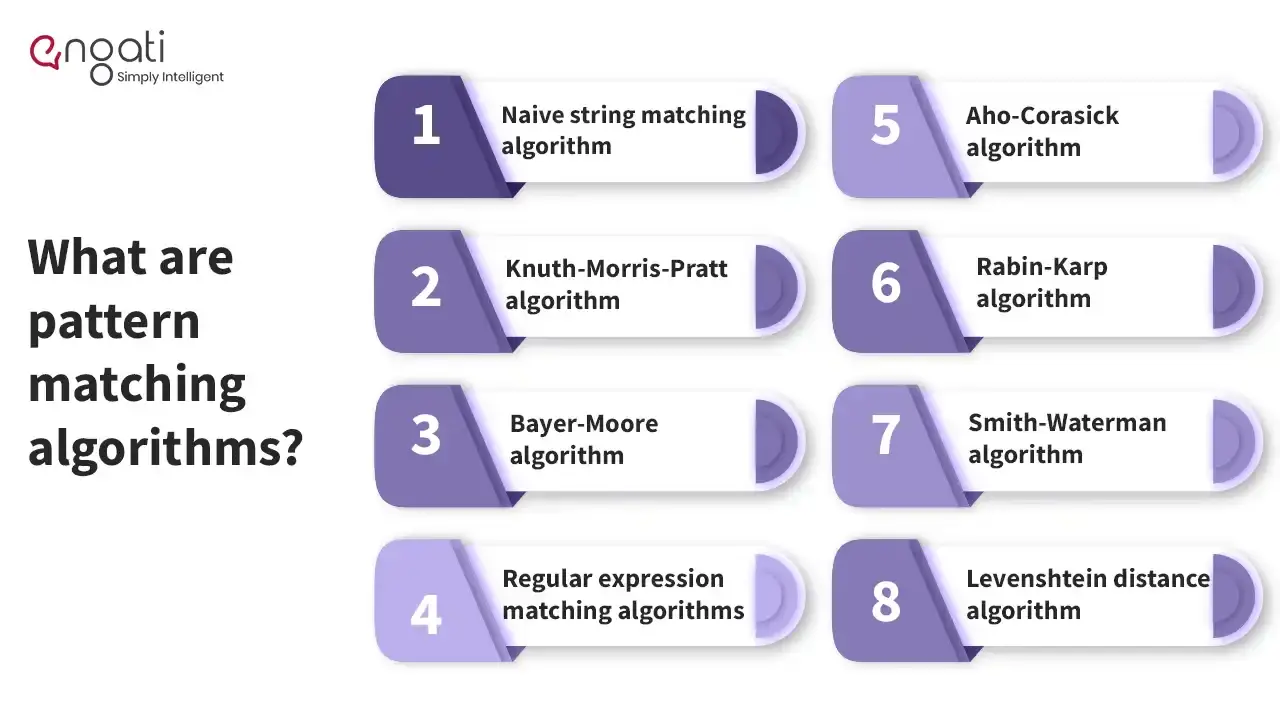
Pattern matching algorithms are the algorithms that are designed to search for specific patterns within the larger dataset.
The most common pattern matching algorithms are:
1. Naive string matching algorithm - compares character by character. Slow & inefficient for large data sets.
2. Knuth-Morris-Pratt algorithm - compares the structure of the search pattern. Faster for large data sets.
3. Bayer-Moore algorithm - scans the pattern from right to left using pre-computed tables to determine the next possible match location.
4. Regular expression matching algorithms - designed specifically for matching patterns defined by regular expressions.
5. Aho-Corasick algorithm - searches multiple patterns in a single pass.
6. Rabin-Karp algorithm - computes a hash value for the search pattern, & then compares this hash value to the hash values of all possible patterns in the text.
7. Smith-Waterman algorithm - scores all possible alignments between two sequences & then identifies the highest-scoring alignment.
8. Levenshtein distance algorithm - computes the edit distance between two sequences, where each edit is a deletion, insertion, or substitution of a single character. Generally used in spell-checking & auto-correction.
By using these pattern matching algorithms in data structure, we can accurately & efficiently match the patterns in complex data sets.
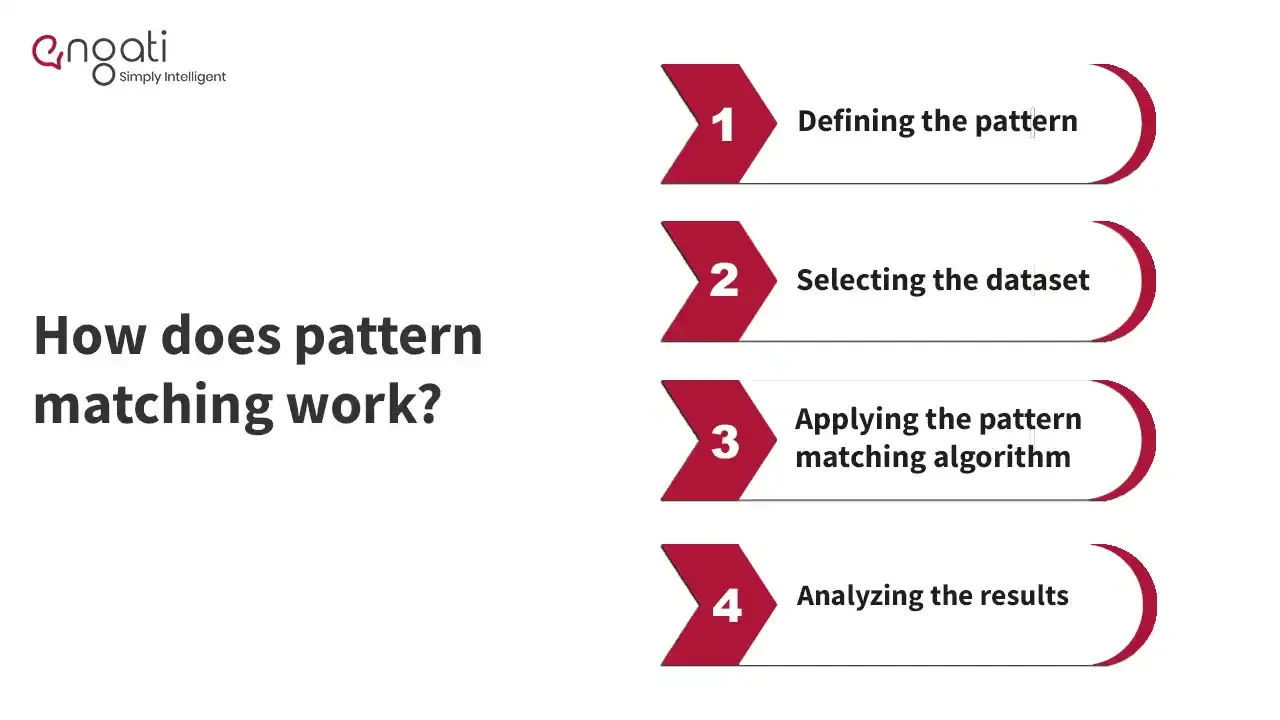
Here are the steps:
With regards to machine learning, pattern matching is generally used in developing predictive models that are able to make accurate predictions based on the input data.
Common pattern matching approaches in machine learning are - Supervised learning, Unsupervised learning, & Reinforcement learning.
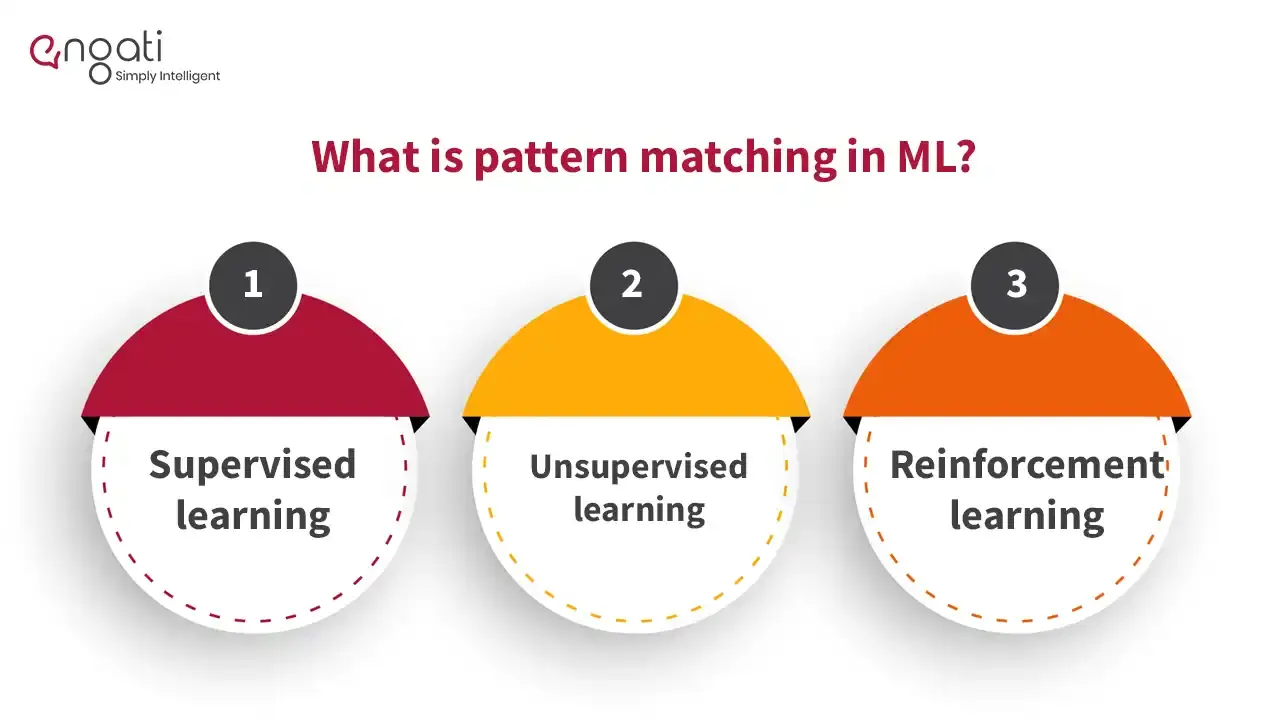
1. Supervised learning - The machine learning algorithm is trained on a labelled dataset, where each data point is associated with a specific label or output.
2. Unsupervised learning - The machine learning algorithm is trained on an unlabelled dataset, where no output labels are provided.
3. Reinforcement learning - The machine learning algorithm learns through the method of trial & error. The algorithm makes the prediction, receives the feedback, and them implements it again for the next prediction.
Using pattern matching in machine learning, we can develop predictive models that can be used in image recognition, image analysis, natural language processing, fraud detection, predictive maintenance, etc.
Drive to Reimagine
HDFC, TMNF & 100 others have deployed banking chatbots that give customers financial advice on how to invest, provide info on nearest ATM, account balance

Drive to Reimagine
To reap all the benefits of chatbot technology and implement it properly, you first need to understand their potential, the advantages and their limits.

Drive to Reimagine
Chatbot trends for 2023 are out and we've listed down the top 10 chatbot trends that will help you grow your business like never before! Read more here!