Tech Corner
Stay ahead of the Machine Learning curve
In this blog, we’ll see what machine learning is all about. How is it growing big globally. How are businesses stepping up their game with machine learning.
In mathematical logic, particularly, first-order logic and propositional calculus, satisfiability and validity are elementary concepts of semantics. A formula is satisfiable if there exists a model that makes the formula true. A formula is valid if all models make the formula true. The opposites of these concepts are unsatisfiability and invalidity, that is, a formula is unsatisfiable if none of the models make the formula true, and invalid if some such models make the formula false. These four concepts are related to each other in a manner exactly analogous to Aristotle's square of opposition.
The four concepts can be raised to apply to whole theories:
It is also possible to consider only interpretations that make all of the axioms of a second theory true. This generalization is commonly called satisfiability modulo theories.
The question whether a sentence in propositional logic is satisfiable is a decidable problem, or a boolean satisfiability problem. In general, the question whether a sentence of first-order logic is satisfiable is not decidable. In universal algebra and equational theory, the methods of term rewriting, congruence closure and unification are used to attempt to decide satisfiability. Whether a particular theory is decidable or not depends whether the theory is variable-free or on other conditions
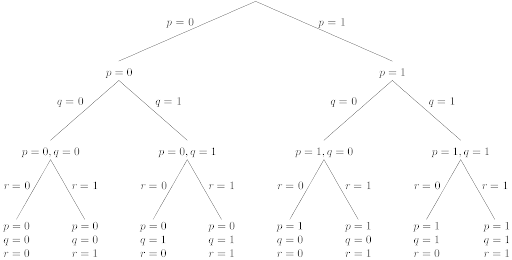
In practice, many automated reasoning problems in Propositional Logic are first reduced to satisfiability problems and then by using a satisfiability solver. Today, SAT solvers are commonly used in hardware design, software analysis, planning, mathematics, security analysis, and many other areas.

Tech Corner
In this blog, we’ll see what machine learning is all about. How is it growing big globally. How are businesses stepping up their game with machine learning.
Future of CX
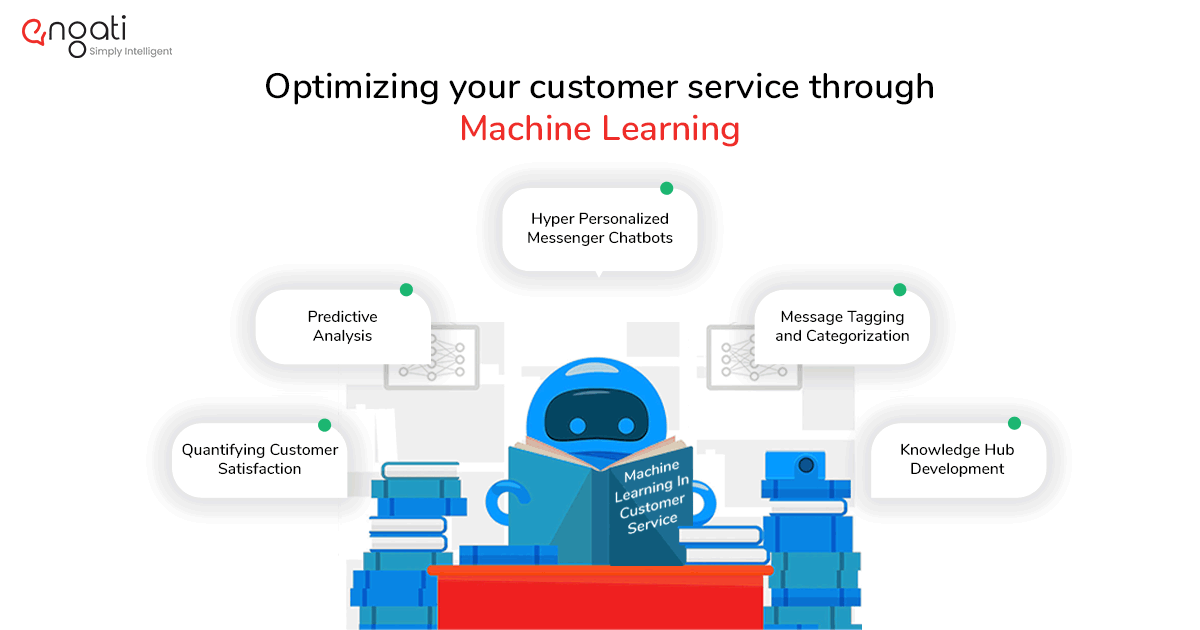
The use of machine learning is increasing as businesses explore new ways to optimize customer service. Here are a couple of ways to use it in your business.
Tech Corner
Looking for a cheatsheet to tune your Hyper-Parameters in Machine Learning and Neural Network Algorithms? We've got you covered! Click here to learn more.