All Categories
WhatsApp AI for Re-Engaging Dormant Leads: A Playbook
Learn how to use WhatsApp AI to re-engage dormant leads, revive stalled conversations, boost conversions, and turn missed opportunities into revenue..
Entity extraction is a fundamental task in natural language processing (NLP) that involves identifying and extracting specific pieces of information, or entities, from unstructured text. These entities can range from simple elements like names of people, organizations, or locations, to more complex types such as dates, numerical values, or even relationships between entities.
The goal of entity extraction is to transform raw text into structured data that computers can analyze and interpret. This process not only aids in information retrieval and content organization but also facilitates deeper insights and understanding from large volumes of textual data.
Various techniques are employed for entity extraction, including rule-based systems, statistical models, and machine learning algorithms like Named Entity Recognition (NER).
As NLP technology advances, the accuracy and efficiency of entity extraction continue to improve, enabling more sophisticated analysis and decision-making capabilities in both business and research contexts.
Entity extraction plays a crucial role in enhancing the functionality and effectiveness of chatbots across various industries. Here are the key reasons why entity extraction is important in chatbots:
1. Accurate Understanding of User Intent: Chatbots need to accurately understand what users are asking or requesting. Entity extraction helps in identifying key entities such as dates, locations, products, or names within user queries. This allows chatbots to provide more precise and relevant responses tailored to the user's needs.
2. Personalized Responses: By extracting entities such as user preferences, locations, or past interactions, conversational AI can personalize responses and recommendations. For instance, in an ecommerce chatbot, entity extraction can identify product preferences or previous purchase history to suggest relevant items or promotions.
3. Efficient Task Automation: Many user queries involve actions that require specific information to be extracted. For example, booking a flight might require extracting the destination, date of travel, and passenger details. Entity extraction automates tasks by parsing the relevant information from the user's input, making the interaction faster and more efficient.
4. Contextual Understanding: Entities provide context to user queries. Chatbots equipped with entity extraction capabilities can understand and respond appropriately to nuanced queries that involve multiple parameters or conditions. For instance, understanding both the departure and arrival locations in a travel query helps the chatbot provide accurate travel options and schedules.
5. Improved User Experience: Accurate entity extraction leads to more accurate and relevant responses, which ultimately enhances the overall user experience. Users receive answers that are directly related to their queries without the need for extensive clarification or repetition, leading to higher satisfaction and engagement with the chatbot.
6. Enhanced Automation and Scalability: With entity extraction, chatbots can handle a wider range of queries and tasks autonomously. This scalability is essential for businesses looking to deploy chatbots across different channels and handle large volumes of customer interactions effectively.
Here are some of the main techniques used for entity extraction:
1. Rule-Based Systems: These systems use predefined rules to find entities based on patterns in the text. For example, they might look for combinations like "noun followed by a proper noun" to identify names of people or organizations.
2. Statistical Models: These models use probabilities and patterns from data to identify entities. They learn from examples to recognize things like names, dates, or locations in text based on statistical patterns they've seen before.
3. Machine Learning Models : These models are trained on labeled data to recognize different types of entities, such as names of people, companies, or places. They use algorithms like BERT or LSTM to understand context and identify entities accurately.
4. Dictionary-Based Approaches: These methods use predefined lists or dictionaries to match words in text with known entities. For example, a dictionary might contain names of companies, and the system matches these names to find company entities in text.
5. Hybrid Approaches: These combine different techniques for more accurate entity extraction. For instance, they might use rules to find potential entities and then use machine learning models to verify and classify them.
6. Deep Learning Approaches: These techniques use advanced neural networks to understand complex patterns in text. They can capture relationships between words and context to identify entities accurately, even in varied or complex sentences.
Entity extraction plays a pivotal role in chatbot automation across various applications, enhancing functionality and improving user interactions. Here are key applications of entity extraction in chatbot automation:
1. Intent Recognition: Chatbots use entity extraction to identify specific entities (such as product names, dates, locations) within user queries. This helps in accurately understanding user intent and providing relevant responses or actions.
2. Personalization: By extracting user preferences, locations, or previous interactions from queries, chatbots can personalize responses. This enhances user experience by tailoring interactions based on individual needs and history.
3. Transaction Processing: In ecommerce or banking applications, entity extraction helps chatbots handle transactions by extracting details like product names, quantities, payment information, and shipping addresses from user inputs.
4. Appointment Scheduling: Chatbots can use entity extraction to understand and schedule appointments by extracting dates, times, and participant names mentioned in user queries.
5. Customer Support: Entity extraction assists in routing customer inquiries to the appropriate department or agent based on extracted entities like issue keywords or customer account details.
6. Content Recommendations: Chatbots can use entity extraction to recommend relevant content or products by understanding user interests and preferences extracted from conversation context.
7. Feedback Analysis: Entities extracted from user feedback help in analyzing sentiment, identifying key topics or issues, and providing actionable insights for improving products or services.
8. Compliance and Data Security: Entity extraction ensures sensitive information (such as personal data or financial details) is identified and handled securely and in compliance with data protection regulations.
9. Multi-Language Support: Chatbots utilize entity extraction for multilingual support by extracting and translating entities between different languages, enabling seamless communication with global users.
10. Analytics and Reporting: Entity extraction provides data for analyzing chatbot performance, including metrics like entity recognition accuracy, user engagement with extracted entities, and overall effectiveness in fulfilling user intents.
Here’s a general guide to implementing entity extraction:
1. Define Entity Types: Identify and define the types of entities you need to extract based on your application requirements. Common types include names (person, organization), locations, dates, numerical values, products, etc.
2. Choose an Approach:
3. Data Collection and Annotation:
4. Model Training:
5. Integration:
6. Testing and Evaluation:
7. Deployment and Monitoring:
8. Security and Compliance:
9. Continuous Improvement:
Here are some common challenges and solutions:
1. Ambiguity and Context Dependency:
2. Variability in Entity Names:
3. Handling New or Rare Entities:
4. Multilingual Entity Recognition:
5. Noise and Irrelevant Information:
6. Scalability and Performance:
7. Data Privacy and Security:
The future of entity extraction holds promising developments driven by advancements in artificial intelligence, natural language processing (NLP), and data processing capabilities.
1. Enhanced Accuracy and Context Awareness: Future entity extraction systems will leverage more sophisticated algorithms and models, such as deep learning architectures like Transformers (e.g., BERT, GPT), to achieve higher accuracy in understanding and extracting entities from complex text data. These models will be trained on larger and more diverse datasets, enabling them to grasp nuanced contextual clues and handle ambiguous references more effectively.
2. Multilingual and Cross-Lingual Capabilities: As businesses and interactions become increasingly global, entity extraction systems will evolve to support multilingual and cross-lingual scenarios seamlessly. Advances in machine translation and multilingual NLP will enable entities to be recognized and translated accurately across different languages, facilitating global communication and engagement.
3. Integration with Knowledge Graphs and Semantic Understanding: Future systems will integrate entity extraction with knowledge graphs and semantic understanding frameworks. This integration will enable deeper insights by linking extracted entities with structured knowledge representations, enhancing the understanding of relationships and contexts within textual data.
4. Contextual Adaptation and Personalization: Entity extraction systems will become more adept at adapting to specific domains and user contexts. They will incorporate personalization techniques to tailor entity recognition and responses based on individual preferences, historical interactions, and user profiles, thereby improving user experience and engagement.
5. Real-Time and Adaptive Learning: Advances in computing power and real-time processing capabilities will enable entity extraction systems to operate faster and more dynamically. These systems will continuously learn from new data inputs and user interactions, adapting their entity recognition capabilities in real-time to reflect evolving language patterns and user behaviors.
6. Privacy and Ethical Considerations: With growing concerns around data privacy and ethics, future entity extraction technologies will prioritize compliance with regulations and ethical guidelines. They will incorporate robust mechanisms for anonymization, consent management, and secure handling of sensitive information during entity extraction processes.
7. Integration with Intelligent Automation: Entity extraction will play a pivotal role in driving intelligent automation across various industries. It will be integrated into broader automation workflows, enabling automated decision-making, personalized recommendations, and proactive customer service based on extracted entities and insights.
All Categories
Learn how to use WhatsApp AI to re-engage dormant leads, revive stalled conversations, boost conversions, and turn missed opportunities into revenue..

Conversation AI
Explore the rise of silent commerce and how customer preferences are shifting toward messaging, while voice continues to play a key role in engagement.
AI Agents
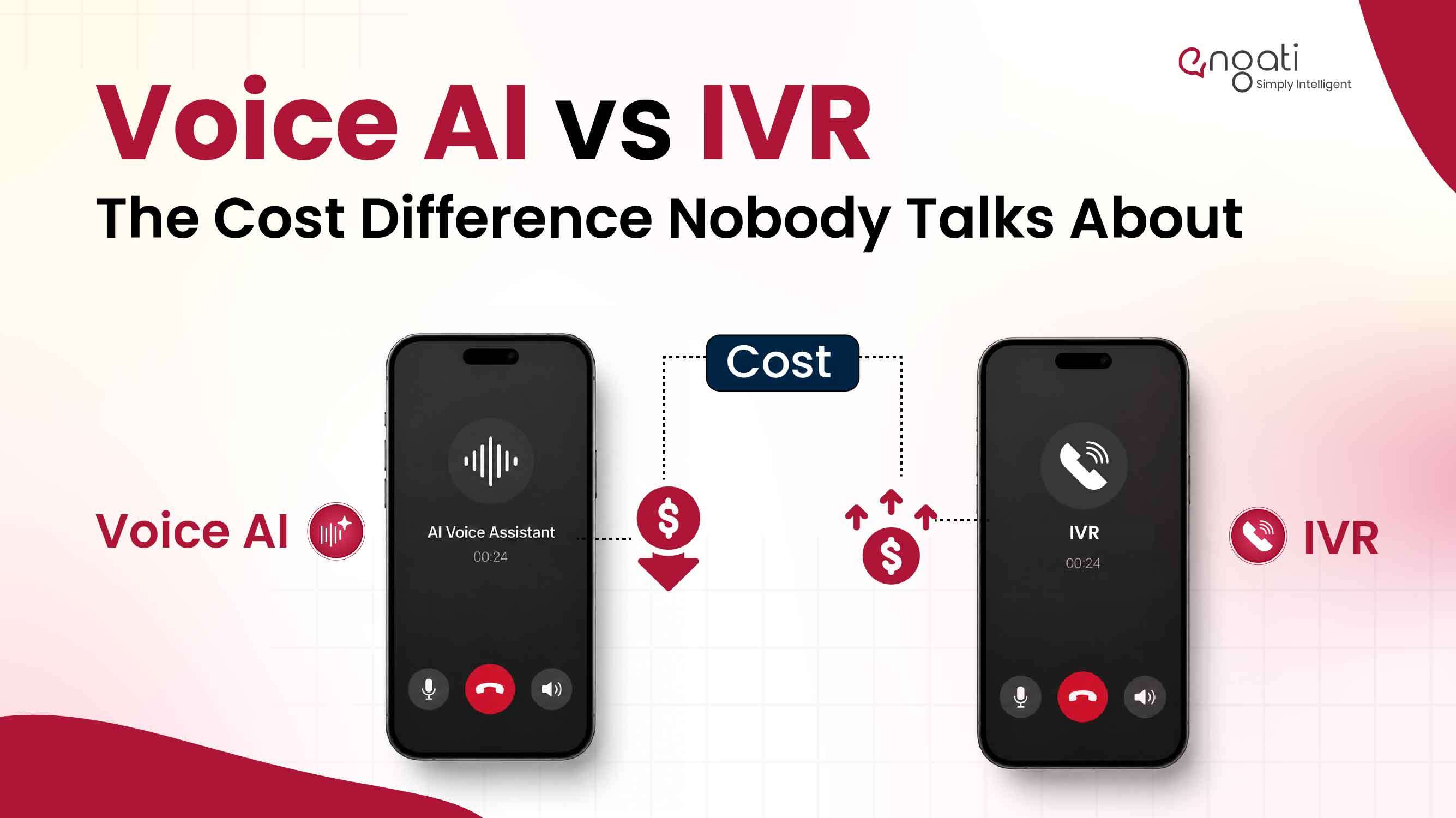
Compare Voice AI and IVR costs beyond setup and licensing. Learn how automation, containment rates, customer experience, and scalability impact ROI for you.