Tech Corner
What is Generative AI? The Ultimate guide (2025)
What is Generative AI? How are DALL-E, nightcafe ai, ChatGPT related to it? What can it do (or rather not do). Here's the only guide you need on Generative AI
With everything turning digital, Cyber Security threats have been growing each day. And a common problem for every IT Security professional right now, is how to prevent these fraudulent activities and save billions of dollars annually ?
To prevent cyber threats, it is necessary to analyse all the data and detect any such risks. That is exactly where AI comes in and simplifies this tiresome process of data analysis, data screening as well as detecting any risks. In this blog we will understand the use of AI in Cybersecurity closely.
AI in cybersecurity refers to the application of artificial intelligence technologies to enhance the protection of digital systems and data from cyber threats. It utilizes machine learning, neural networks, and other AI techniques to detect, prevent, and respond to cyber attacks more efficiently and effectively. AI is employed in threat detection and response by learning normal network behavior to identify anomalies, conducting behavioural analysis to detect suspicious activities, and enabling real-time monitoring for immediate threat identification.
Role of AI in cybersecurity is to anticipate potential vulnerabilities and future attacks via predictive analytics, while automated threat hunting reduces the workload on cybersecurity professionals by identifying threats within a network. AI aids in incident response by quickly analyzing attacks, suggesting remediation steps, and automating responses to mitigate damage. It improves phishing and malware detection through machine learning algorithms that analyze email content, sender behavior, and software characteristics to identify and block threats. AI enhances Security Information and Event Management (SIEM) systems by correlating and analyzing security data to provide actionable insights and reduce false positives.
Additionally, AI improves Identity and Access Management (IAM) systems by continuously monitoring and adjusting access controls based on user behavior and risk levels. Overall, AI makes cybersecurity efforts more efficient, accurate, and scalable, allowing organizations to better defend against sophisticated cyber threats, though it also introduces new challenges as adversaries may use AI for advanced attacks. Thus, ongoing research and adaptation are crucial in the AI-cybersecurity landscape.
Here are 7 reasons that make AI application in cybersecurity important:
1. Enhanced Threat Detection: AI systems can analyze vast amounts of data quickly to identify anomalies and potential threats that might be missed by traditional methods. This capability is crucial for identifying sophisticated and emerging threats in real time.
2. Improved Response Time: AI can automate responses to certain types of cyber incidents, reducing the time between detection and mitigation. This rapid response helps limit the damage caused by cyberattacks.
3. Proactive Defense: AI enables predictive analytics, allowing organizations to anticipate and prepare for potential cyber threats before they occur. This proactive approach enhances overall security posture.
4. Handling Complexity: Modern cyber threats are increasingly complex and can involve multiple attack vectors. AI can integrate and analyze diverse data sources, providing a comprehensive view of the threat landscape and enabling more effective defense strategies.
5. Reducing Workload for Security Teams: By automating routine and time-consuming tasks such as threat hunting, monitoring, and incident response, AI allows cybersecurity professionals to focus on more strategic activities, improving overall efficiency and effectiveness.
6. Scalability: AI solutions can scale to handle large volumes of data and an increasing number of devices connected to networks, maintaining robust security in the face of growing digital infrastructure.
7. Adaptive Learning: AI systems can continuously learn from new data and past incidents, improving their ability to detect and respond to threats over time. This adaptive capability ensures that security measures evolve alongside emerging threats.
Overall, AI enhances the ability to protect digital assets by providing faster, more accurate, and scalable solutions to combat the ever-evolving landscape of cyber threats.
Cybersecurity comes with its set of unique threats, which include:
AI and machine learning are increasingly important for prevention against cybersecurity threats, they can analyse large amounts of data to detect risks like phishing and malware.
However, cyber criminals can modify malware code to evade detection. ML is ideal for anti-malware protection since it can draw on data from previously detected malware to detect new variants. This works even when dangerous code is hidden within innocent code. AI-powered network monitoring tools can track user behavior, detect anomalies, and react accordingly.
These technologies can stop threats in real-time without interfering with business processes and can track data that escapes human sight, such as videos, chats, emails, and other communications.
The goal of artificial intelligence is to replicate human intelligence, and it has significant potential in the field of cybersecurity. AI systems can be trained to detect threats, identify new types of malware, and safeguard sensitive data, which could be extremely beneficial if implemented effectively.
According to TechRepublic, mid-sized companies receive over 200,000 alerts for cyber events each day, and a team of human experts cannot possibly address all of them. Consequently, certain threats are likely to go unnoticed, leading to significant network damage. To overcome these challenges, businesses seeking to succeed in the digital world must rely on AI and other advanced technologies to bolster their cybersecurity defenses.
This article explores the uses and the benefits of AI in cyber security.
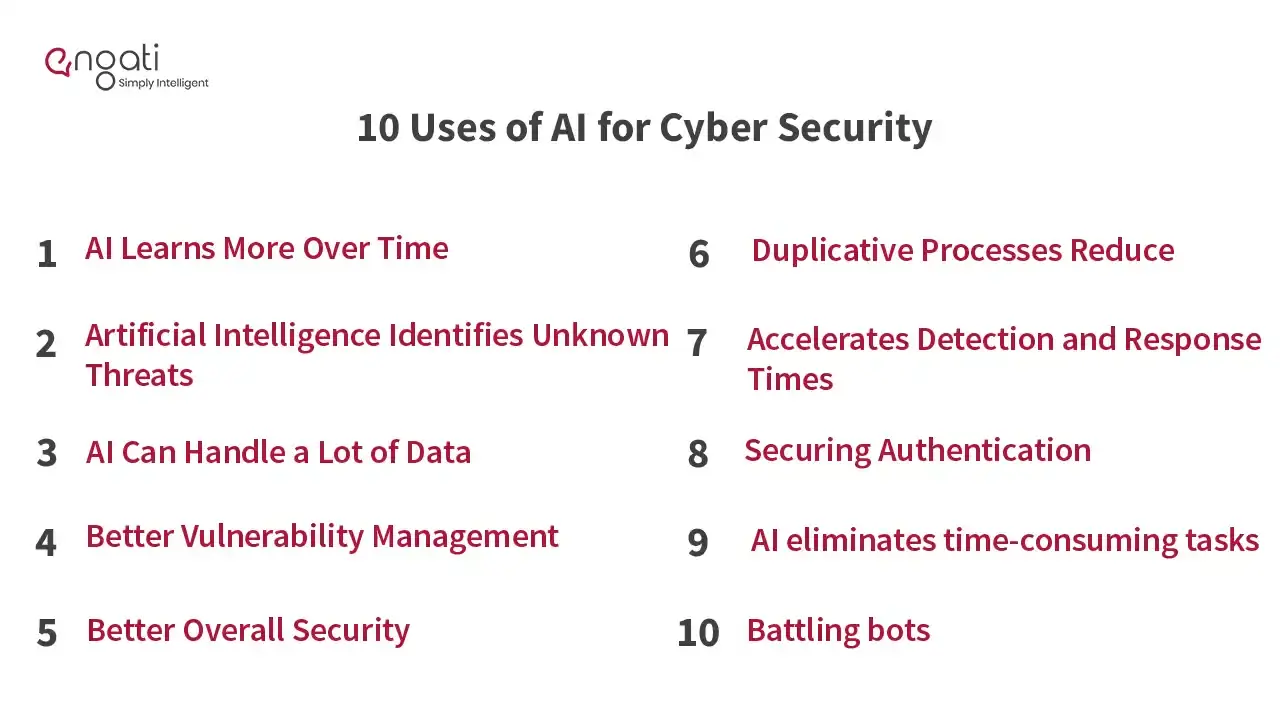
Here are top 10 uses the uses of AI for cyber security let's check them out:
Identifying all potential threats to a company can be overwhelming due to the ever-changing tactics of hackers. This makes it crucial to adopt modern solutions like AI to effectively identify and prevent unknown threats, which can cause severe damage if undetected.
A company's network generates a vast amount of traffic, making it difficult for cybersecurity personnel to manually review all activity for potential threats. The use of AI automatically scans and identifies disguised threats, streamlining the detection process and enhancing protection.
AI uses machine learning and deep learning techniques to analyze network behavior and identify deviations or security incidents from the norm. This allows for immediate response and enhances future security measures by blocking potential threats with similar traits.
AI's constant learning process also makes it challenging for hackers to outsmart its intelligence.
It is essential to use AI in cyber security for managing network vulnerabilities, given the daily threats companies face. It analyzes existing security measures to identify weak points, enabling businesses to focus on critical security tasks. This improves problem-solving abilities and secures business systems faster than cybersecurity personnel.
Hackers constantly change their tactics, making it hard to prioritize security tasks. AI can help detect all types of attacks and prioritize prevention, even when dealing with multiple threats simultaneously. Human error and negligence can also pose security challenges, but AI's self-learning capabilities can make it well-equipped to handle them.
One of the main use case of AI in cyber security is that, it handle the monotonous and repetitive security tasks that can cause cybersecurity personnel to become complacent. It detects and prevents basic security threats regularly and performs thorough analysis to identify potential security holes.
With AI, businesses can ensure their network security best practices are consistently implemented without the risk of human error or boredom.
Integrating AI with cyber security enables quick detection and response to threats, saving your company from irreversible damage.
AI scans the entire system, identifies threats early, and simplifies security tasks compared to humans.
Websites with user account features or contact forms containing sensitive information require an additional security layer for protection.
AI provides this security layer by using tools like facial recognition, CAPTCHA, and fingerprint scanners to secure authentication during login attempts. This helps to detect fraudulent login attempts and prevent credential stuffing and brute force attacks, which could lead to a potential security breach on your network.
Another way that AI can help in cybersecurity is the way it eliminates time-consuming tasks done manually by human experts. It scans vast data and identifies potential threats and reduces false positives by filtering out non-threatening activities. This helps human experts focus on more critical security tasks.
Bots are a growing threat in cybersecurity, used for malicious activities like spreading malware and stealing data. AI can recognize and block bots by identifying their patterns, creating more secure captchas, and deploying honeypots to trap them.
Here are 14 applications of AI in cyber security:
AI is instrumental in strengthening data security by proactively identifying risks and mitigating potential threats. It analyzes access patterns to swiftly detect anomalies , such as unauthorized login attempts, and immediately flags or blocks suspicious activity. Advanced AI-driven encryption methods safeguard sensitive data, ensuring secure communications and storage. Predictive analytics help identify system vulnerabilities, allowing proactive measures to prevent exploitation. Additionally, tools like DLP systems and IAM solutions minimize human error by automating security policies, ensuring compliance with standards like GDPR and HIPAA.
AI and ML transform cybersecurity by enabling systems to anticipate and neutralize threats before they materialize. Machine learning algorithms process vast datasets, identifying attack patterns and evolving as new threats emerge. Supervised learning helps identify known risks, while unsupervised models uncover previously undetected vulnerabilities. These technologies power AI-based solutions like phishing detection tools and fraud prevention systems. By continuously learning from new data, they provide organizations with adaptive, intelligent defenses capable of countering even the most sophisticated cyberattacks.
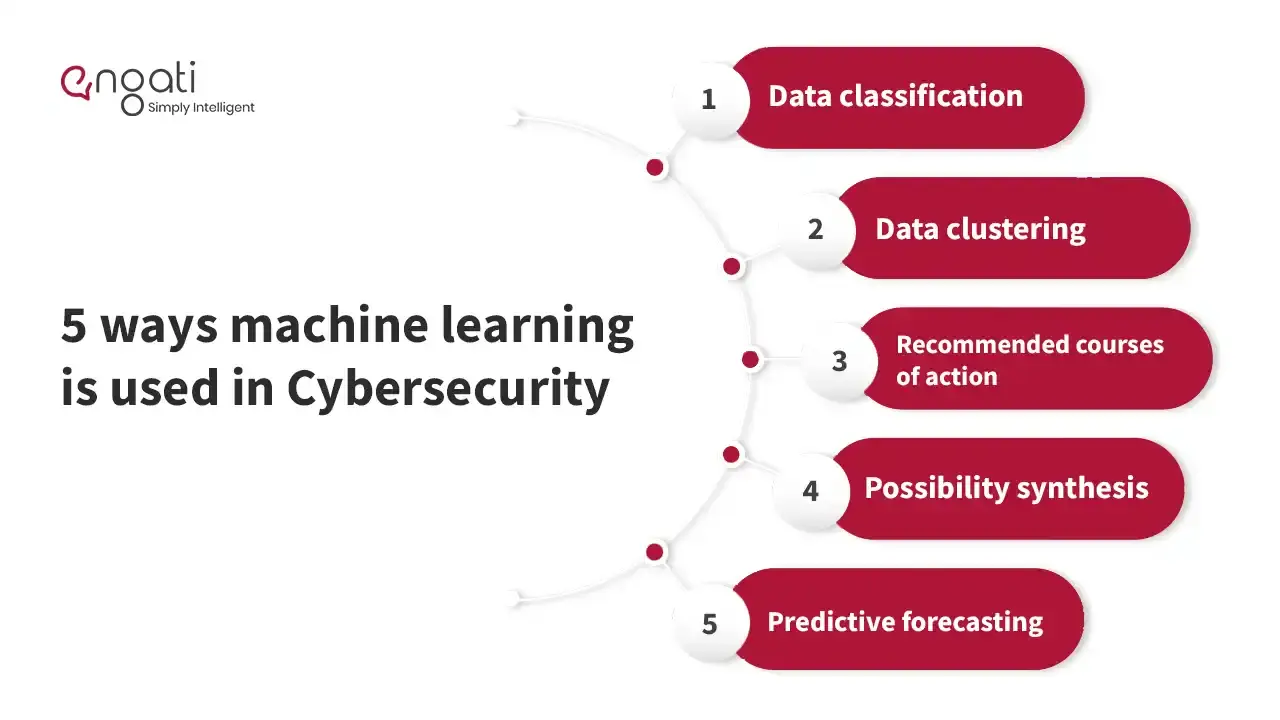
5 ways machine learning is used in cybersecurity:
AI in cybersecurity is advancing through innovations like adversarial AI, which strengthens defenses by simulating real-world attacks. Federated learning allows secure collaboration across organizations, improving AI models without compromising sensitive data. Researchers are integrating AI with quantum computing to develop robust cryptographic solutions that resist decryption attempts. Moreover, Explainable AI (XAI) is making cybersecurity solutions more transparent, enabling better decision-making. These improvements, coupled with collaborative efforts between tech leaders, are ensuring AI adapts swiftly to the ever-changing landscape of cyber threats.
Organizations can leverage AI by deploying advanced intrusion detection systems to monitor network traffic for unusual activities. AI-powered Security Orchestration, Automation, and Response (SOAR) tools automate threat management, reducing response times. Businesses can use AI for endpoint protection, securing devices against malware or ransomware attacks. AI also aids in real-time risk assessments, prioritizing vulnerabilities and suggesting mitigation strategies. Regularly updating AI systems with the latest threat data ensures resilience against emerging challenges, enabling comprehensive, proactive cybersecurity measures.
Artificial intelligence for cyber security has its own advantages as well as disadvantages. On one hand, it improves the analysis, understanding, and prevention of cybercrime, enhancing the trust and safety of companies and customers.
However, AI can be resource-intensive and not always practical, and it can also be used by cybercriminals to improve their attacks. One industry that benefits from AI is VPNs, as machine learning allows them to protect users from online threats posed by AI.
The use of AI has been a topic of discussion for some time, with the ability to analyze data quickly being a key advantage of AI technology. This was highlighted two years ago when we discussed how AI and machine learning would shape the future of cyber security.
To conclude with what is the main AI use case in Cybersecurity is that it's crucial in order to enhance IT security performance at an enterprise level. It provides analysis and threat identification that help security professionals minimize breach risk and prioritize risks, direct incident response, and identify malware attacks before they occur.
Despite potential downsides, AI will drive cybersecurity forward and improve organizations' security posture.
Food for thought-
Here are 50 Cybersecurity Influencers that are bringing a big change in the industry.
Tech Corner
What is Generative AI? How are DALL-E, nightcafe ai, ChatGPT related to it? What can it do (or rather not do). Here's the only guide you need on Generative AI
Drive to Reimagine
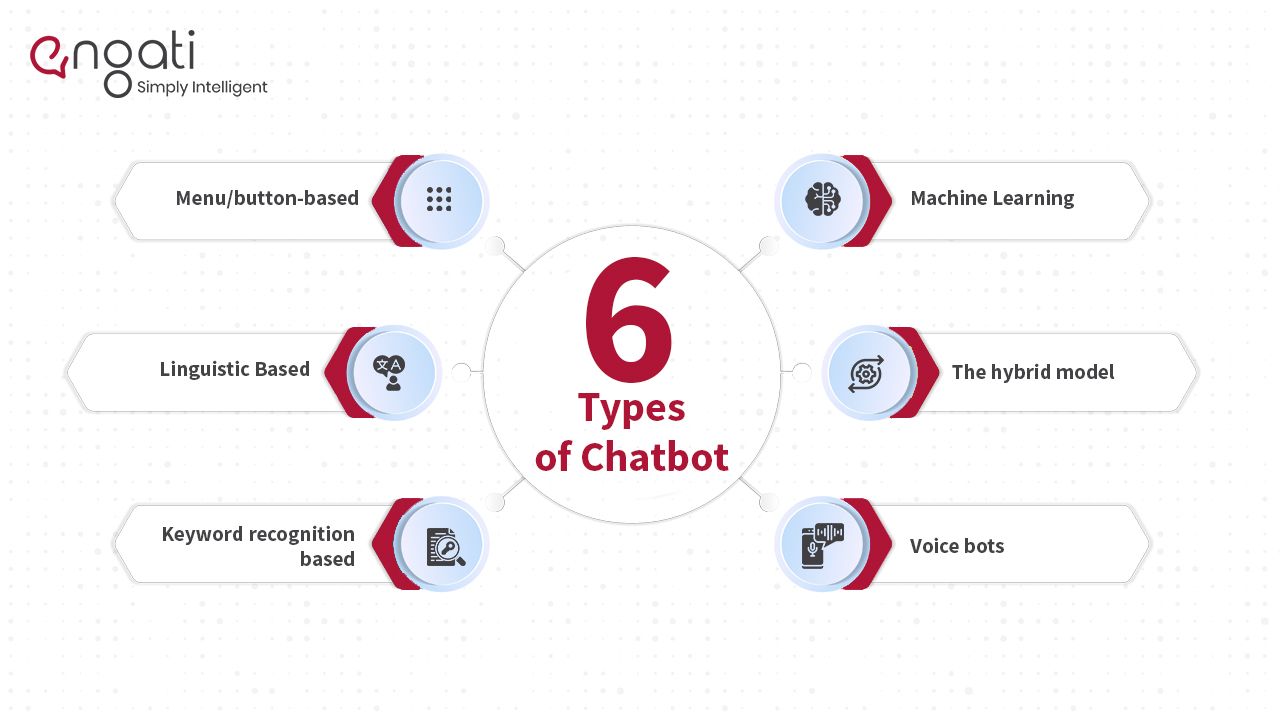
Discover what a chatbot is and the types of chatbot along with their diverse applications. Explore how our conversational AI solutions transform your business.
Drive to Reimagine
Artificial Intelligence can even help telecom companies to avoid crashes and reduce downtime, giving their customers a smoother and seamless experience.