Future of CX
6 Ways AI Can Boost Your Customer Centricity
AI can help you give your customers what they actually want, if you use it right. Learn how to use it to make your organization more customer-centric.
Artificial Intelligence (AI) is a branch of computer science that seeks to replicate human intelligence in a computer. It aims to allow machines to automate tasks that would usually need to be performed by humans.
It is a multidisciplinary science and is characterized by the systems having the ability to make rational decisions, picking actions that have the highest probability of allowing them to achieve specific goals.
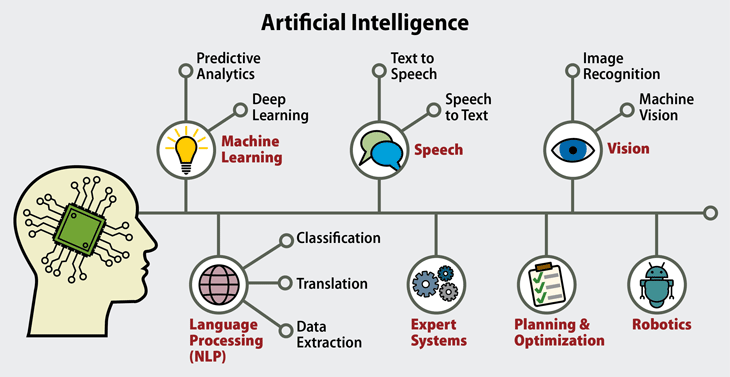
"It is the science and engineering of making intelligent machines, especially intelligent computer programs. It is related to the similar task of using computers to understand human intelligence, but AI does not have to confine itself to methods that are biologically observable."
- John McCarthy
The three types of artificial intelligence, based on the level of intelligence, are:
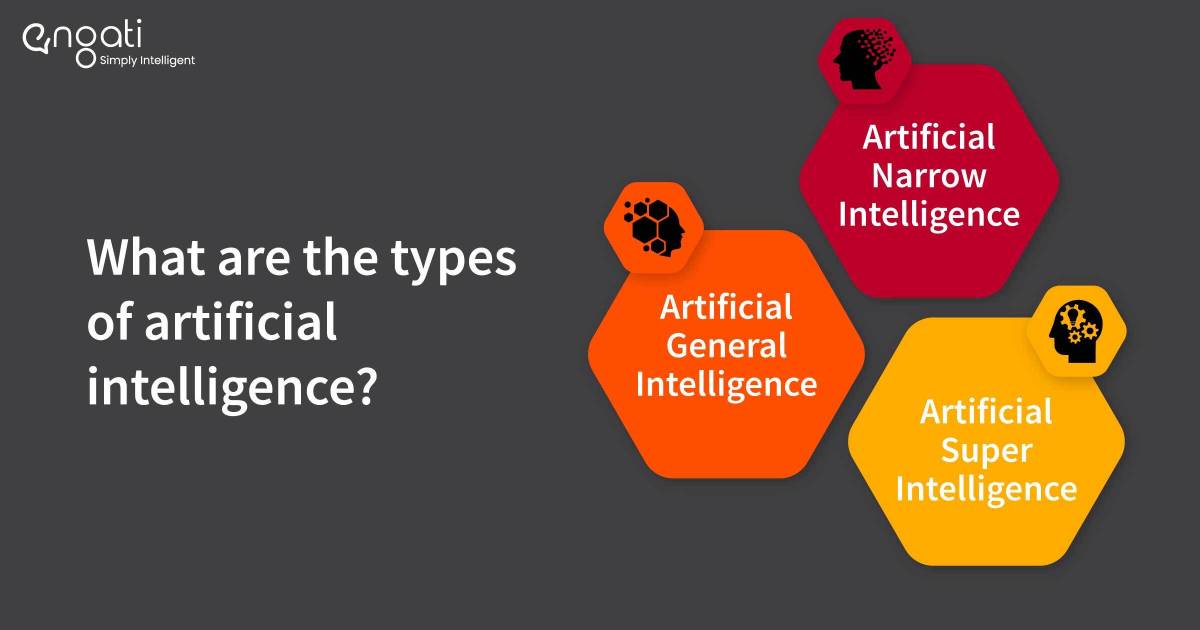
This is the artificial intelligence that is available now. Artificial narrow intelligence systems focus on one domain and are designed to solve specific problems and perform set tasks.
They have narrow capabilities and can even perform certain tasks more efficiently and effectively than humans can, but they can’t function outside of that area; they are only able to perform those specific tasks.
As of now, artificial general intelligence is still a hypothetical concept. It refers to AI systems that are as intelligent as humans and have the ability to think, understand things, solve problems, and perform tasks at the same level as humans do.
Artificial super intelligence is even further from the abilities of current AI systems than artificial general intelligence.
This refers to artificial intelligence that can think, comprehend, make decisions, and perform tasks even better than humans can. This is a concept that lies a very long time away in the extremely distant future.
Artificial Intelligence and AI-based machines can also be classified into four other categories, based on their likeness to the human mind, and their ability to think and feel like humans. These are:
Reactive machines are the earliest form of artificial intelligence systems. They have particularly limited capabilities. These AI systems mimic the ability of the human mind to react to various types of stimuli. Reactive machines do not have the ability to use previously gained experiences to guide the current actions and decisions. This limitations is because they do not possess memory-based functionality, thus making it impossible for them to learn.
These are essentially reactive machines that also have the ability to learn from historical data and make better decisions based on that data. Almost all modern AI-based systems are limited memory machines. They are trained using vast volumes of training data that they store in their memory and use to create a reference model that helps them solve future problems.
Chatbots, virtual assistants, deep learning systems, self driving cars and almost all other forms of AI available today are making use of limited memory AI.
Theory of Mind is the next level of AI that researchers are currently working on developing. Theory of Mind AI will be able to work better with users by understanding their emotional states, thoughts, needs, beliefs, etc.
This is supposed to be the final level of AI and only exists theoretically. This is essentially AI that has evolved to be so similar to the human brain that it has become self-aware. This type of artificial intelligence is not expected to be created for decades, or even centuries and is pretty much the ultimate objective of AI research. It could cause great progress for humanity, but there is also the chance that it could be dangerous.
The main goal or the primary objective of artificial intelligence is to make it possible for computer systems to carry out tasks that require intelligence, like problem solving, perception, decision making, human communication (in various languages, and even translating messages from one language to another), etc. This objective has been reached in many ways by automating several daily tasks, but it is still a long way off till we have artificial general intelligence available to us and our artificially intelligence systems are able to perform all these tasks as well and efficiently as humans can.
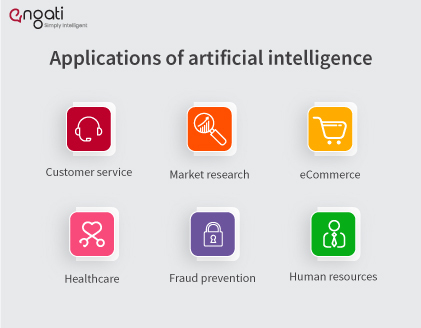
Artificial intelligence is used extensively in multiple industries, across and range of domains and functions and has myriads of use cases. Here are a few areas where artificial intelligence is employed.
Artificial intelligence helps chatbots answer customer queries faster, with greater accuracy. NLP is used to understand customer queries more effectively, while sentiment analysis is used to judge their emotional state and provide an appropriate response.
Artificial intelligence can also be used to process vast amounts of data from the target market to understand the market’s needs and pain points, identify opportunities, and even get an understanding of how a product or service is faring.
Sentiment analysis can also be used with social listening to get an idea of how the market feels about a product.
The most prominent use of artificial in eCommerce is recommendations. Recommendation engines can process data from a user’s consumption patterns can suggest products that the shopper would be most likely to purchase and enjoy using.
It can also be using for monitoring inventory levels and can automate placing orders for fresh stock.
AI systems are very helpful in the healthcare industry, especially in administrative tasks. They can help doctors make more informed decisions by showcasing the patient’s entire medical history. They can even assist with diagnosis, by processing the known symptoms and providing a set of predictions about the likely syndromes, once again helping doctors make more informed decisions.
AI can detect fraud early on. It can identify ties between applications for credit cards and loan applications. It can even help prevent money laundering by monitoring spending and deposit patterns from multiple data points and reporting anomalies.
AI systems can parse multiple CVs at a fast pace and determine whether the candidate is a good fit for the role. It can even be used to gather and process feedback from employees and help you understand the voice of the employee.
Future of CX
AI can help you give your customers what they actually want, if you use it right. Learn how to use it to make your organization more customer-centric.
Drive to Reimagine
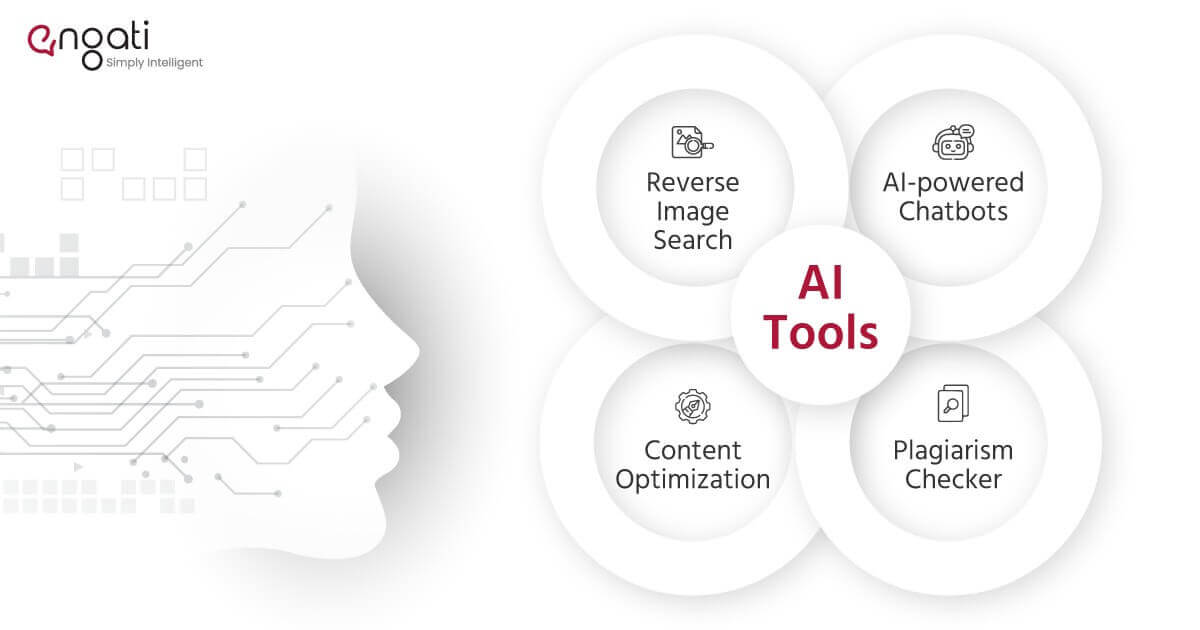
AI technology tools are imperative towards formulating and executing campaigns and tasks in this current digital world. Here are 4 tools at your disposal.

Tech Corner
Join Patrick Bangert on an exploration of the status of AI evolution. We'll cover real AI applications vs. the public imagination, and commercial vs. research.