Drive to Reimagine
Chatbot business predictions - Future of chatbots
A chatbot is a designed tool powered by the rules of Artificial Intelligence (AI), acts as a simulator of human conversation for the purpose of automating a bus
Business process outsourcing (BPO) is a business practice in which an organization contracts with an external service provider to perform an essential business task.
Typically, an organization first identifies a process that is necessary for its operations yet is not part of its core value proposition in the market; this step requires a good understanding of the processes within the organization and strong business process management.
Processes that are performed the same or similarly from company to company, such as payroll or accounting, are candidates for BPO.
Because these commodity processes don't generally differentiate one organization from another, enterprise executives often determine there's little value in having their own staff perform them. Indeed, companies calculate that outsourcing these processes to a company specializing in these processes could deliver better results.
BPO has its roots in the manufacturing industry. Manufacturers hired third-party vendors to handle parts of their supply chains after determining that the vendors could bring more skills, speed and cost efficiencies to that process than an in-house team could deliver. Over time, organizations in other industries adopted the practice.
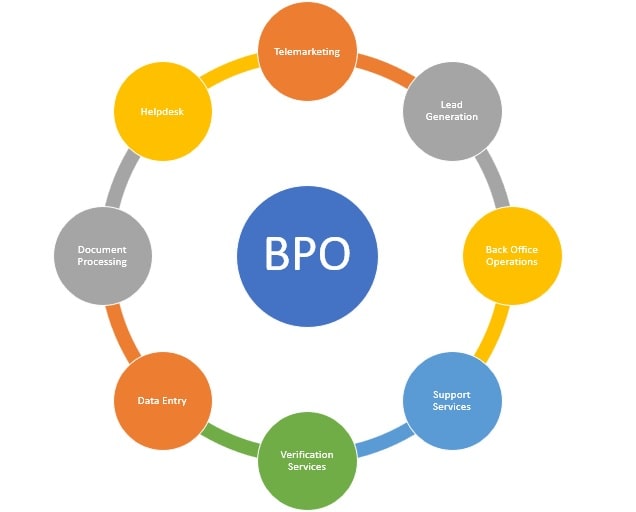
A business process outsourcing (BPO) company is a company that handles non-core process like payroll, accounting, and customer service for other companies. These BPO companies focus solely on these processes and are specialists at them.
Enterprise executives opt to outsource a business process for a variety of reasons.
Those reasons vary based on the type of organization, the age and size of the organization, market forces and economic conditions.
Startup companies, for example, often need to outsource back-office and front-office functions because they do not have the resources to build the staff and supporting functions to preform them in-house.
On the other hand, an established company may opt to outsource a task that it had been performing all along after an analysis determined that a third-party service provider could do the job better and at a lower cost.
Management experts advise enterprise executives to identify functions that can be outsourced and then determine if shifting that task to an outsourcing provider makes sense.
If so, the organization then must go through the process of not only identifying the best vendor for the work, but also shifting the work itself from in-house to the external provider.
This requires a significant amount of change management, as the move to an outsourced provider generally affects staff, established processes and existing workflows.
The shift to an outsourced provider also impacts the organization's finances -- not only in terms of shifting costs from the internal function to the outsourced providers, but often also in terms of corporate taxes and reporting requirements.
The organization might also have to invest in new technology to enable the smooth flow of work from the organization itself to the outsource provider, with the extent and cost of that technology product dependent on the scope of the function being outsourced and the maturity of the technology infrastructure in place at both enterprises.
The advantages of Business Process Outsourcing are:
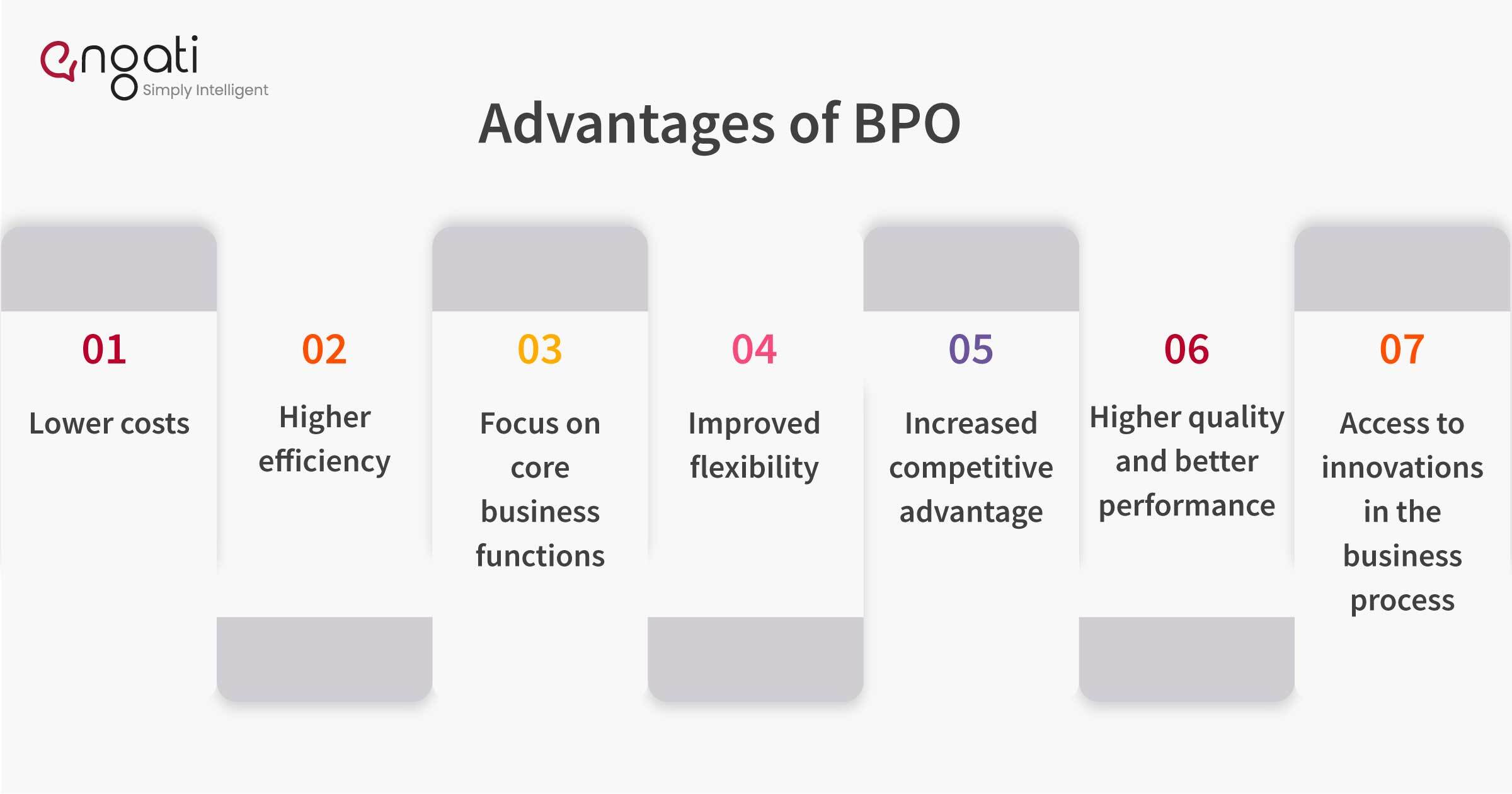
One of the main reasons organizations outsource is cost reduction. Instead of buying IT equipment and hiring more employees to do different tasks, they can outsource the tasks to a service provider, reducing or even eliminating overhead costs.
BPO companies are experienced in different fields and perform at the highest level. They also adopt best practices and use the latest technology. It naturally results in higher efficiency and greater productivity.
Many companies, usually start-ups, encounter a difficult time with ancillary business activities. Transferring non-core processes to a BPO company gives the organization more time to focus on its main business activities.
BPO contracts can offer the ability to modify how an outsourced business process is done, enabling companies to react more nimbly to changing market dynamics.
BPO enables an organization to focus more of its resources on operations that distinguish it in the marketplace.
Because business processes are their core business, BPO providers are well positioned to complete the work with greater accuracy, efficiency and speed.
BPO providers are more likely to know about advances happening in the process areas they specialize in. That means they're more likely to invest in new technologies, such as automation, that can improve the speed, cost and/or quality of the work.
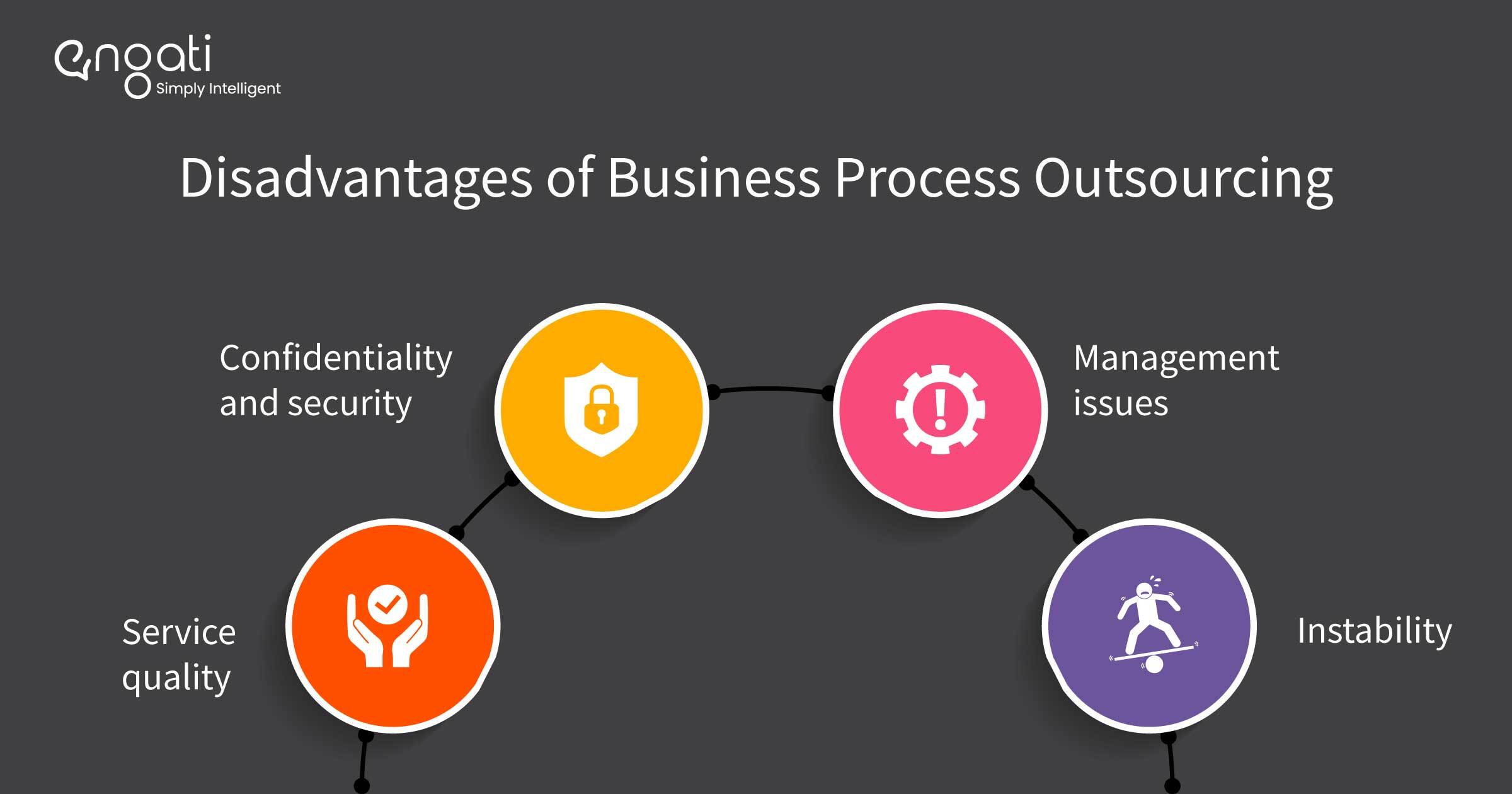
When you outsource your business processes, the quality might fall below you standards and expectations. You need to monitor your quality on a regular basis to make sure it meets your standards and benchmarks.
You may be at risk of exposing your organization’s private and confidential information to outsiders.
It might be hard for you to manage the outsourced processes and changes at the BPO company could cause friction.
The outsourcing company that you have contracted could shut down and go out of business. Now you’ll be forced to find a new outsourcing company or build an internal team to deal with those processes.
Commonly outsourced processes include the following:

Drive to Reimagine
A chatbot is a designed tool powered by the rules of Artificial Intelligence (AI), acts as a simulator of human conversation for the purpose of automating a bus
Drive to Reimagine
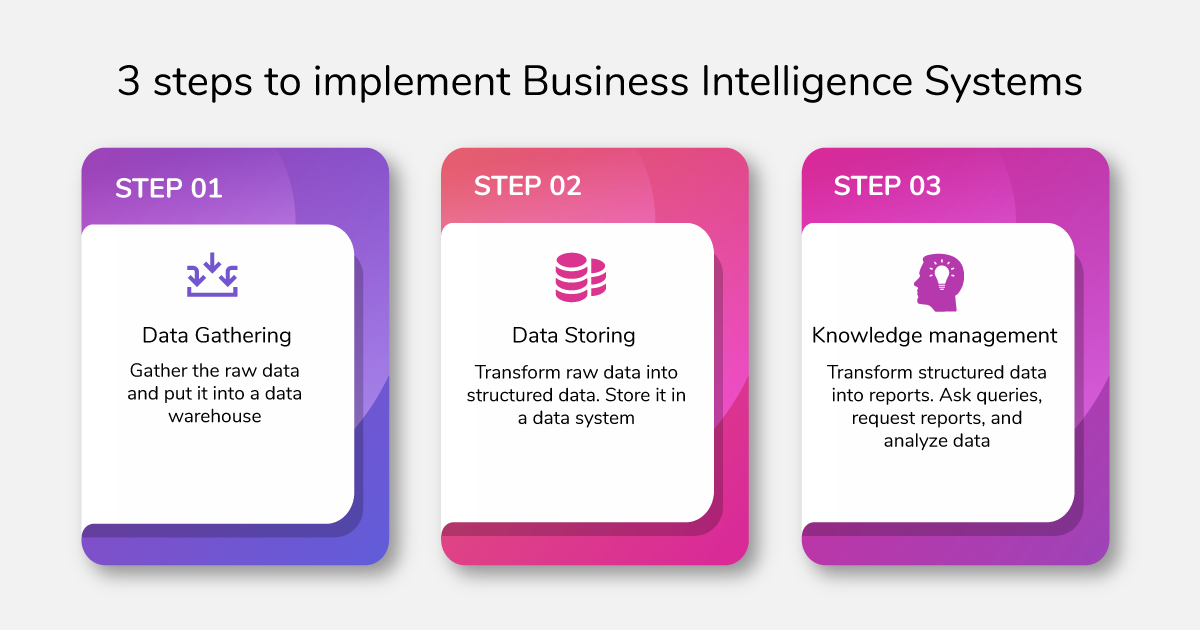
Real-time data is the need of the hour for Business Intelligence. But are your systems holding you back? Here’s how to empower your organization with chatbots.

Drive to Reimagine
Chatbots in education are providing a personalised learning environment to students, and technology is upgrading the way they learn and absorb information.