Whatsapp Marketing
Create WhatsApp Bot for Free in 5 Mins With No Code (2025)
Learn how to create a WhatsApp bot in 5 minutes with easy steps. Discover WhatsApp integration tips, explore use cases & get a chatbot demo with free trail.
Data modelling in software engineering is the process of creating data models or visual representations of either a whole information system or parts of it to communicate connections between data points and structures. Data modelling represents data with diagrams, symbols, or text to visualize the interrelation and data structure. It helps to improve data analytics by increasing consistency in naming, rules, semantics, and security.
In simple language, the goal of data modelling is to illustrate the types of data used and stored within the system, the relationships among these data types, the ways the data can be grouped and organized, and its formats and attributes. We generally built these models around or as per the business needs. Data representation helps the organization comprehend, analyze, and reuse complex data more easily.
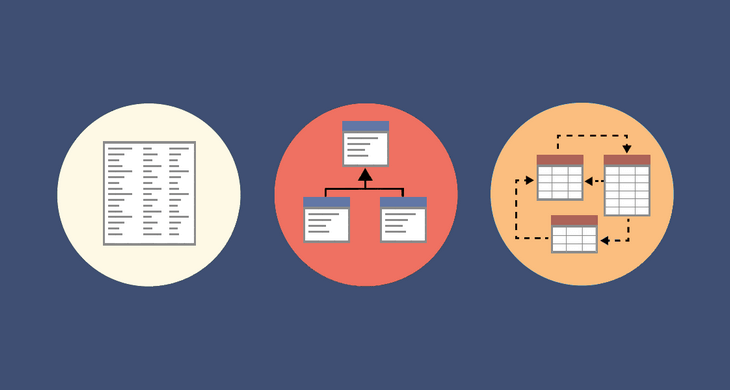
There are three stages in data modelling: conceptual, logical, and physical. Each stage brings the database closer to reality.
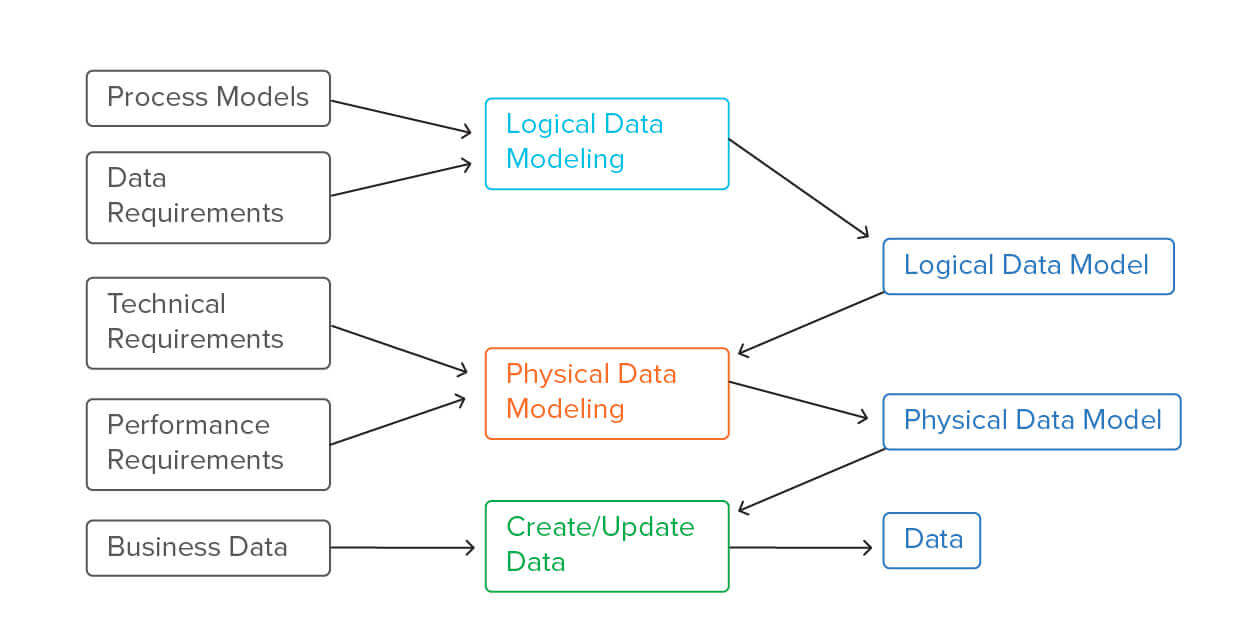
The conceptual model defines what data entities are to be represented and determines what kinds of relationships exist between them. The conceptual data model is a view of the data that is required to help business processes. It also keeps track of business events and keeps related performance measures. The conceptual model defines what the system contains. This type of data modelling focuses on finding the data used in a business rather than processing flow. The main purpose of this data model is to organize, define business rules and concepts. For example, it helps business people to view any data like market data, customer data, and purchase data.
A logical data model is the map of rules and data structures that includes the data required such as tables, rows, columns, etc. A logical data model talks about "how the system should be implemented?" and what the data representation should look like. The purpose is to develop a technical map of rules and data structures. This data model helps to form the base for the physical model.
The physical data model focuses on the implementation of data, which database management technology to be used, the design of the tables that will make up the actual database, and the keys that will represent the relationships between these tables. The physical data model represents each table, column, constraint like primary key, foreign key, etc. Since the physical data model is the most detailed and usually the final step before database creation, it often accounts for database management system-specific properties and rules.
Data Models are used to show how data is stored, connected, accessed, and updated in the database management system. Though many data models are being used nowadays, the Relational model is the most widely used. Apart from the Relational model, there are many other types of data models which are as follows.
This model organizes the data in the hierarchical tree structure. The hierarchy starts from the root which has root data and then it expands in the form of a tree adding child node to the parent node.
This model is the same as the hierarchical model, the only difference is that a record can have more than one parent. It replaces the hierarchical tree with a graph.
In this model, we represent the real-world problem in the pictorial form to make it easy for the stakeholders to understand.
The relational model is the most widely used. In this model, the data is maintained in the form of a two-dimensional table. All the information is stored in the form of rows and columns.
The real-world problems are more closely represented through the object-oriented data model. In this model, both the data and relationship are present in a single structure known as an object.
As the name suggests, it is a combination of relational and object-oriented models. This model was built to fill the gap between the object-oriented model and the relational model.
It is a simple model in which the database is represented as a table consisting of rows and columns.
Some entities may have missing attributes in this model while others may have an extra attribute. This model gives flexibility in storing the data. It also gives flexibility to the attributes.
Associative Data Model is a model in which the data is divided into two parts. Everything which has independent existence is called an entity and the relationship among these entities are called association.
This consists of models like network models, relational models, etc. Using this model we can do various types of tasks that are not possible using any model alone.
Following are the best data modelling tools available in the market.

Whatsapp Marketing
Learn how to create a WhatsApp bot in 5 minutes with easy steps. Discover WhatsApp integration tips, explore use cases & get a chatbot demo with free trail.
Future of CX
200 most powerful influencers from customer experience, digital transformation, marketing automation, and technology domain that you need to follow in 2022.

Drive to Reimagine
WhatsApp chatbots are benefiting the healthcare industry in many ways. Here are some of the ways in which these intelligent bots are creating a huge impact.