Drive to Reimagine
AI Technology Tools and its impact on the Digital World
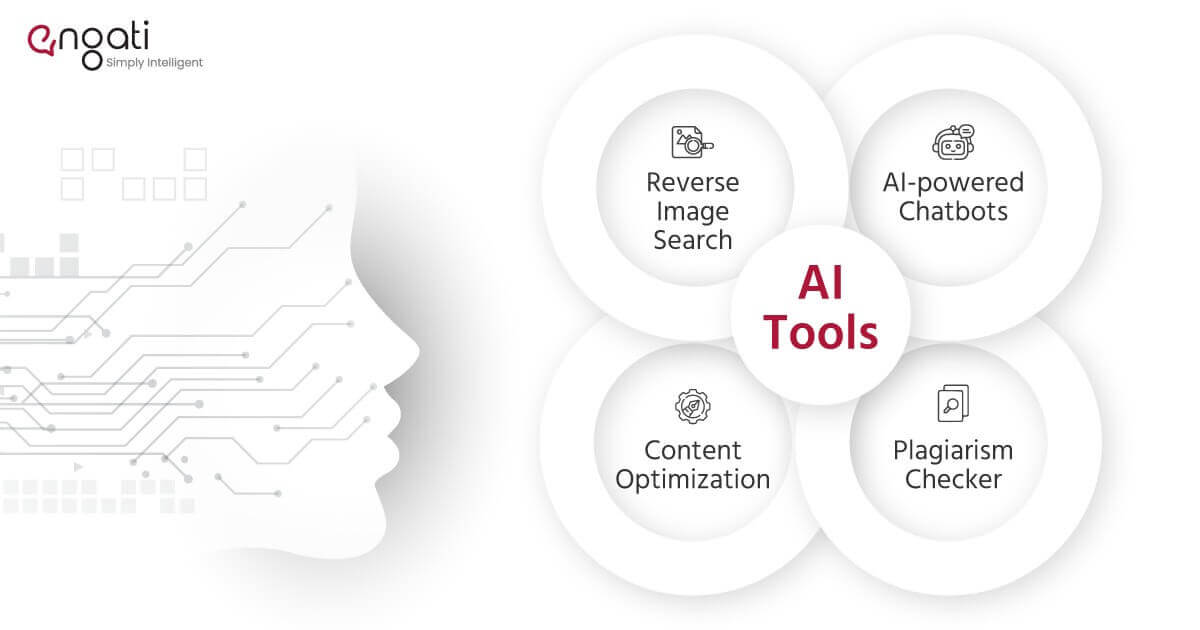
AI technology tools are imperative towards formulating and executing campaigns and tasks in this current digital world. Here are 4 tools at your disposal.
Decision support systems are computer programs that analyze enormous amounts of data and compile information that can be used in decision-making and to solve problems.
These programs are used by businesses and other organizations to support determinations, judgments, and courses of action.
They are informational applications, and unlike ordinary operations applications that simply collect data, a decision support system collects, analyzes, and synthesizes data to create comprehensive information reports.
They may present the information graphically and they could include AI or an expert system.
Decision support systems help humans make decisions much faster than we would tend to on our own.
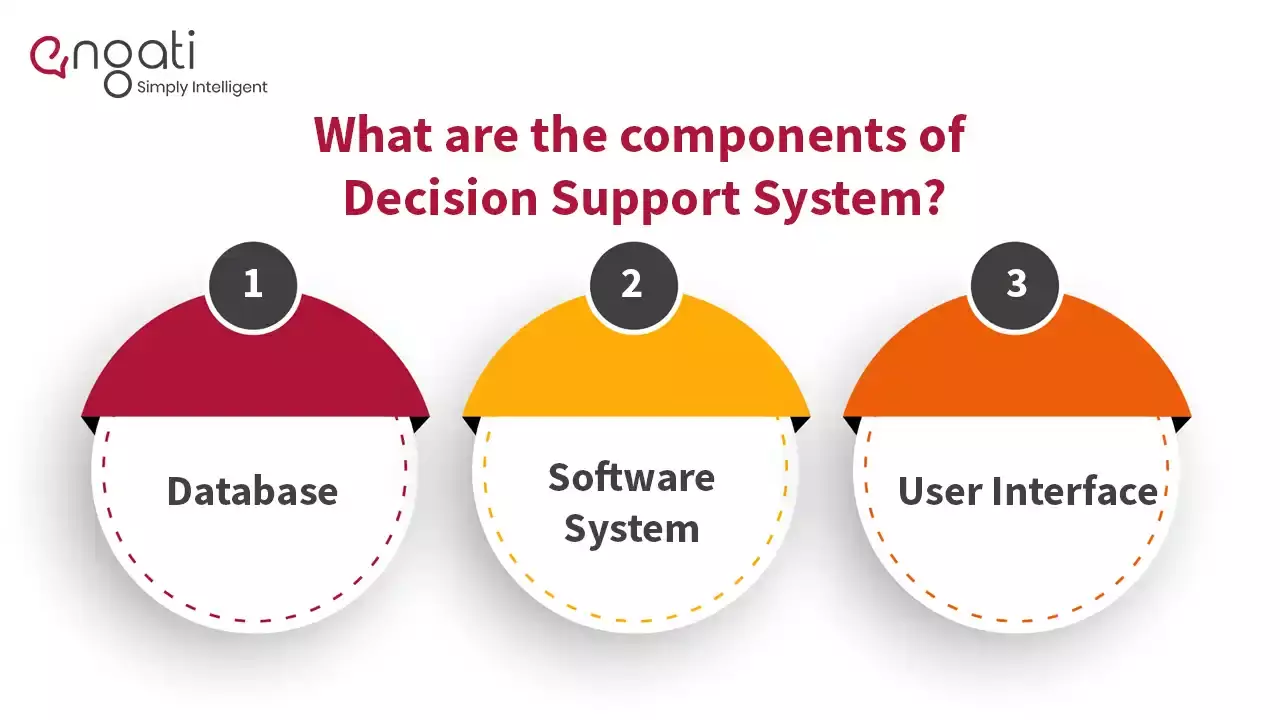
There are three main components in a decision support system:
The database contains information from multiple sources. It can either be a small database, a standalone system, or an enormous data warehouse, depending on the organizational requirements.
The decision support system software is made up of mathematical and analytical models which are utilized for the analysis of complex data. The models predict outputs based on inputs or conditions or even combinations of inputs and conditions.
The decision support system could even have multiple models, each of them performing particular tasks. The models could include statistical models, sensitivity analysis models, optimization analysis models, forecasting models, and backward analysis sensitivity models.
This is the graphical user interface that makes it easy for users to interact with the decision support system. It presents outputs as text, tables, charts, or graphics.
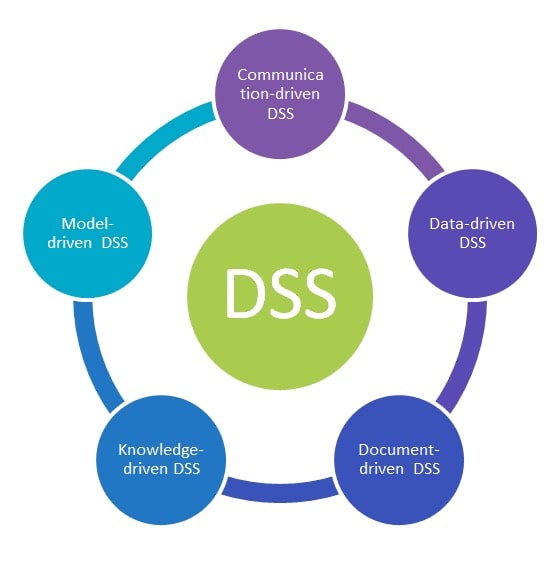
There are various decision support systems available, but they can be classified into five categories. These are:
These are generally used by internal teams. They help users collaborate and work together. A Communication-driven DSS is usually deployed over a web or client server.
These are used to search web pages and find documents that revolve around particular keywords or search terms.
They are mostly used by managers, staff, and vendors. They query databases & data warehouses to find answers to particular questions.
These are also referred to as knowledge bases. They encompass a variety of systems and are used to provide management advice or to choose products/services.
These are complex systems and are used to aid in analyzing decisions and in choosing between options.
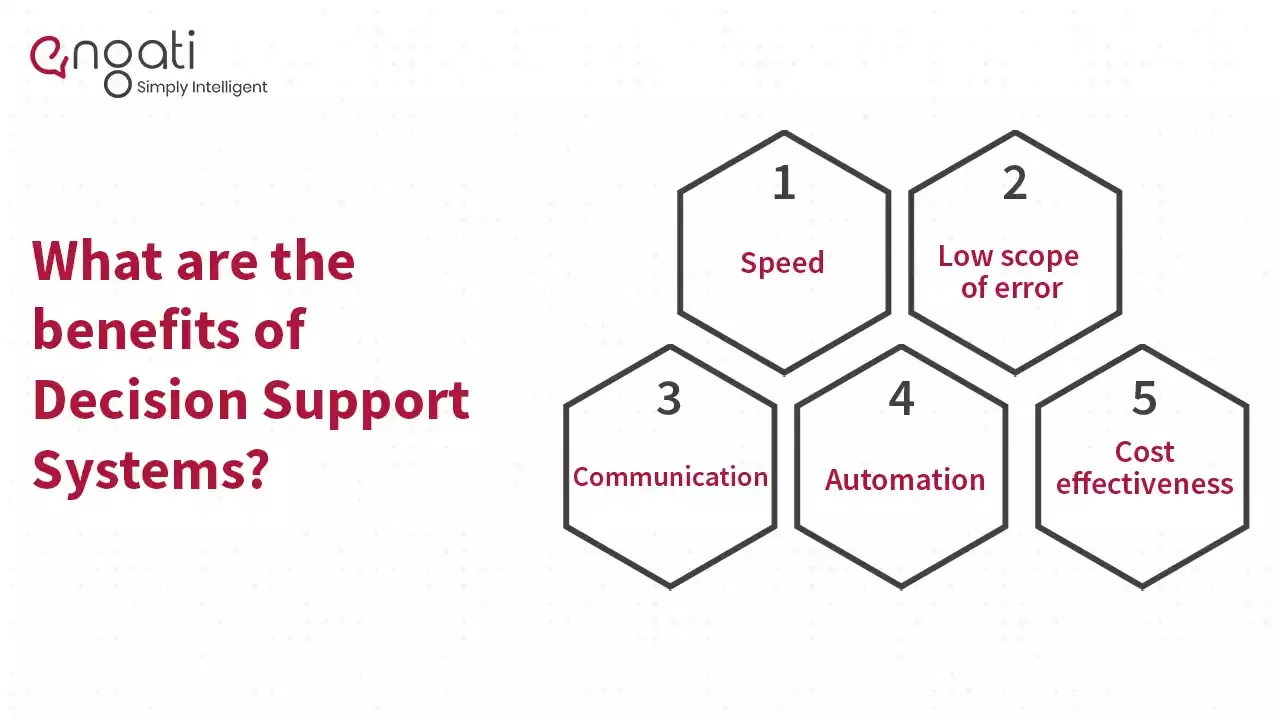
Here are the most significant advantages of decision support systems:
Decision support systems make it possible for users to take informed decisions quickly.
If the data fed into the system is relevant and accurate, the output data will be accurate.
Top management gets accurate data from the systems and are able to communicate with each other clearly and make effective decisions.
It automates simple managerial decisions, allowing your staff to concentrate on higher-level tasks.
The traditional method of organizing and processing data takes too much manpower. Using a DSS takes fewer resources and even reduces the opportunity cost that would arise due to the delay caused by the manual process.
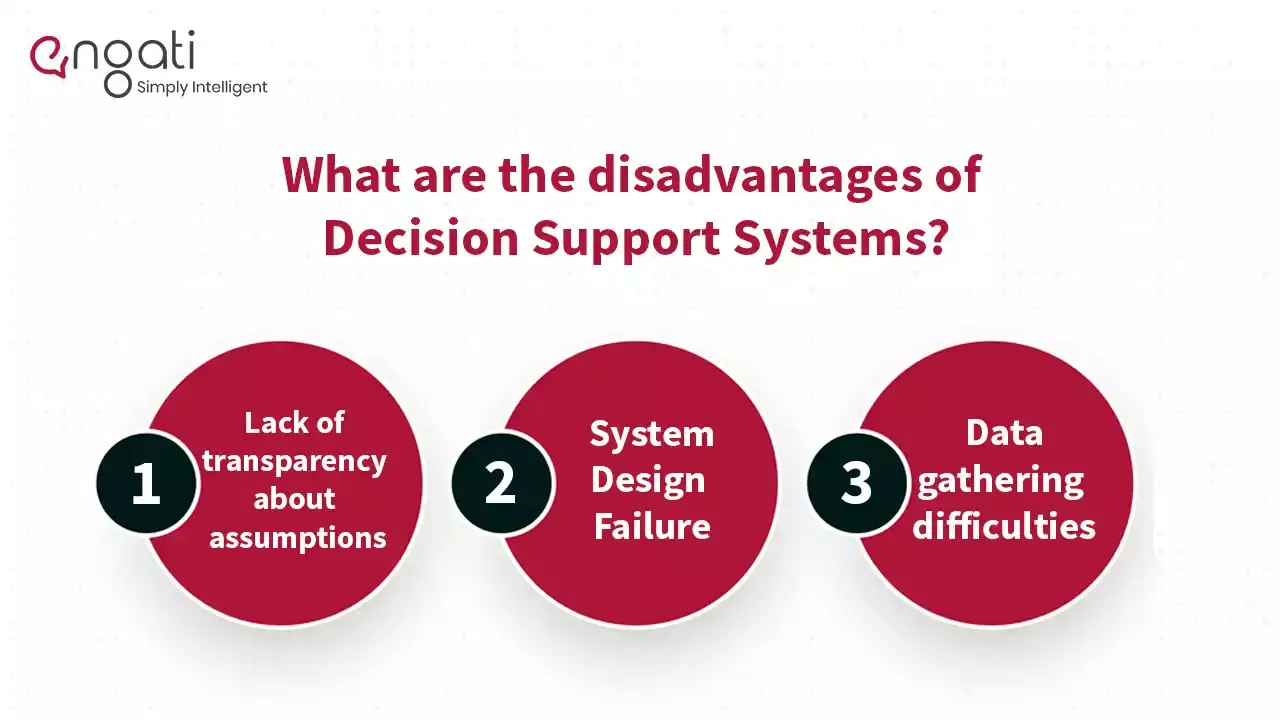
Here are the disadvantages of decision support systems:
Decision-makers may not be clear about the assumptions that the decision support system has made, and that could be dangerous.
A DSS is designed specially to meet particular needs. If you don’t have your needs clear, the DSS may be vague and will not give you the results that you require.
You can’t collect all the required information manually. Some data may be hard to record and some may be impossible to record.
Drive to Reimagine
AI technology tools are imperative towards formulating and executing campaigns and tasks in this current digital world. Here are 4 tools at your disposal.
Tech Corner
Join Patrick Bangert on an exploration of the status of AI evolution. We'll cover real AI applications vs. the public imagination, and commercial vs. research.
Tech Corner
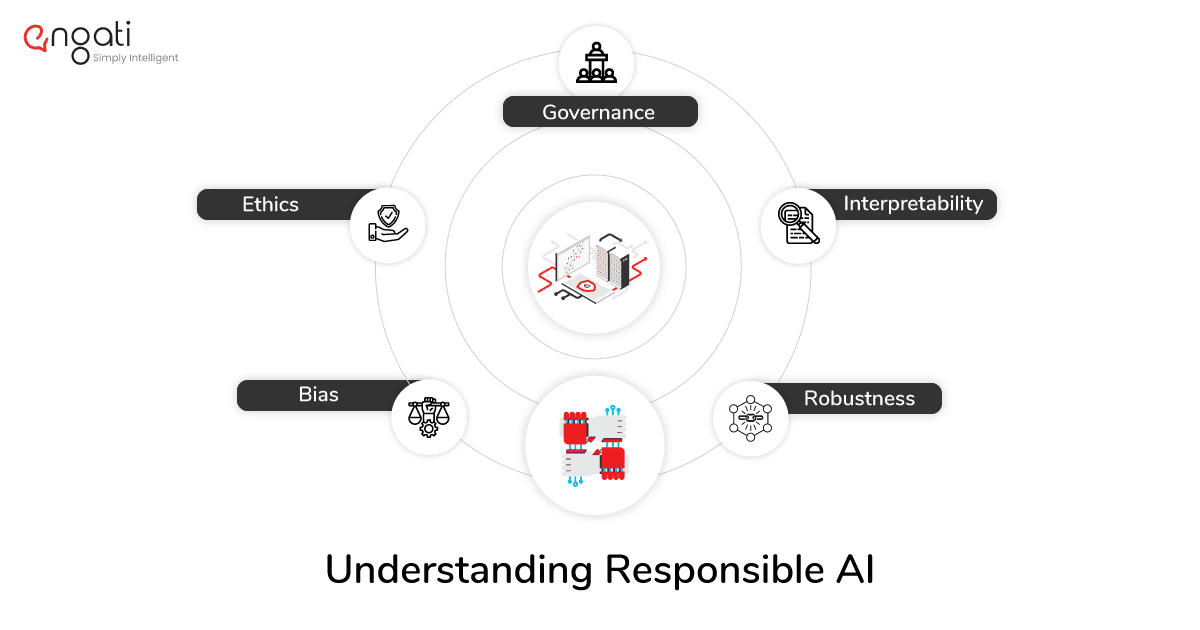
How do you ensure that your AI systems are ethical? Maria Luciana Axente, the Responsible AI & AI for Good lead at PwC UK, helps identify key considerations.