Drive to Reimagine
7 powerful ways to increase eCommerce customer retention
To increase eCommerce customer retention, you need to simplify purchases. You also need to tempt and delight your customers. Here are 7 ways to do just that.
Distribution channels are the paths through which products or services pass while flowing from the producer, manufacturer, or service provider till they reach the final consumer. Distribution channels could include wholesalers, retailers, agents. distributors, and even the internet itself.
Distribution channels make up the downstream process and are answers to the question “How can we make our product reach your customers?”. A distribution channel is essentially a chain of businesses or intermediaries through which the final consumer manages to buy a good or service. They also refer to the path through which the payments reach from the final consumers to the manufacturer, producer, service provider, or original supplier.
Distribution channel strategies are crafted to maximize the products’ sales as the products enter markets. Quite often, retailers tend to be the ones who end up planning out distribution strategies. They’re figuring out where they should source their products from, how to get these products to flow from the producer or supplier to their customers, what they could do to reduce their costs and increase their profitability, as well as the most effective ways in which they could market these products and services so as to boost their sales.
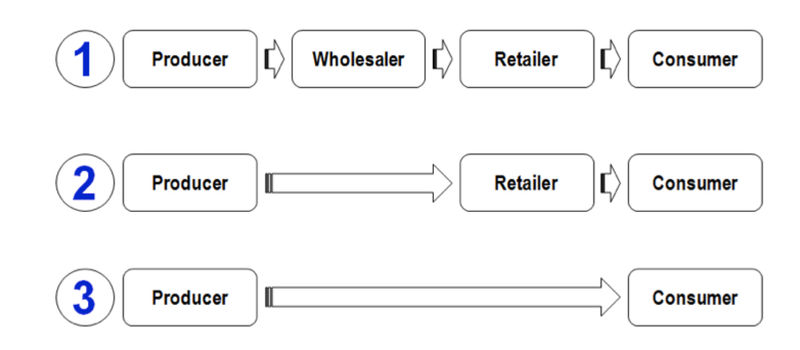
The whole purpose and role of distribution channels is to connect the producers of a good or the providers of a service with the final consumers of that good or service.
The primary function of distribution channels is to create time and place utilities by bridging the gap between the time and place of the production of a product or service and the time and place of its consumption. This is a particularly complex process, and for a large number of companies, this is the only part of marketing in which it is still possible for them to save on costs.
Distribution channels have dual functions. There are two basic functions between the producer of the goods or services and the final consumer of these goods and services. The first function is known as the exchange function. This is about the sales of products and services to the different members of the channel of distribution. The next function is the physical distribution function in which products are moved across the exchange channel along with the title and ownership of these products.
In the absence of a proper channel of distribution, the exchange process would be rather difficult and ineffective.
On a broad level, distribution channels can be divided into two main types: direct channels of distribution and indirect channels of distribution.
Direct distribution channels are the channels in which the company sells it products or services directly to the end consumer. This is known as direct-to-consumer retail or D2C retail. There are no intermediaries or intervening partners involved in this distribution channel. An example of this type of channel of distribution is when a company manufactures it own products, let’s take t-shirts as an example here, and then sells them directly on their eCommerce site or a physical retail store without involving any intermediaries in the process. Here the company gets a larger share of the profit since there are no intermediaries involved. Some of these additional profits could even be passed on to customers in the form of discounts.
Indirect distribution channels are the channels where the company works with one or multiple distribution partners or intermediaries to get the products and services flowing to the end consumers.
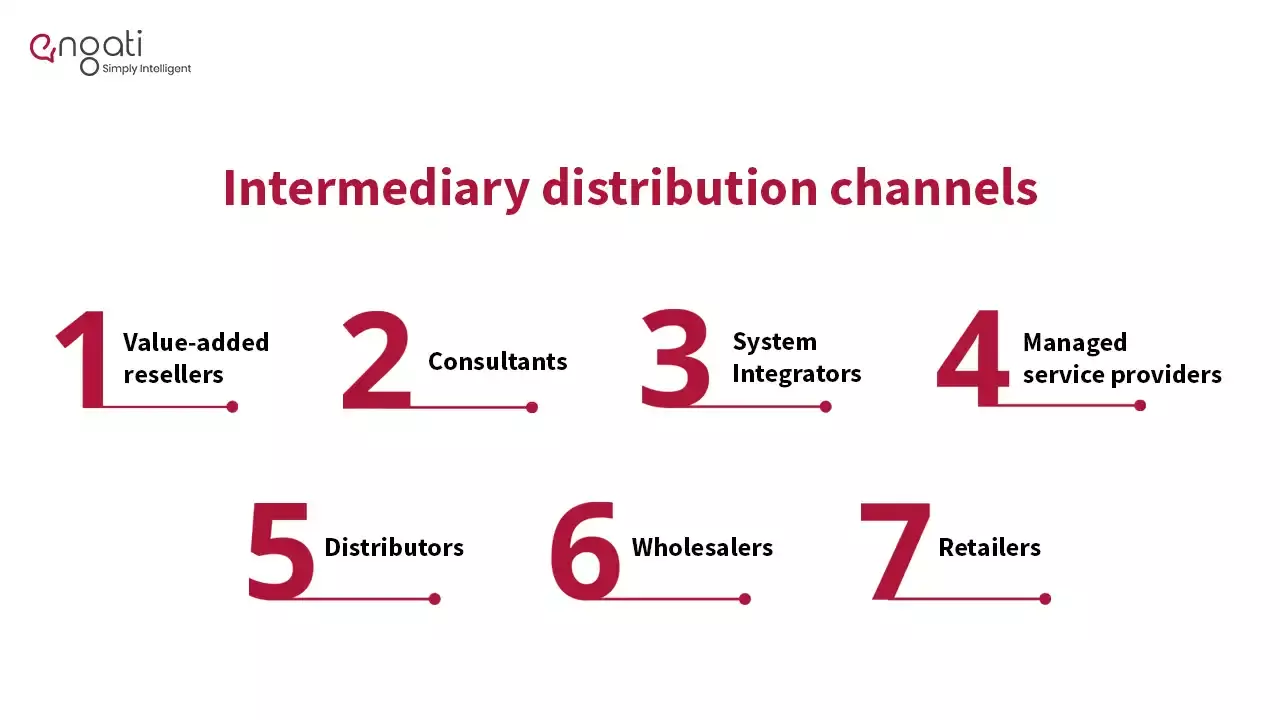
One thing you have to keep in mind is that you might need different distribution channels for different products that you sell. So instead of framing a company-wide distribution strategy, you might need to create separate distribution strategies for the various products that you sell. How do you do that?
You first need to look at the product. How quickly does it need to reach the customer? Do you need to engage in product bundling to make it sell more? How soon would the product perish? Do you need to work with someone like a VAR that could add more value to your offerings?
Your sales goals will also be a major factor in helping you figure out your distribution strategy. If you have a very niche target market that’s spread internationally, you might want to consider using a direct channel of distribution via the internet. However, if there are retailers who already have a strong relationship with the community whom you want to target, an indirect channel of distribution might be a better bet for you.
Drive to Reimagine
To increase eCommerce customer retention, you need to simplify purchases. You also need to tempt and delight your customers. Here are 7 ways to do just that.

Business Transformation
The ever-increasing expectations of the customers can be met with the implementation of an artificial intelligent chatbot in e-commerce websites.......
Drive to Reimagine
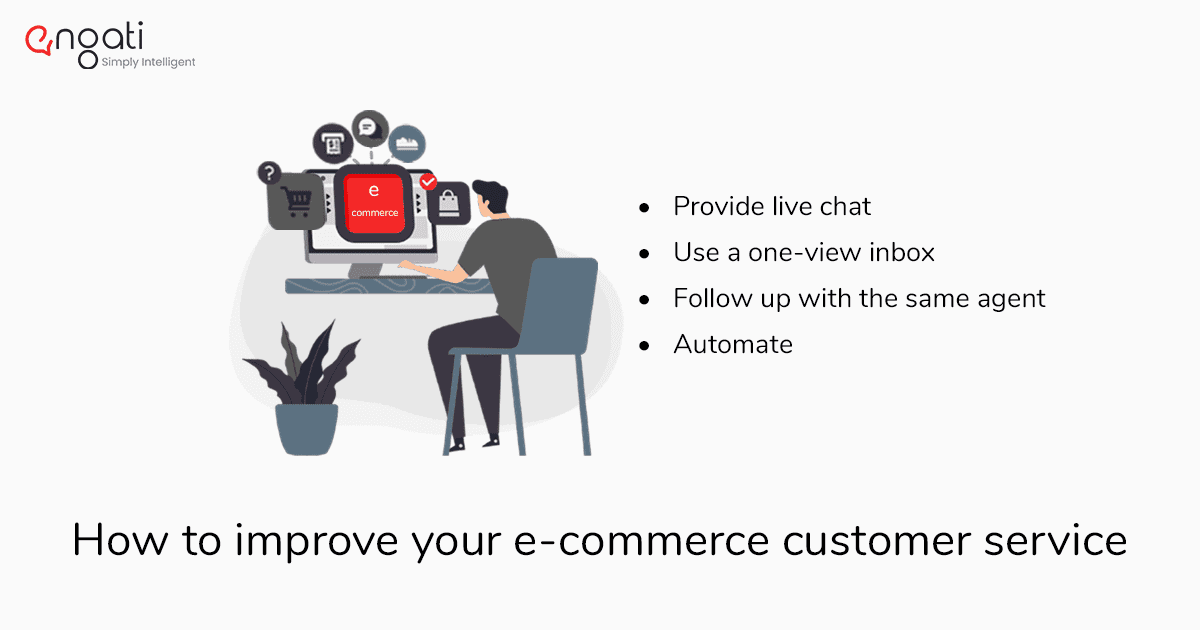
Differentiate your business by winning at eCommerce customer service. Understand all the benefits, techniques, and best practices here for better results!