Tech Corner
Optimizing Solr Resources with G1
This article is focused on tunning G1 GC params in Solr and tell how blibli.com‘s search gained huge performance gains with limited resources by tweaks.
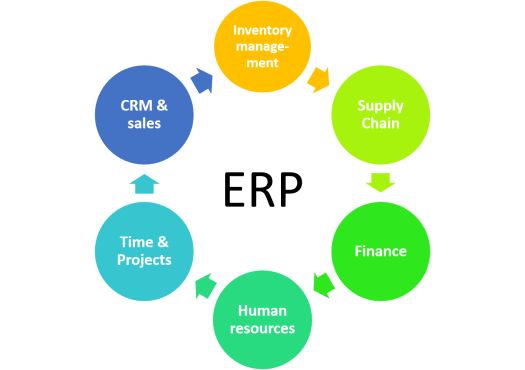
Enterprise resource planning (ERP) is a type of enterprise software that organizations make use of for the purpose of managing day-to-day tasks and business activities like accounting, procurement, project management, risk management and compliance, and supply chain operations.
If you opt-in for a complete ERP suite, you’ll also get enterprise performance management software that could assist you in planning, budgeting, predicting, and reporting on an organization’s financial results.
Enterprise resource planning systems bring together several business processes and make it possible for data to flow between them. The systems collect the company’s shared transactional data from multiple sources, thus doing away with data duplication and providing data integrity with a single source of truth.
In today’s world, ERP systems are vital for businesses of all sizes, across all industries. They are designed around a single, defined data structure ( or a schema) that generally tends to have a common database. This helps in making sure that the data nad information used across the organization is normalized and based on common definitions and user experiences. These core constructs then get interconnected with business processes which are driven by workflows across business departments like finance, human resources, engineering, marketing, operations, etc., and connect systems and the people who use them.
One of the key principles of enterprise resource planning (ERP) is all about gathering data in one centralized location for it to be widely distributed. Rather than having multiple databases and a ton of disconnected spreadsheets, your business could use an ERP system to make sure that everyone can create, store, and utilize the same data pulled by making use of common processes. When there is a secure and centralized data repository, all the staff in the enterprise can be assured that the data they are accessing and using is correct, up-to-date, and complete. There is data integrity in every task carried out across the entire organization.
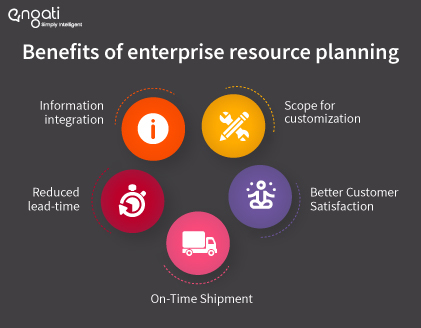
The benefits of enterprise resource planning (ERP) software are:
ERP software makes it possible to update data between related business functions and components automatically and even interlinks the people working on the project, thus increasing productivity.
Lead time is the time that passes between the moment of placing an order and the momet when you receive it. To reduce the lead time, the company should have an efficient inventory management system, and integrate it with the purchasing, production planning, and production departments.
ERP systems help your company reduce data transfer time, minimize errors, and boost design productivity. The ERP system can use the steps of ECO (Engineering Change Order) to automatically implement changes in the production database. This helps make sure that goods are shipped and delivered faster to customers.
Using an enterprise resource planning system, you’ll be able to produce goods in a more flexible way while saving time and costs. This helps you deliver goods faster, but that’s not all. ERP systems also help you give your customers individual attention without you having to spend a lot of money or your customers needing to wait for a ridiculous amount of time.
ERP systems help your business achieve production flexibility, allowing you to produce unique and customized products at a much lower cost.
ERP software can be classified on the basis of industry or on the basis of implementation.
There are several other types of ERP systems available, depending on the industry in which they are used. Industry specific ERP solutions offer you specific features that you’d need for your industry while stripping away extra features that would be of no use to you. They help you save on computing space as well as on money.

Tech Corner
This article is focused on tunning G1 GC params in Solr and tell how blibli.com‘s search gained huge performance gains with limited resources by tweaks.

Drive to Reimagine
An eCommerce platform needs to be mobile-friendly if you want to attract more customers, retain them and gain customer loyalty. Check out the article now!
Drive to Reimagine
To increase eCommerce customer retention, you need to simplify purchases. You also need to tempt and delight your customers. Here are 7 ways to do just that.