Business Transformation
How to use ChatGPT? (260+ ChatGPT Prompts to copy-paste)
Master ChatGPT with 260+ prompts! Your ultimate guide on how to use ChatGPT effectively. Unleashing the power of AI language model today with this article!
GPT is the acronym for Generative Pre-trained Transformer.
Generative Pre-trained Transformer (GPT) is a type of transformer, i.e. an advanced deep learning model, designed to comprehend and create human-like text based on the patterns it picks up after learning from vast amounts of text dataset during the pre-training phase.
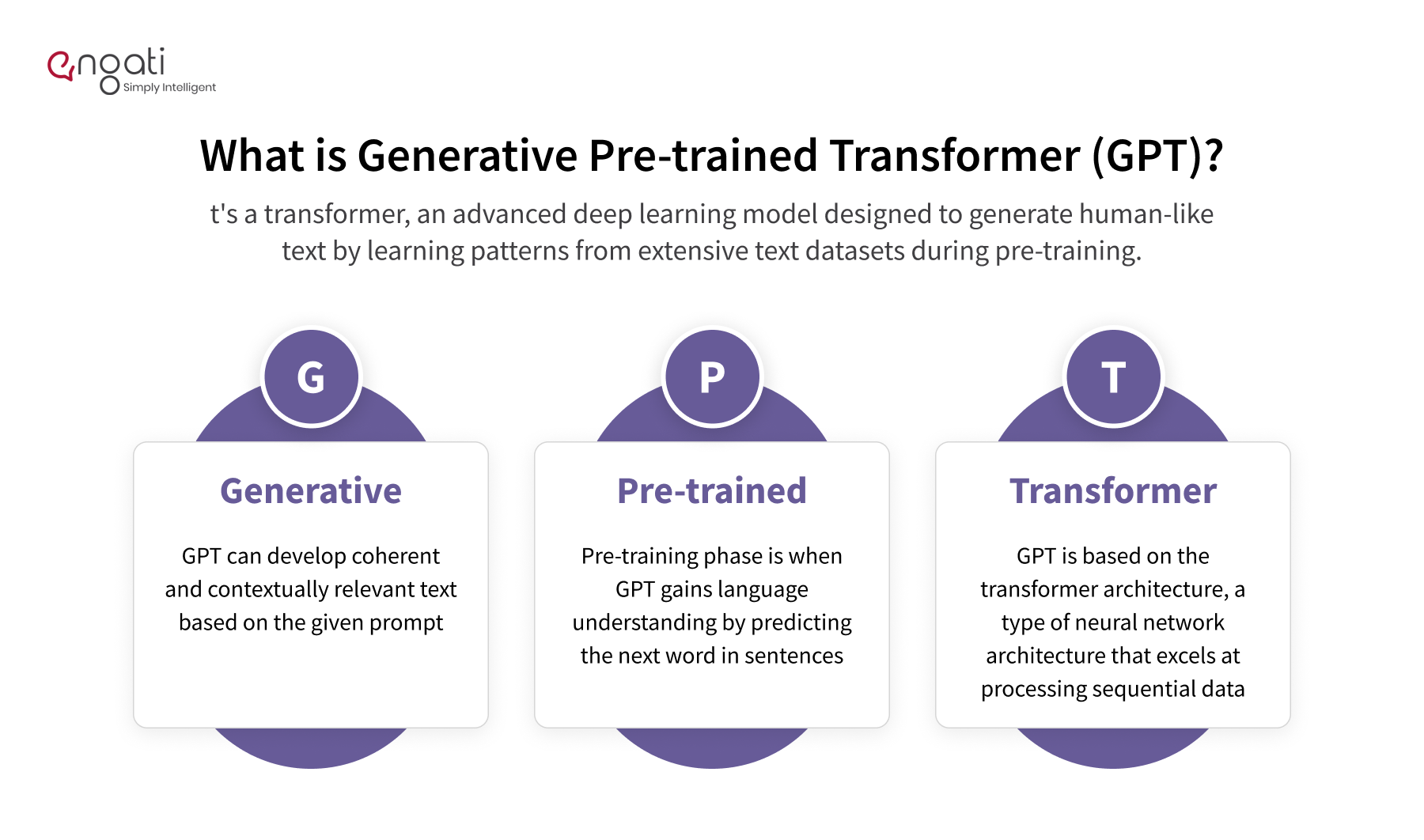
The term GPT, i.e. 'Generative Pre-trained Transformer' came about because of the following key characteristics:
GPT works through a two-step process: pre-training and fine-tuning.
In the pre-training phase, the model learns language by predicting the next word in sentences and gaining an understanding of language structure. No task-specific information is gained here; the learning is limited to understanding the fundamental patterns in a language, such as grammar rules, semantic information and the relationships between words.
During fine-tuning, the model is trained on specific tasks or domains to make it more specialised. Given a prompt, GPT uses its learned patterns to generate coherent and contextually appropriate text.
GPT's capabilities have the world awestruck from the start. Here are just some examples of what it can do
The most obvious use of GPT is to generate content- whether it's generating information on topics or writing articles and blog posts from scratch, GPT can do it all within seconds, thereby saving time and effort.
Owing to its human-like conversational style, GPT-powered chatbots and virtual assistants allow for engaging conversations that can assist or simply entertain users.
As it understands the relationships between words after comprehending chunks of data, GPT is capable of completing sentences and elaborating on or summarizing texts. GPT can also suggest, rephrase or directly edit text, increasing readability and aiding users to improve their writing.
GPT can break down language barriers thanks to its ability to easily translate text between languages
Need a brainstorming buddy? Now you've got GPT. Bounce ideas, request feedback or directly ask GPT for ideas and inspiration.
GPT 1, the very first version of GPT, introduced the concept of utilizing transformers for tasks that generate text.
While it demonstrated promising results in generating coherent and contextually relevant responses, it had limitations in terms of fine-tuning and generating highly convincing text across a wide range of topics.
GPT-2 was released in 2019 and made substantial improvements since it was trained over a much larger dataset and overcame GPT -1's obstacle of not being able to produce relevant responses for different topics. OpenAI ,however, made the decision not to release the full version of GPT-2 to the public since they were concerned over potential misuse and spreading fake information.
GPT-3 and GPT-4 are subsequent versions of the GPT model, each more advanced than the last. GPT-3, for example, introduced remarkable capabilities, such as generating human-like text across various prompts and contexts. Each version builds on the architecture and capabilities of its predecessors with increased performance and sophistication.
When the world was introduced to the wonders of AI, GPT 3 was at the forefront of it.
GPT - 3, at its time, was one of the largest language models created and demonstrated a level of human-like response generation that was not seen before, hence leading to its fame in the tech community and, eventually, the public eye.
GPT 3.5 served as an intermediary model between GPT 3 and GPT 4. It improved on the previous model while trying to reduce the bias present.
A set of models that improve on GPT-3 and can understand as well as generate natural language or code
The turbo version is a cost-effective model that has been optimized for non-chat applications as well and is available to fine-tune on particular tasks.
In OpenAI's own words, GPT 4 is a large multimodal model (accepting image and text inputs, emitting text outputs) that, while less capable than humans in many real-world scenarios, exhibits human-level performance on various professional and academic benchmarks.
GPT 4 has upgraded on many fronts:
Meanwhile, new additions to the model have brought about new features:
GPT's capabilities raise ethical concerns regarding misinformation, bias, and misuse. Efforts are being made to address these issues and ensure responsible use. The future of GPT likely involves further enhancements in understanding and generating natural language, as well as improved ethical guidelines to mitigate potential risks and challenges.
Business Transformation
Master ChatGPT with 260+ prompts! Your ultimate guide on how to use ChatGPT effectively. Unleashing the power of AI language model today with this article!
Business Transformation
Avoid common mistakes while chatting with ChatGPT. Learn what not to do for a smooth and productive AI conversation. Maximize your experience with ChatGPT!
Drive to Reimagine
Engati Technologies, today announced that its platform is now enabled with eSenseGPT a Generative AI engine built on Large Language Models (LLM)......