All Categories
WhatsApp AI for Re-Engaging Dormant Leads: A Playbook
Learn how to use WhatsApp AI to re-engage dormant leads, revive stalled conversations, boost conversions, and turn missed opportunities into revenue..
The SWOT analysis framework is utilised to ascertain and evaluate the strengths, weaknesses, opportunities, and threats faced by an organisation. The acronym SWOT is composed of these terms. Usually, the analysis entails assembling the four categories into a matrix:
Raising awareness of the elements involved in formulating a corporate strategy or choice is the main objective of a SWOT analysis. SWOT analyses the internal and external environments as well as the variables that may have an impact on a decision's feasibility in order to achieve this.
A SWOT analysis is a useful framework for assessing your company from various perspectives. and find fresh approaches to development.
Performing a SWOT analysis allows you to:
A graphic depiction of strengths, weaknesses, opportunities, and threats is known as a SWOT matrix, and it is one of the most often used tools for creating a SWOT analysis. There are four distinct squares in the matrix as given below.
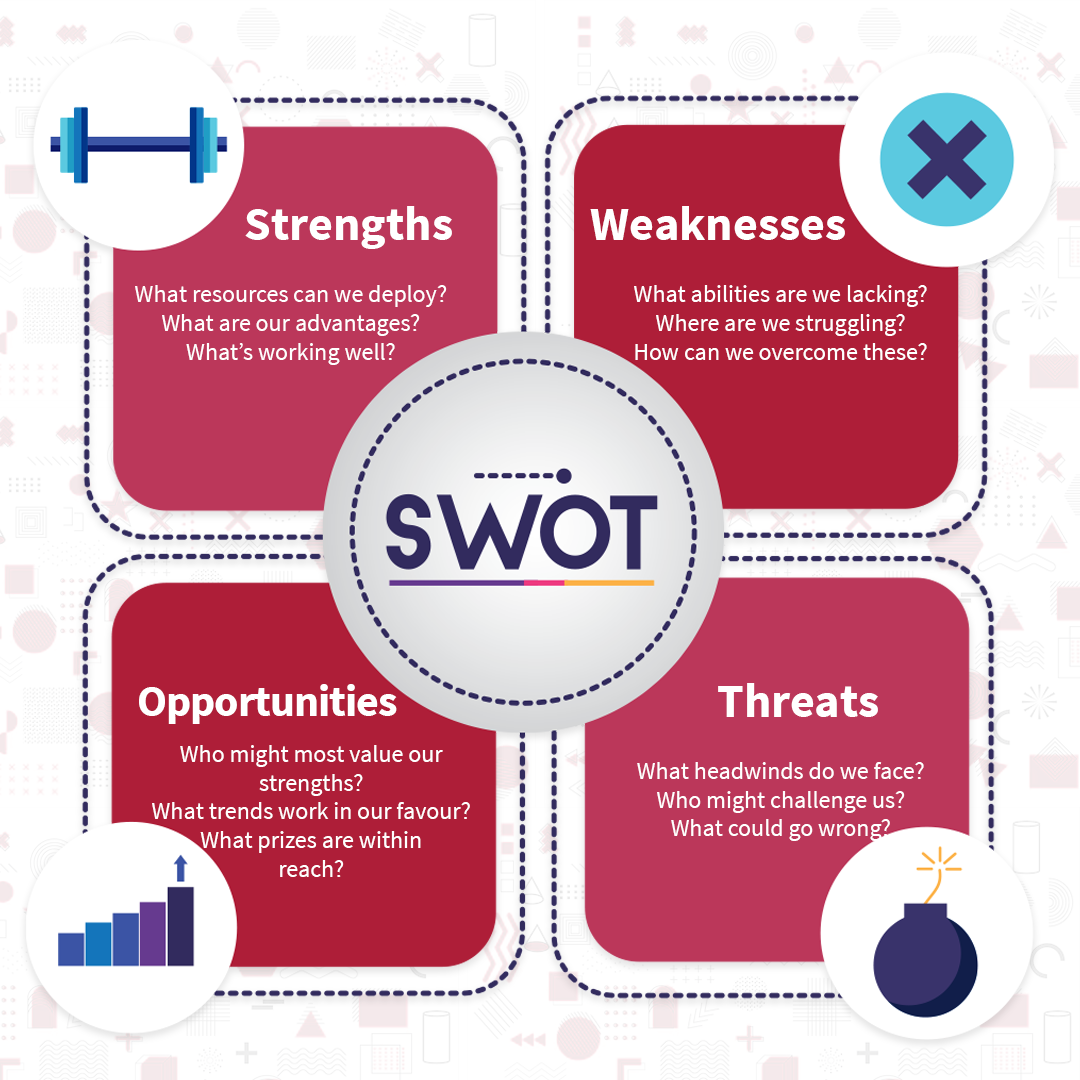
You can make sure your SWOT analysis is accurate and comprehensive in a few different methods. Let's examine some pointers in more detail to get you going.
Selecting what is most pertinent to your analysis will be made easier if you have a goal. If not, you could wind up with a tonne of fundamental knowledge but no clue how to use it for your company. Hence, it is crucial for your business to have a goal in mind. It may be any significant choice or adjustment for your company:
Each SWOT analysis is unique, and in order to support the creation of many SWOT analysis tables, a business could require distinct data sets. A business should start by figuring out what data it can access, what data restrictions apply, and how trustworthy its external data sources are.
A business should know which personnel combination is best for the analysis in addition to the data. While certain employees in the production or sales sectors could be more aware of what's happening internally, others might be more connected to external factors. Diverse, valuable contributions are likewise more likely to result from having a wide range of opinions.
The team tasked with conducting the study should start by enumerating concepts under each of the four SWOT analysis components.
The company's internal operations are a rich source of data for the SWOT analysis's strengths and weaknesses sections. Financial and human resources, tangible and intangible assets (such as brand names), and operational efficiency are a few examples of internal elements.
An organization's success is influenced by external events just as much as by internal ones. Various categories, including monetary policies, market fluctuations, and supplier accessibility, can be utilised to generate a list of advantages and disadvantages.
It's time to organise the ideas now that you have a list of each category's concepts. A business can concentrate on only the greatest concepts or the biggest hazards to the business by honing the ideas that everyone has. Participants in the analysis may need to engage in intense disagreement at this point, and higher management may need to be brought in to assist with setting priorities.
Now that you have a prioritised list of opportunities, threats, weaknesses, and strengths, it's time to turn the SWOT analysis into a strategic plan. The analysis team members take the list of things that are organised into bullets for each area and combine them to generate a summary plan that offers direction on the initial goal.
For instance, the business considering whether to launch a new product may have determined that it leads the market for its current offering and has room to grow into other areas. However, the advantages can be outweighed by rising material costs, congested supply chains, the requirement for more employees, and erratic product demand. In the expectations of reduced expenses and increased transparency in market demand, the analytical team formulates a plan to reevaluate the decision after six months.
When creating a SWOT analysis, it's simple to make the mistake of not being sincere and impartial in your evaluation. Businesses frequently overstate their advantages while downplaying their disadvantages, which leads to an analysis that is excessively optimistic and unrealistic. This prejudice may result in the organisation missing out on opportunities for growth and leaving it open to unanticipated dangers. The basis for the usefulness of the SWOT analysis is the veracity of the underlying assumptions, despite the challenge of being truthful in your analysis.
Doing the analysis alone, without consulting with a variety of important stakeholders, is another grave error. It is advisable to get feedback from a range of stakeholders, including suppliers, customers, and experts in the field. Everybody might have a distinct perspective on your business, and depending on how they specifically engage with it, everybody might suggest various things to put in each quadrant.
Not giving the elements found in the SWOT analysis enough weight or priority is yet another common mistake. Not every opportunity, threat, weakness, or strength has the same weight or significance. Making poor strategic judgements and resource allocations might result from a failure to differentiate between significant and small issues. If too many non-material artefacts are found, it could be easy for the significant ones to get lost.
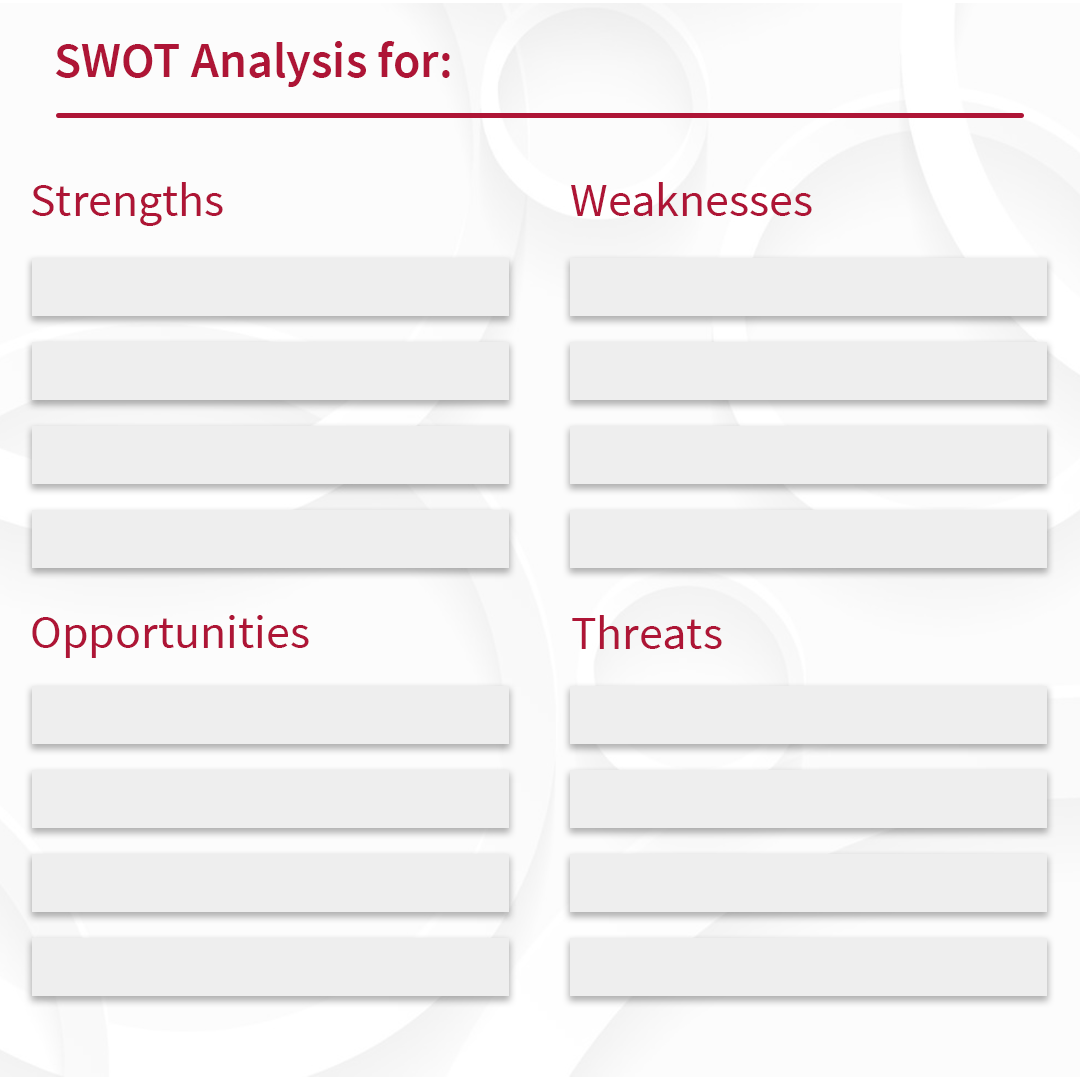
To conduct a SWOT analysis effectively and derive actionable insights, consider the following tips:
1. Involve Key Stakeholders: Gather input from a diverse group of stakeholders within your organization to ensure a comprehensive view of internal strengths and weaknesses. Include perspectives from different departments and levels of management.
2. Be Objective and Honest: Maintain objectivity and honesty when identifying strengths, weaknesses, opportunities, and threats. Avoid biases or preconceived notions that may skew the analysis.
3. Focus on Specificity: Be specific and precise when identifying factors for each quadrant of the SWOT matrix. Use concrete examples and data where possible to substantiate your analysis.

All Categories
Learn how to use WhatsApp AI to re-engage dormant leads, revive stalled conversations, boost conversions, and turn missed opportunities into revenue..

Conversation AI
Explore the rise of silent commerce and how customer preferences are shifting toward messaging, while voice continues to play a key role in engagement.

AI Agents
Compare Voice AI and IVR costs beyond setup and licensing. Learn how automation, containment rates, customer experience, and scalability impact ROI for you.