Whatsapp Marketing
Create WhatsApp Bot for Free in 5 Mins With No Code (2025)
Learn how to create a WhatsApp bot in 5 minutes with easy steps. Discover WhatsApp integration tips, explore use cases & get a chatbot demo with free trail.
The linear model of communication depicts one-way communication & is used to communicate with the masses.
The linear communication models are:
The transactional model of communication highlights two-way communication with direct feedback.
The transactional communication models include:
The interactional model of communication highlights two-way communication with indirect feedback.
Linear models of communication are models where the sender sends the message & the receiver only receives the message. There's no concept of feedback involved. The introduction of noise may affect clear communication in these 4 types of communication models.
Aristotle's model of communication consists of 5 main elements which make up the framework:
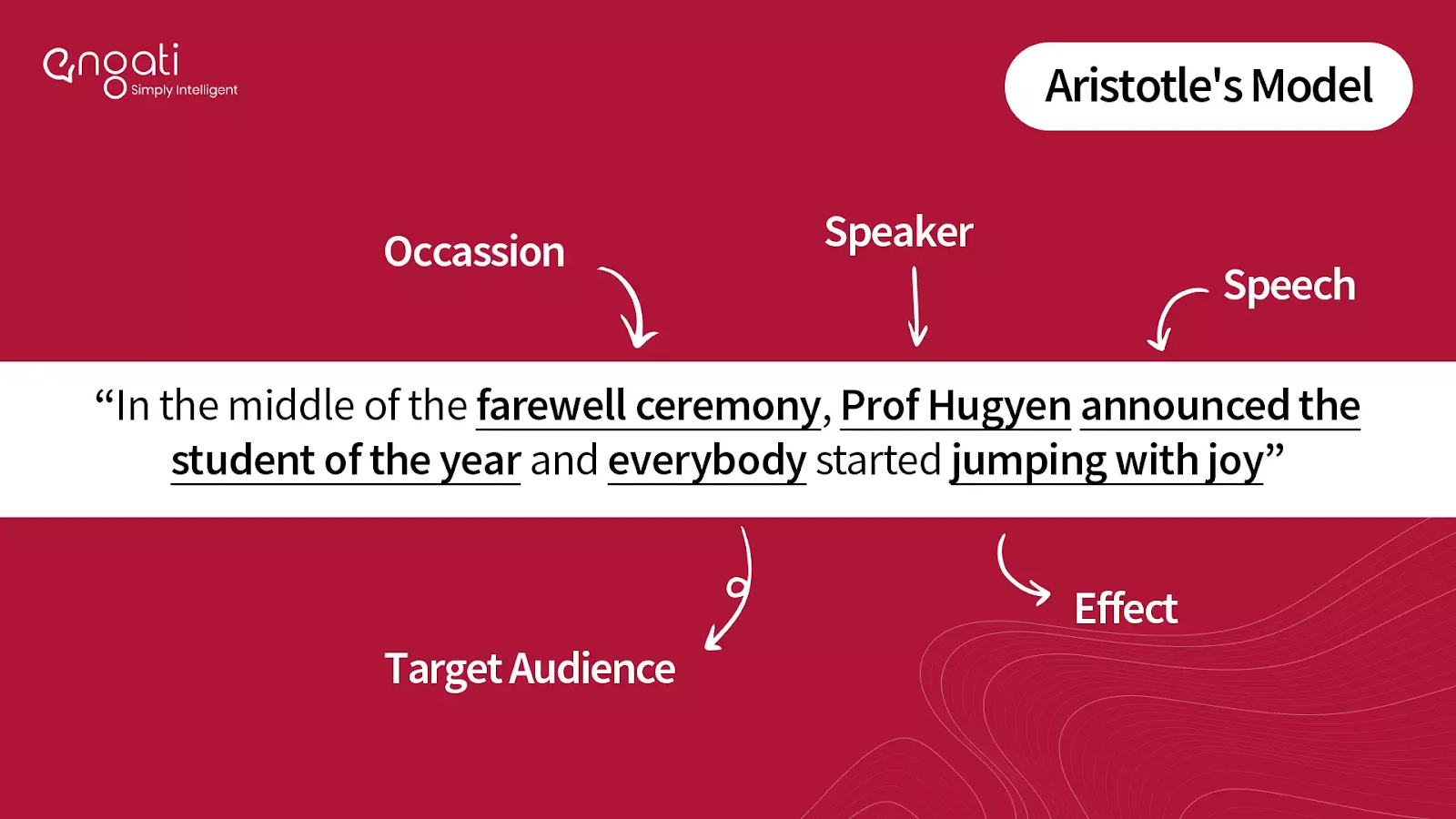
Aristotle's model of communication does not assign any importance to the role of feedback in communication.
Aristotle even identified three elements that have the power to improve communication:
This model was created to understand how to become a more effective & persuasive communicator
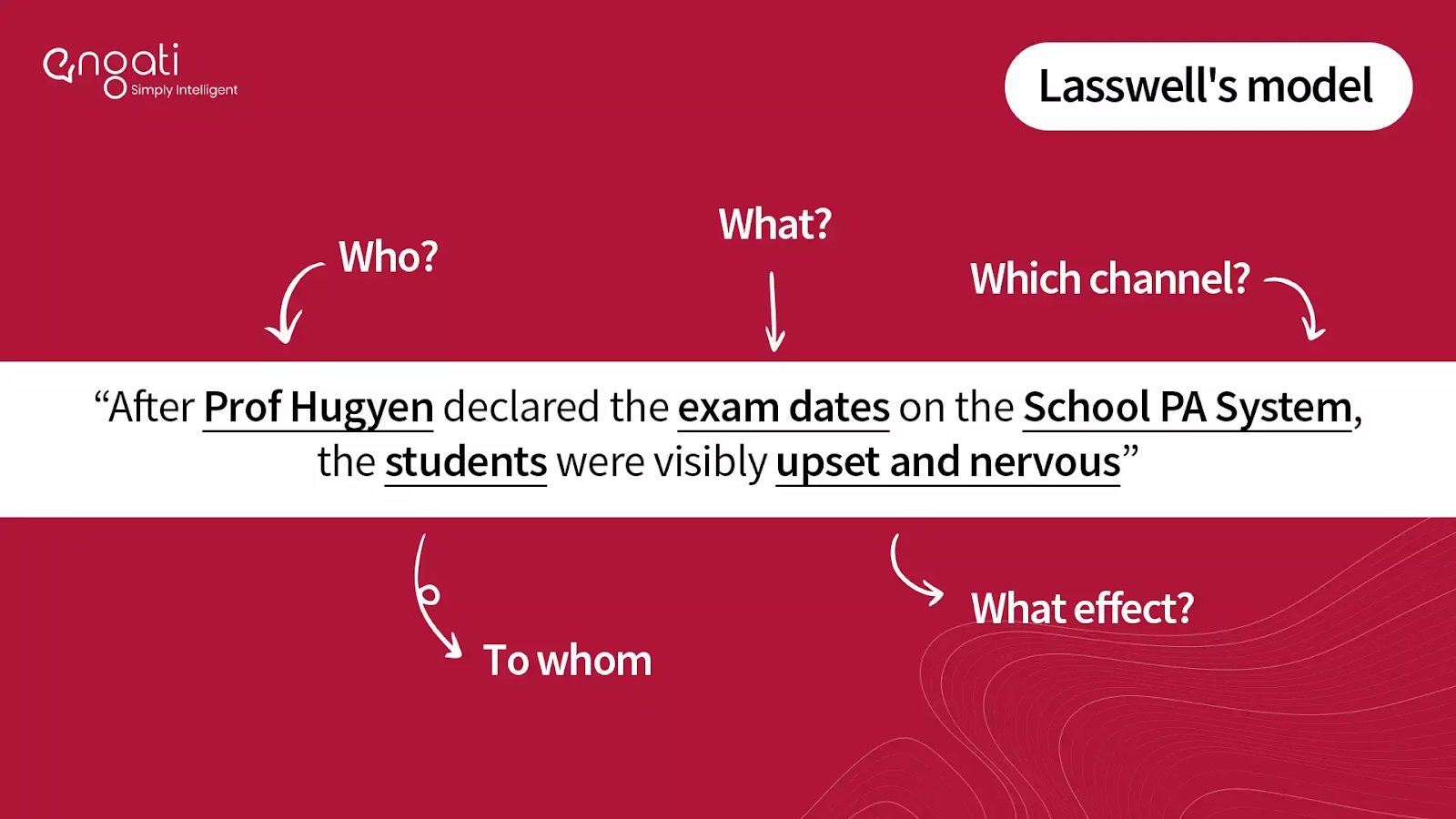
The Lasswell model of communication attempts to understand a communication event by asking five important questions:
The Shannon Weaver model of communication considers communication to occur in five parts:
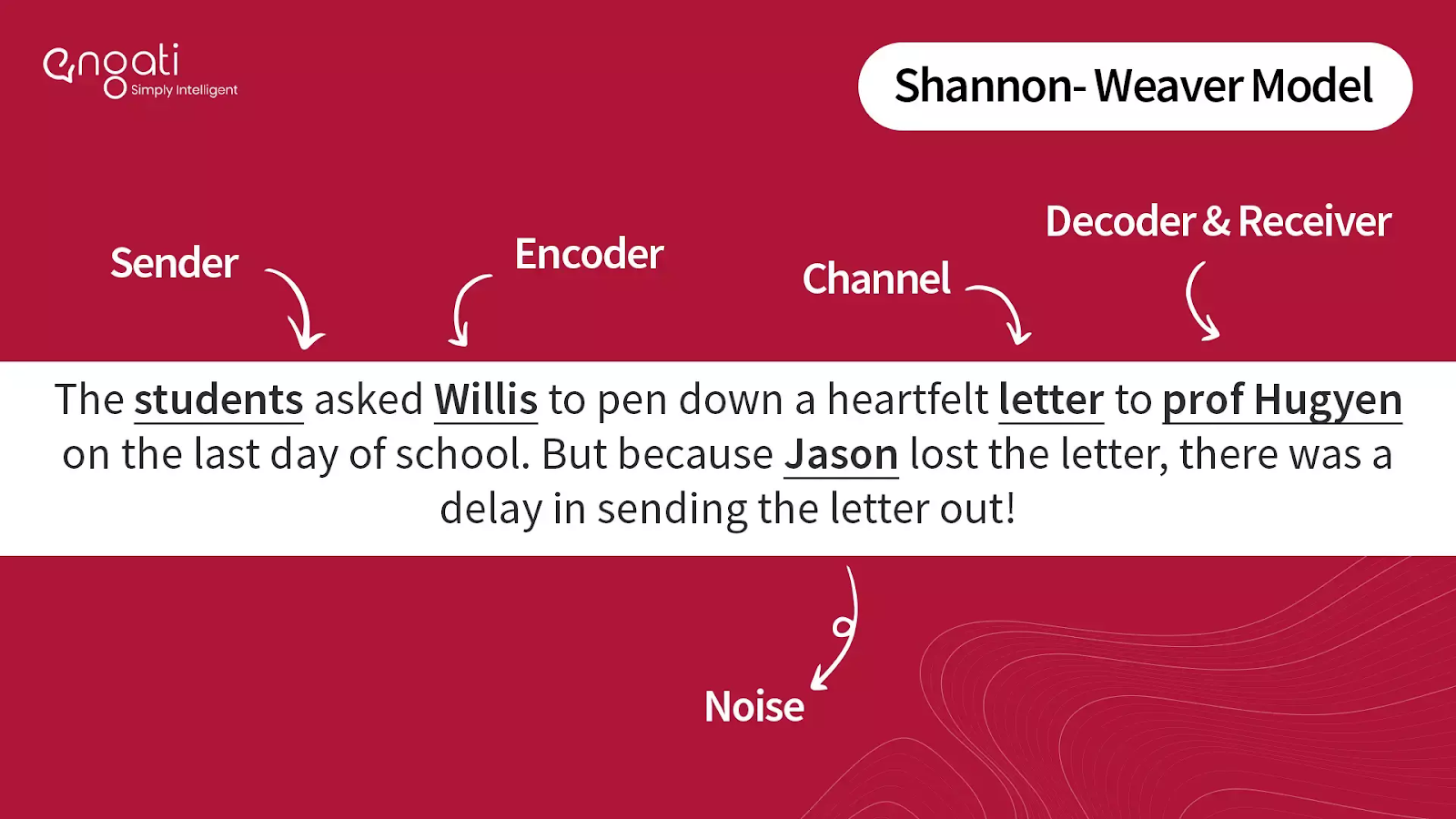
Shannon and Weaver's model of communication stresses the importance of encoding and decoding messages for them to be transmitted. This was the first model to acknowledge the existence of noise in communication that could disrupt or alter a message. This noise could refer to something like the static on a radio broadcast, but it could include spelling errors in written communication or the receiver mishearing the message.
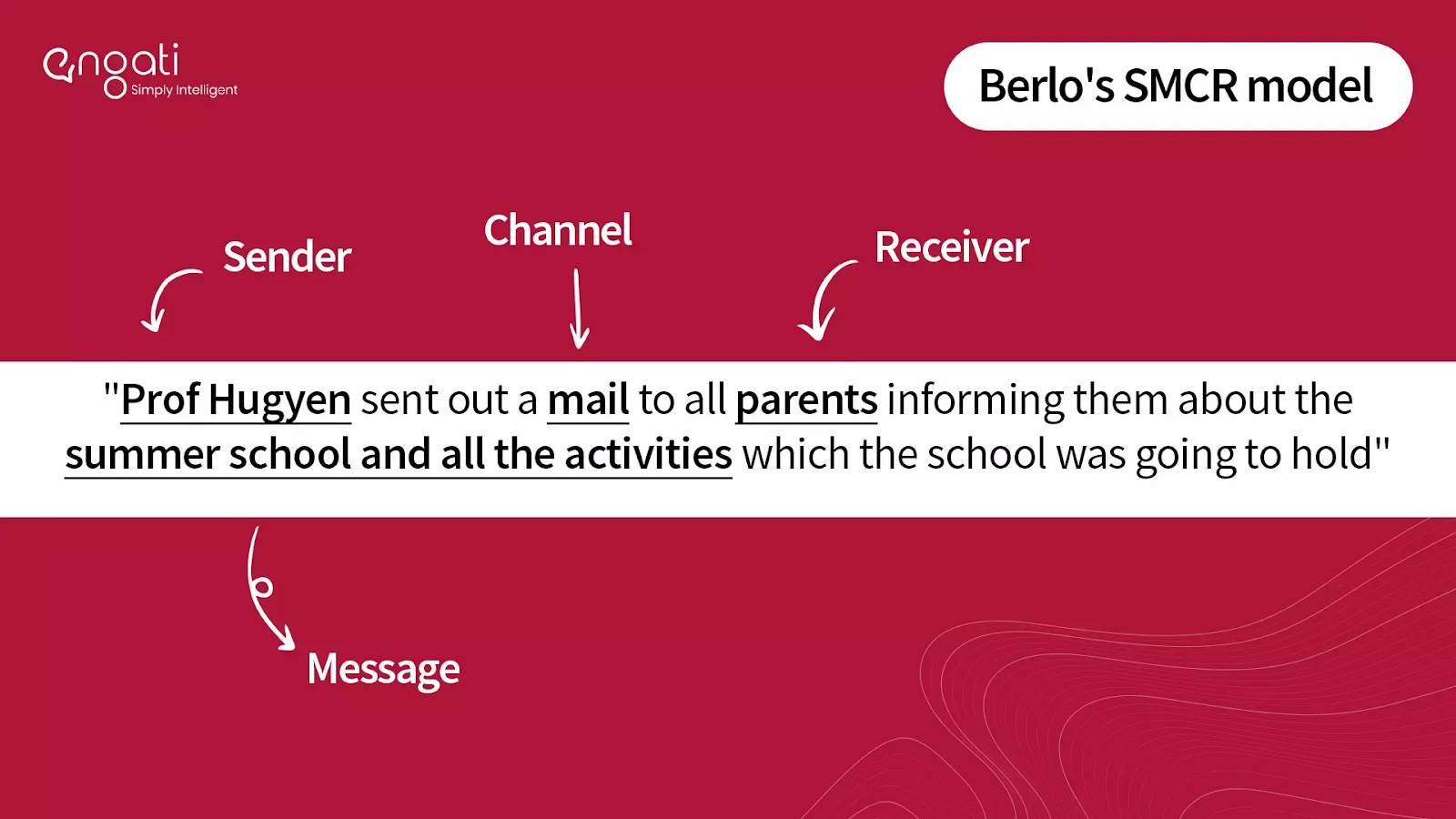
Berlo’s model of communication explains communication in four steps: This model provides a thorough account of the key elements in every one of the steps that will affect how the message is communicated.
1. Highly impactful in getting things done.
2. Good at audience persuasion & propaganda setting.
1. With no feedback, communication is not continuous.
2. It's difficult to interpret whether the communication was effective or not.
The interactive communication models highlight that the feedback may get delayed when the messages are exchanged between the sender & receiver.
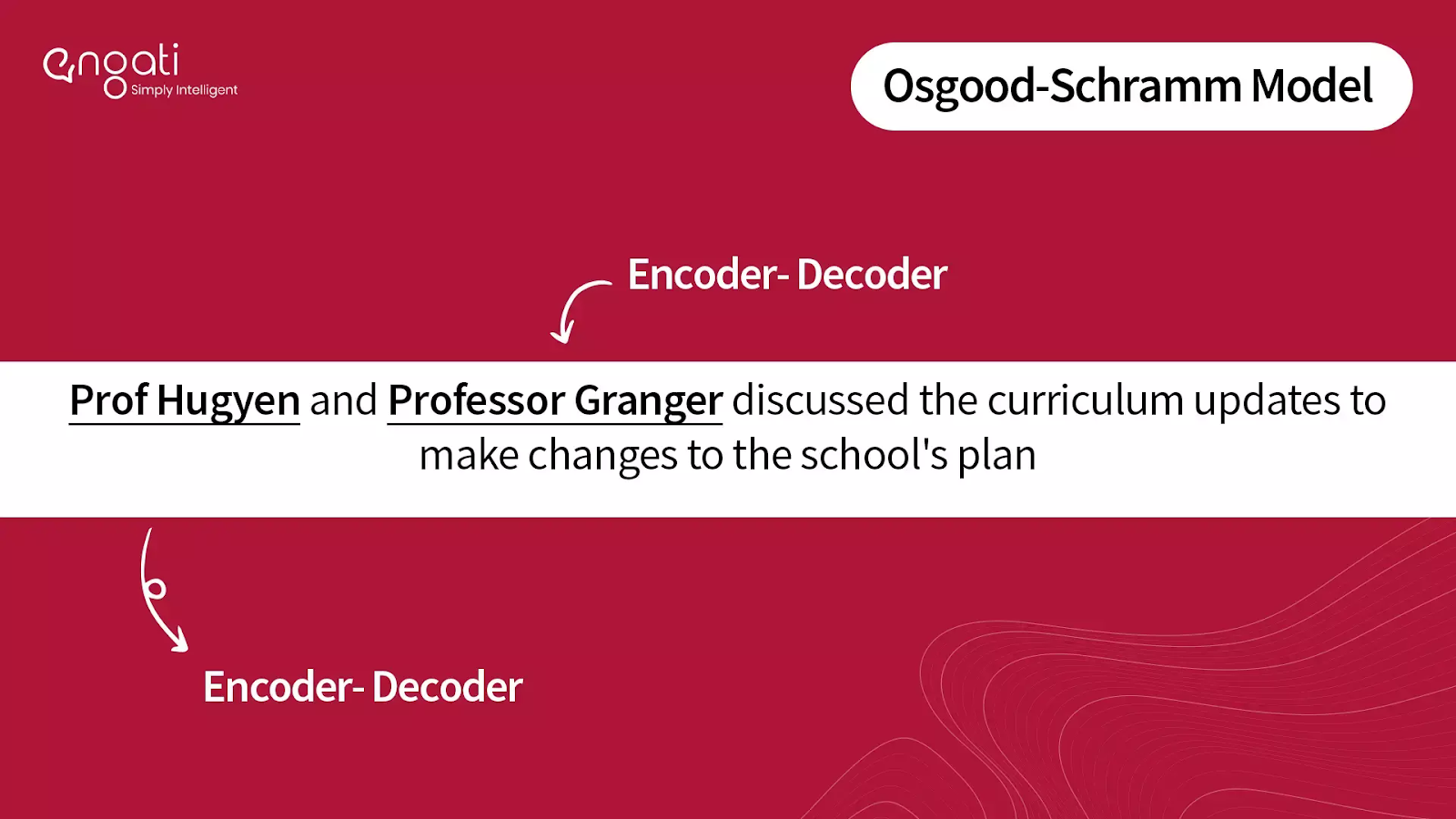
This model considers communication to be equal and reciprocal. It has no differentiation between the sender and receiver. In this model, it is believed that the encoder and decoder keep interchanging roles of sending and receiving.
The Osgood-Schramm model of communication is the most appropriate model for explaining and analyzing personal synchronous communication in which feedback is instantaneous like in face-to-face conversations. Since feedback is immediate, it is possible to reduce noise through the continuous clarification of messages throughout the conversation flow.
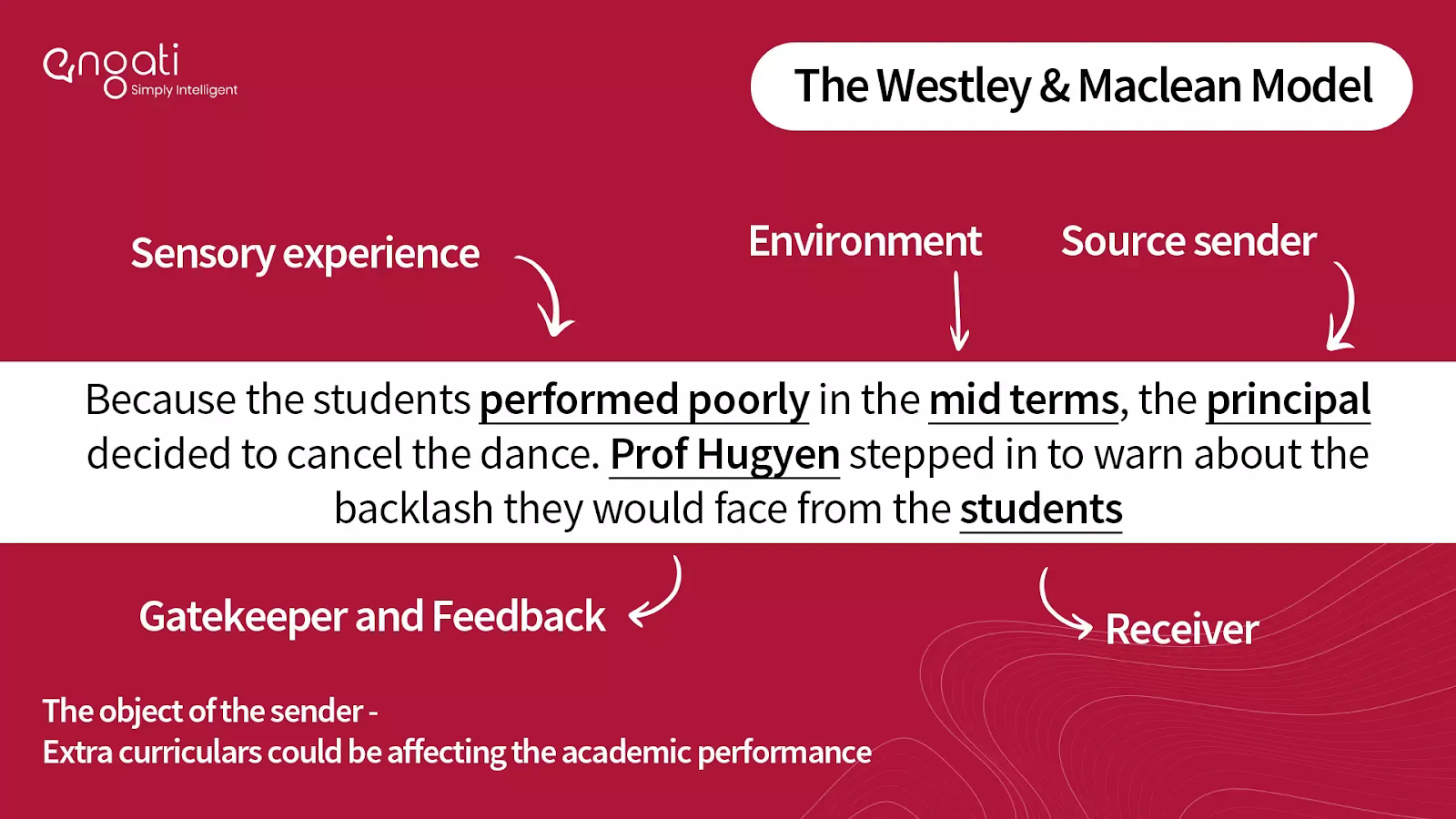
The Westley & Maclean Model is more of a mass communication model. It discusses these essential components:
1. Environment- The actual stimuli for any conversation
2. Sensory Experience - The experience that makes them want to send the message
3. Source Sender - The one who sends the message
4. The object of the orientation of the source - The belief of the sender that led to the initiation of that message
5. Receiver- The one who received the message feedback - Receivers input to the message
6. Gatekeepers- The one who modifies/provides feedback to the messages before they are conveyed. (Usually involved in mass communication)
7. Opinion Leaders- Influence holders who can change the impact of the message (Usually involved in mass communication
The transactional models of communication are models where the feedback plays an important role & the sender/receiver can exchange their roles. It's generally used for direct personal communication in which two-way feedback is immediate.
Barnlund's communication model examines interpersonal, immediate-feedback communication. It holds the idea that feedback for the sender is the reply for the receiver central to the approach.
Barnlund’s transactional model of communication also emphasizes the role of cues in impacting your communication. It sheds light on public cues (environmental cues) and private cues (your thoughts and background). Essentially, this model shows us the factors that influence what we think & say.
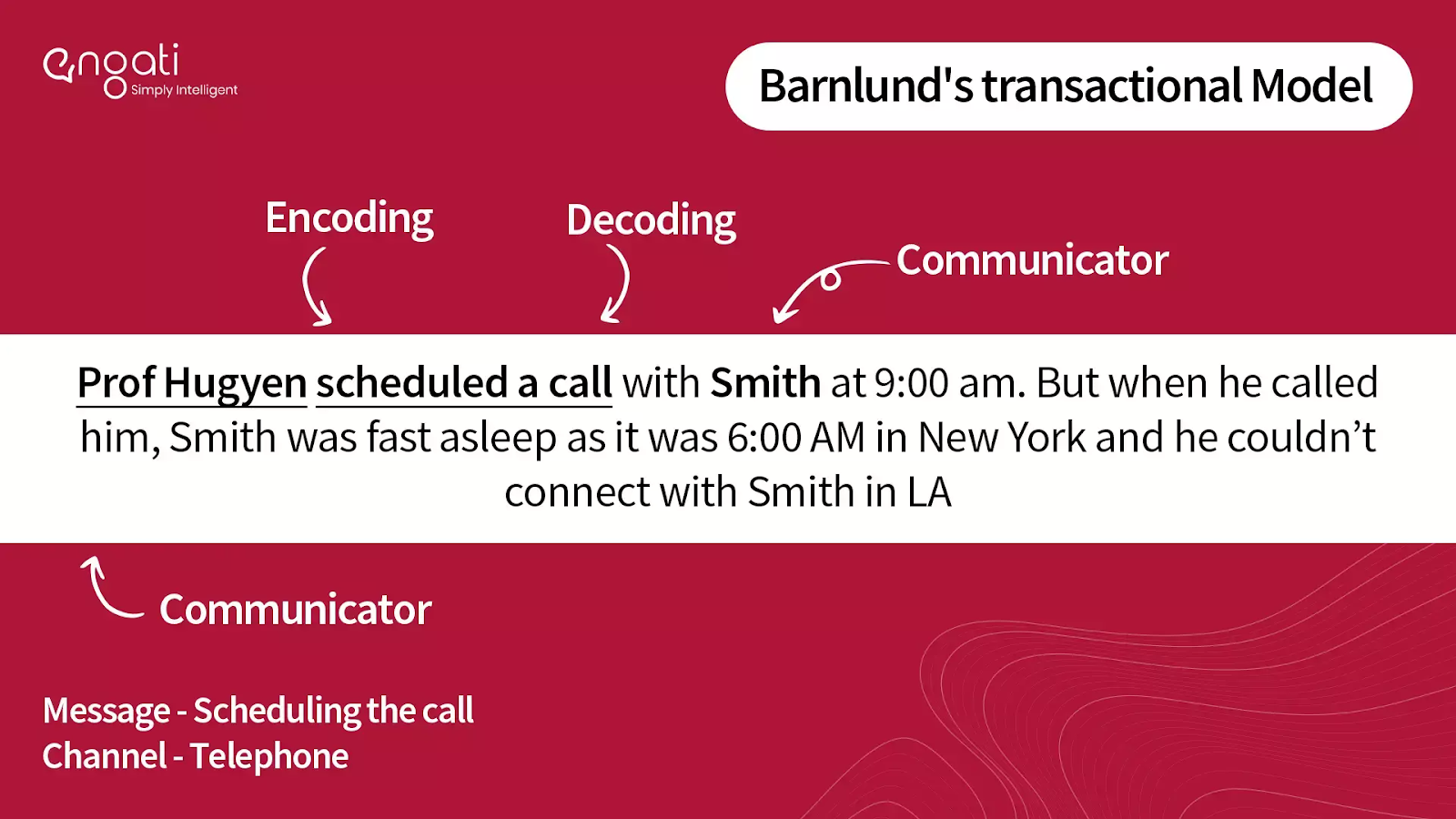
Barnlund’s transactional model of communication consists of 5 main elements:
Barnlund’s model also emphasizes the role of cues in impacting your communication. It sheds light on public cues (environmental cues), private cues (personal thoughts and background), and behavioural cues (verbal or non-verbal actions) Essentially, this model shows us the factors that influence what we think & say.
This model builds on circular models of communication and explains how we improve our messages over time by using feedback. The feedback received for one message influences our next statement. This helps us become more knowledgeable with each cycle, allowing us to expand our circle as depicted in the model by circles that continuously increase in their width. The upward movement in the spiral denotes that every communication practice is new and unique as communication doesn’t ever perfectly repeat itself.
1. Chance of getting feedback even in mass communication
2. New communication channels can be explored
1. Feedback can take a very long time
2. The sender/receiver may not know who the other person is - that's providing the feedback
1. Cognitive Communication Models
2. Relational Communication Models
3. Cultural Communication Models
4. Mediated Communication Models
5. Integrated Communication Models
6. Network Communication Models
7. Organizational Communication Models
8. Interpersonal Communication Models
9. Public Communication Models
10. Mass Communication Models
11. Intercultural Communication Models
12. Critical Communication Models
Decoding these communication models will help you improve lead generation, deliver superior customer experience, and automate customer support, marketing, and sales processes at all levels.
Whatsapp Marketing
Learn how to create a WhatsApp bot in 5 minutes with easy steps. Discover WhatsApp integration tips, explore use cases & get a chatbot demo with free trail.
Chatbot
Learn how to create a chatbot with nocode in simple steps. Also explore three methods you can train and deploy your chatbot as per your business needs.
Chatbot
Learn from chatbot flowchart examples and discover how to design chatbot conversational flows that lead to more natural and engaging user interactions.