Whatsapp Marketing
Create WhatsApp Bot for Free in 5 Mins With No Code (2025)
Learn how to create a WhatsApp bot in 5 minutes with easy steps. Discover WhatsApp integration tips, explore use cases & get a chatbot demo with free trail.
Vanishing gradient problem is a phenomenon that occurs during the training of deep neural networks, where the gradients that are used to update the network become extremely small or "vanish" as they are backpropogated from the output layers to the earlier layers.
During the training process of the neural network, the goal is to minimize a loss function by adjusting the weights of the network.
The backpropogation algorithm calculates these gradients by propogating the error from the output layer to the input layer.
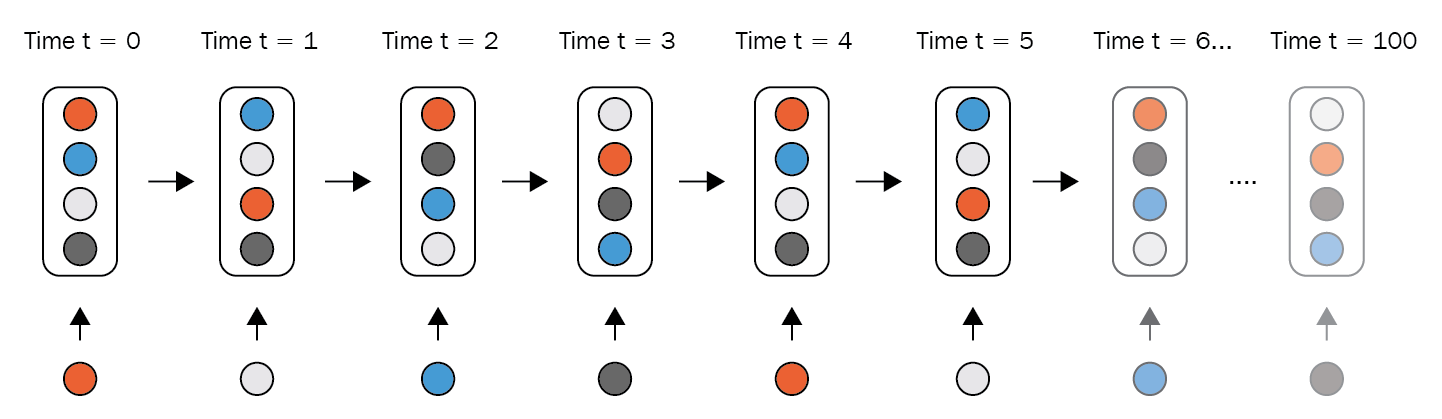
The consequences of vanishing gradient problem include slow convergence, network getting stuck in low minima, and impaired learning of deep representations.
The vanishing gradient problem in deep learning is a big issue that comes up when training neural networks in deep structures with lots of layers. It happens when the gradients used to update the weights during backpropagation get small disappearing. This makes it hard for the network to learn because the weights of the earlier layers change, which slows down or stops training altogether. Fixing the vanishing gradient problem is key to train deep neural networks . People have come up with ways to deal with this challenge, like setting up weights in a certain way at the start, using batch normalization, and trying out activation functions such as ReLU.
After understanding what is vanishing gradient problem, here's how it impacts Deep learning models:
Here are some signs that are indicators of your problem suffering from the vanishing gradient problem:
The vanishing gradient problem is caused by the fact that while the process of backpropagation goes on, the gradient of the early layers (the layers that are nearest to the input layer are derived by multiplying the gradients of the later layers (the layers that are near the output layer). Therefore, if the gradients of later layers are less than one, their multiplication vanishes at a particularly rapid pace.
1. Forward pass - Input is propogated through the network, layer by layer, for computing the output predictions. It has 2 layers - linear transformation & activation function.
2. Loss calculation - After forward passing is done, the output predictions are compared to true labels to compute the loss.
3. Backpropogation - Used to calculate the gradients of the loss function wrt the weights of the network. It has 2 steps - backward pass & gradient calculation.
4. Weight update - After calculating the gradients, the total weights of the network are updated to minimize the loss function.
The vanishing gradient problem causes the gradients to shrink. But, if a gradient is small, it won’t be possible to effectively update the weights and biases of the initial layers with each training session.
These initial layers are vital for recognizing the core elements of the input data, so, if their weights and biases are not properly updated, it is possible that the entire network could be inaccurate.
Activation functions have a direct impact on the occurence of vanishing gradient problems in neural networks. Here are a couple of activation functions:
Here are some methods that are proposed to overcome the vanishing gradient problem:
1. Residual neural networks (ResNets)
2. Multi-level hierarchy
3. Long short term memory (LSTM)
4. ReLU
5. Batch normalization
6. Weight initialization
7. Gradient clipping
8. Skip connections
9. Gated architectures
10. Reduced network depth
11. Faster hardware
Here's a better understanding of how does ResNet solve vanishing gradient problem by the use of skip connections to learn the residual mapping, enabling easier gradient flow & efficient training of deep neural networks.
ReLU avoids the saturation issues of functions like sigmoid tangent or hyperbolic tangent, that can cause the gradients to vanish.
ReLU allows for better gradient flow, promoting more effective training of deep networks.
Multi-level hierarchy involves pre-training a single layer at a time and then performing backpropagation for fine-tuning.
LSTMs are designed to capture the long-term dependencies by allowing information to persist over many time steps by incorporating the memory cells & gating mechanisms.
This enables the effective training of deep recurrent networks & the modeling of complex temporal dependencies in sequential data.
It is a technique that normalizes the activations within each min-batch during training.
It helps to reduce the internal shifts & ensures more stable gradient propagation.
Initializing the weights with appropriate values minimizes the possibility of the gradients becoming too small or too large.
Techniques like Xavier/Glorot initialization set the initial weights based on the network's inputs & outputs, ensuring a more balanced & stable initialization.
It is a technique where the gradients are rescaled to the maximum threshold during backpropogation.
If the gradients exceed the thresholds, they are scaled down to prevent them from exploding.
It provides direct connections between layers, allowing the gradients to bypass multiple layers during backpropogation.
Architectures like Long Short-Term Memory (LSTM) and Gated Recurrent Unit (GRU) incorporate gating mechanisms that selectively control the flow of information within the network.
These architectures allow the network to retain & propogate relevant information over long sequences.
GRUs are designed to overcome the limitations of traditional RNNs by providing efficient solutions for modeling the sequential data.
They achieve this by incorporating gating mechanisms (similar to LSTM networks) but with a simpler architecture.
Shallower networks have shorter paths for propogating gradients, reducing the likelihood of the gradients vanishing or exploding.
It's a counterpart to the vanishing gradient problem that occurs when the gradients in a neural network grow exponentially during the training phase.
This can lead to unstable training dynamics, making it challenging for the network to converge into an optimal solution.

Whatsapp Marketing
Learn how to create a WhatsApp bot in 5 minutes with easy steps. Discover WhatsApp integration tips, explore use cases & get a chatbot demo with free trail.

Chatbot
Learn from chatbot flowchart examples and discover how to design chatbot conversational flows that lead to more natural and engaging user interactions.

Tech Corner
Contrastive learning is used to train a model to learn representations of images or sentences using vectors. We'll explore how it works in this article.