Drive to Reimagine
6 ways to amaze your customers with proactive customer service
What's proactive customer service all about? Why's it more important than reactive support? How do you serve your customers proactively? Find the answers here!
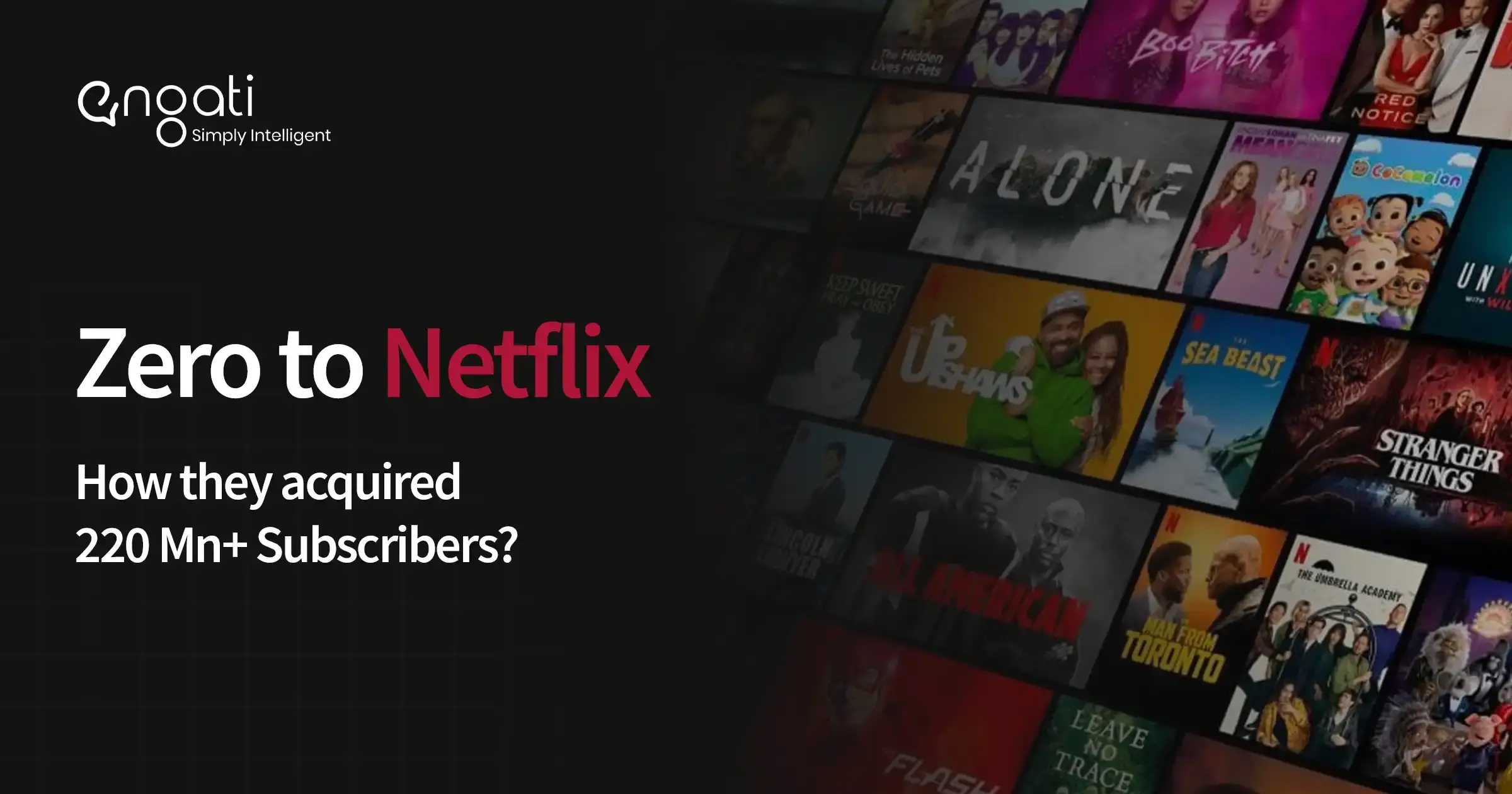
Netflix and chill, right?
Yeah, Netflix would even recommend the next movie or the series to watch based on your interests! No doubt they’ve managed to gather 220Mn+ paid subscribers!
Even Zomato has figured out what food are you going to order today, tomorrow and for eternity! They’ve also smartly used the data of our behaviour and patterns of ordering food, and now they just tempt you to order every single time they strike a conversation.
One thing they’ve nailed is understanding customer expectations. And they’ve gone way too far with that.
However, with brands taking the bar so high on customer expectations, other brands also need to match the same expectations & bring something unique to the table!
But how will brands jump to this level of proactivity? How will they anticipate needs, trends & behaviours? Let’s learn from Netflix predictive analytics case study!
Predictive analytics analyzes current & historical data to make predictions using various statistical techniques- usually data mining, predictive modeling, and machine learning. Historically, it has helped brands understand customers and is also used to identify risks and opportunities and guides in the decision-making process.
Companies today are swamped with data stored and collected from various mediums and sources. To gain insights from this data, data scientists use deep learning and machine learning algorithms and make predictions about future events, and plan necessary strategies. Learnings gained through predictive analytics can be used further within prescriptive analytics to drive actions based on predictive insights.
87% of customers require active communication from companies. ~ inContact.
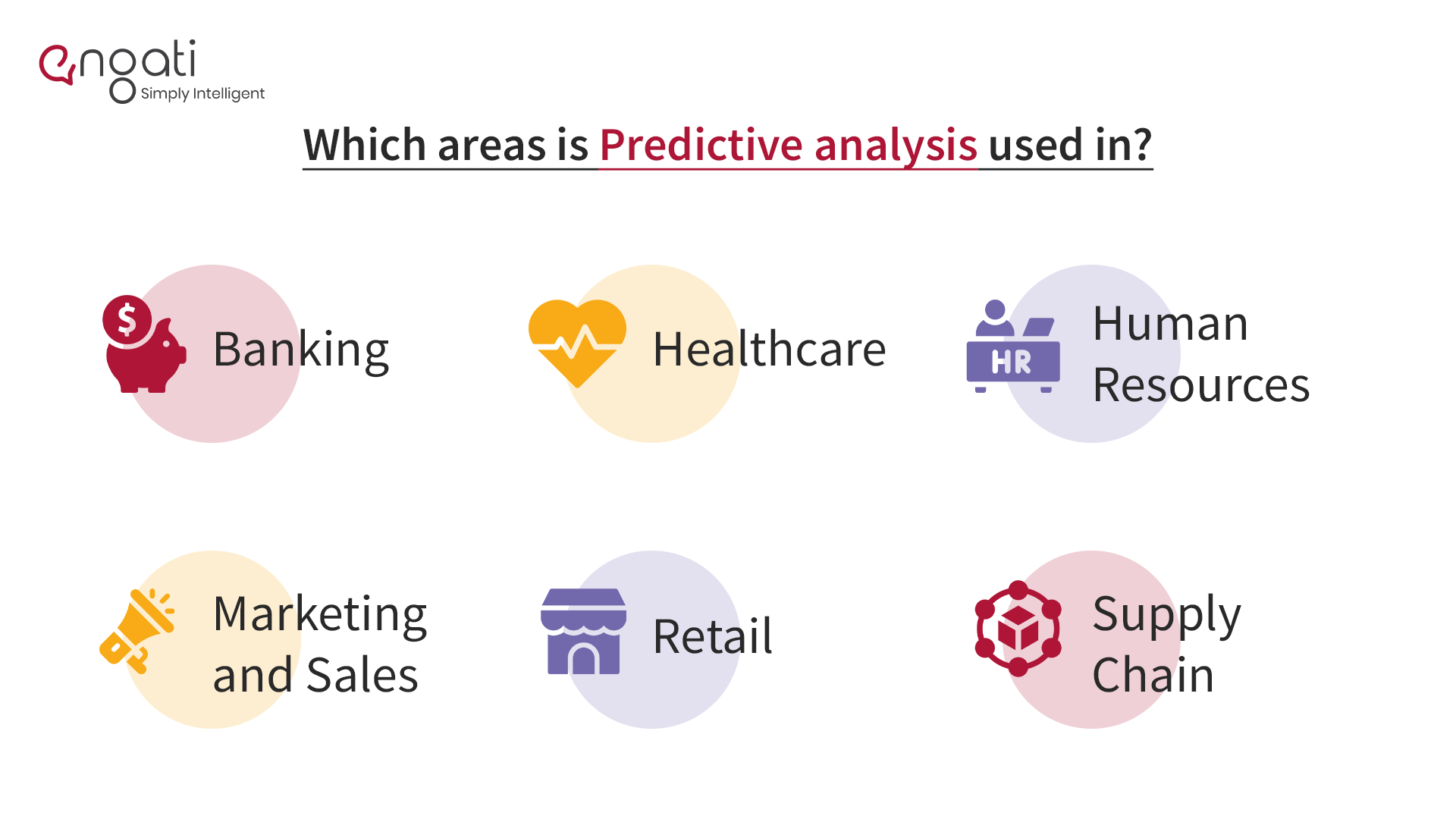
Predictive analytics allows businesses to look into the future with more accurate and reliable insights. At a macro-level, predictive analytics provides a lens into consumer behavior and purchase patterns, but businesses use it at a micro-level as well.
For example, retailers use predictive analytics to forecast inventory requirements and manage shipping schedules. Airlines use predictive analytics to set ticket prices based on past ticket trends. Marketing departments used predictive analytics to optimize product development, advertising, distribution and retailing, or marketing research. Predictive analytics can help attract, retain, and nurture customers at the most opportune moments.
It can also be used as a preventative measure. For example, in her interview with Engati CX, Tyler Cohen Wood mentioned that predictive analytics detects and halts malicious activities and criminal behavior in cyberspaces. When the model notices an unusual behavior pattern from the cybercriminal attempting to infiltrate a system, it fires an alert to cybersecurity teams immediately to resolve the issue.
Now that you know what is predictive analytics, here’s how they can drive business performance.
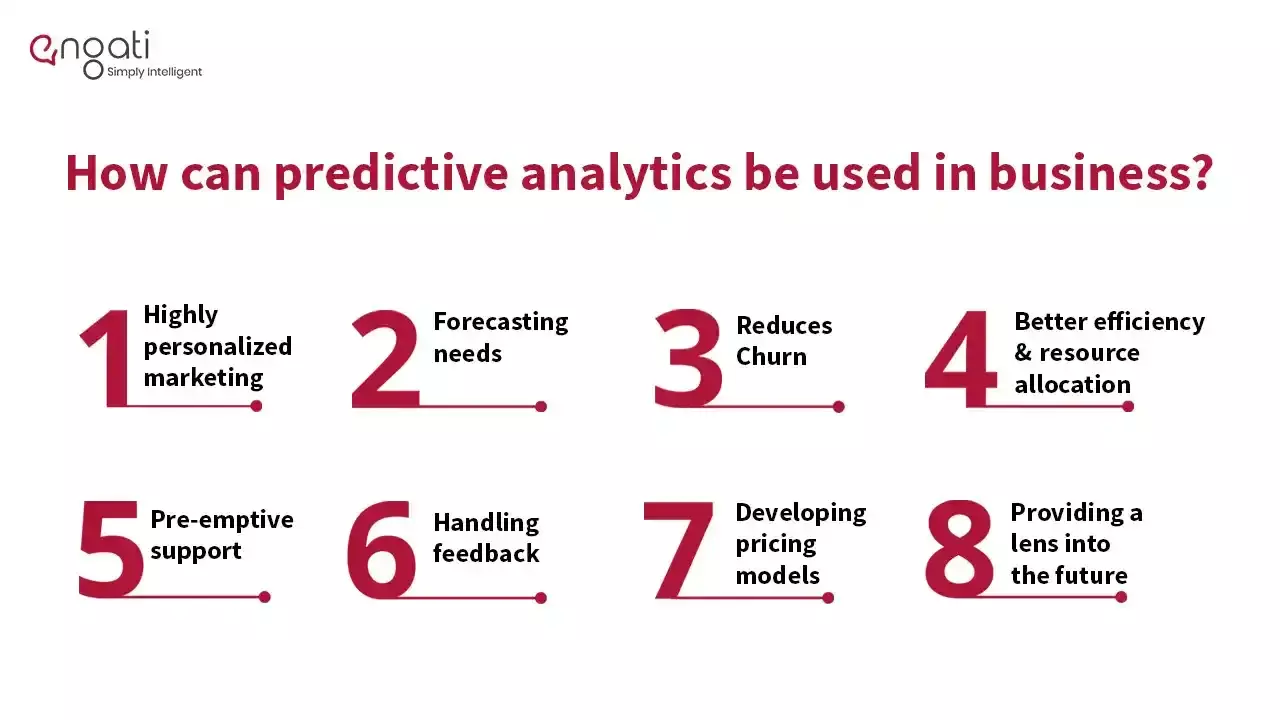
Imagine using a model that can monitor customer behavior at both a micro and macro level. Customers expect this kind of service as it makes the experiences more convenient and enjoyable. Predictive analytics enables you to carry this out. Personalization can only be effective when it’s based on quality data. Use this data and these insights to deliver hyper-personalized messages to the right customer at the right time and place.
Building on this, predictive analytics can anticipate the needs of your customers before your customer does. Predictive analytics makes it possible for businesses to forecast customer needs based on purchase history, search history, interests, demography, and more. This is what makes Netflix so successful.
As we’ve mentioned above, predictive analytics is marvelous at identifying malware and abnormal, risky behavior. But this mechanism can also be applied to flighty customers. Leaders can use analytics to predict when a once-promoter may turn into a detractor before your agents can. Once the abnormal behavior is detected, the model can alert your customer service leaders to pay extra attention to these customers. It enables businesses to take a proactive approach to reduce churn and customer attrition.
Predictive analytics can significantly improve internal operations efficiency to enhance the customer experience. The smoother the operation, the faster the service. Having efficient internal operations can help ensure that the customer receives quality service without any fuss. The model can help staff within the contact center by forecasting inventory needs, for example.
By introducing a predictive analytics model, you can further boost employee productivity to give you an edge over your competitors.
The model can predict significant events in the customer life cycle to increase revenue in these critical times. For example, an insurance company will send out alerts for car insurance or driver’s tests when they’re aware of the family’s child coming of age. Providing recommendations at these turning points of a customer’s life can give you an edge.
As the model becomes more sophisticated with the data being fed into it, it can act on real-time feedback to deliver ultra-personalized recommendations. The customer’s actions, such as jumping from one category to another on an e-commerce website, immediately impact the model and will affect the following recommendations they receive. These trends can easily be identified and acted on by the model.
Insurance companies typically use predictive models to determine the optimal pricing model for their clients. There’s a telematics program called Snapshot that uses in-car sensors to determine to price. The data from the model personalizes the rate for each customer based on their skill level when it comes to driving. Someone who drives less often and stays close to home is likely to have a lower rate than someone who’s always on the road and likes to speed.
We’ve spoken about predictive intelligence at a fairly micro-level, but its scope is endless. Organizations can use it to track and predict customer behavior trends to create an experience like never before. The current trends suggest that because of the forced digital transformation and migration into our devices, customers demand speed and agility, and care. Customer experience is going to dominate each industry. So, how can you get started?
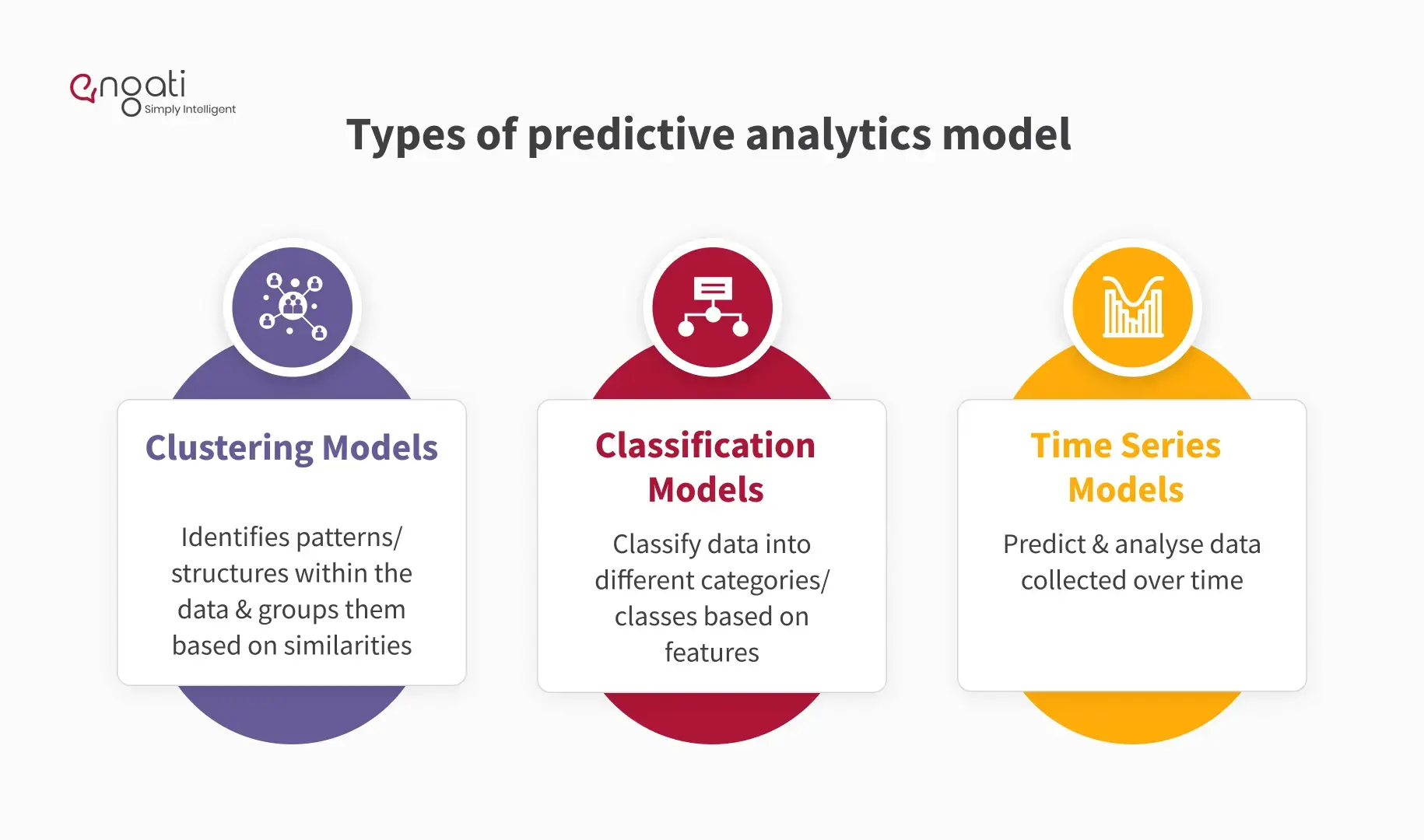
Now that you have a better understanding of the term predictive analytics, let's read more about the here are three types of predictive analytics model-
Clustering Models are a major part of unsupervised learning. They mainly identify patterns and structures within the data, and group them on the basis of the similarities. This model helps provide valuable insights to the data. Some commonly used clustering algorithms include k-means, hierarchical clustering, and density-based spatial clustering of applications with noise (DBSCAN)
Classification Models are used to categorize and classify data into different categories or classes based on their features. Such models mainly learn from historical data and make predictions about the class membership of new or unseen instances. For segmentation purposes, this model can classify prospects or customers into different groups. Classification models are used by many domains, like customer segmentation, medical diagnosis, spam filtering and sentiment analysis.
Time series models are mainly used to predict and analyse data that is collected over time. It is a very effective model and is used widely by various domains. They are used for observing patterns, trends and dependencies in a sequence of data and forecast future trends or values. Moving average (MA), autoregressive (AR), autoregressive integrated moving average (ARIMA) are some components of the Time Series Model.
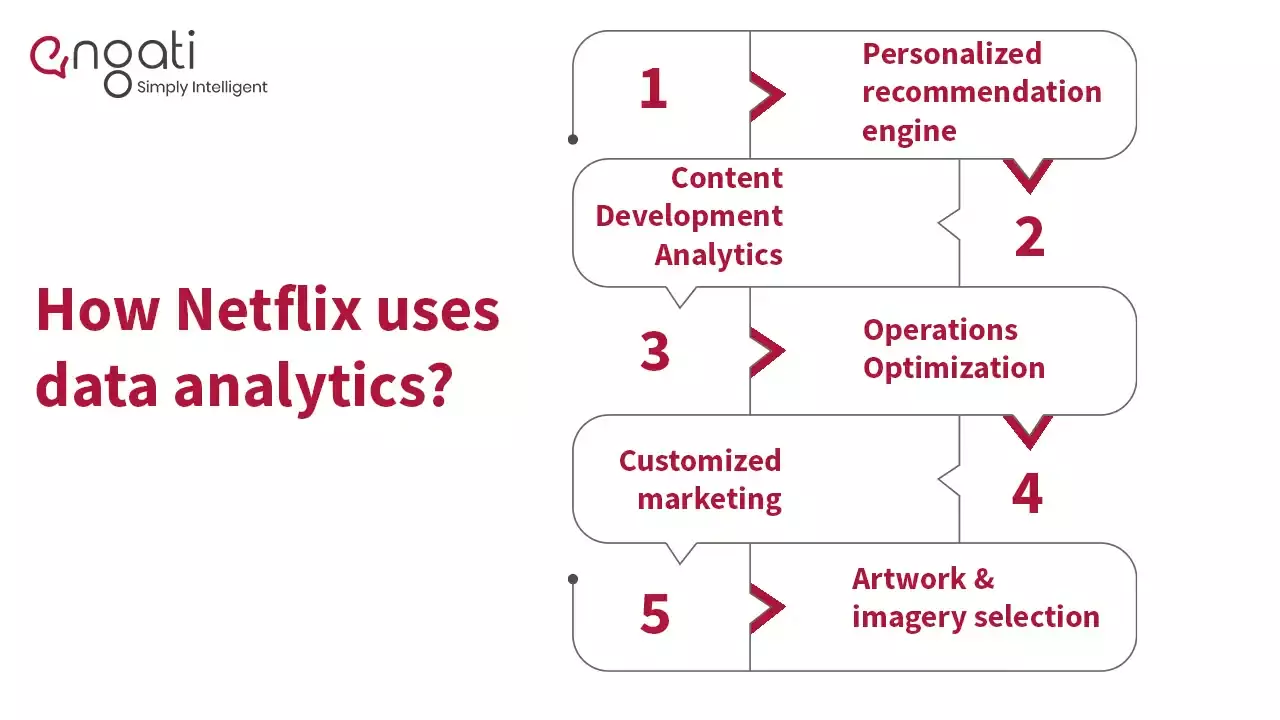
Netflix uses AI-powered algorithms to make predictions based on the user’s watch history, search history, demographics, ratings, and preferences. These predictions shows with 80% accuracy what the user might be interested in seeing next. Here are 5 ways how Netflix uses data analytics -
We’ve already seen the data points that Netflix captures in the above section. A series of algorithms are applied on this data & based on the subscriber’s viewing preferences, Netflix is able to predict what you’re likely to watch next!
Some examples of how does Netflix uses big data of these algorithms are Personalized Video Ranking, Trending Now Ranker, Continue Watching Ranker, etc.
Based on the shows / movies that are performing really well and are picking up with the audience, Netflix uses a projection model to select which projects to invest and work on!
Stranger Things, Squid Game, and other shows that touched the sky - have all gone through the grind (and marketed phenomenally)!
Netflix uses data analytics to optimize the ground logistics for the shoots of the shows / movies. Just like projecting the shows that’d turn out to be successful, they have built algorithms that help them project the costs of filming in one location v/s another location.
Even the post-production activities are analysed using data, and performed with best productivity.
For the show - House of Cards, Netflix created more than 10 versions for the show’s trailer. If you watched a lot of shows centered around women, you’ll be shown the trailer that’s focussed on female characters, and so on.
Mind blown, right?
One of the ways how Netflix uses big data with the AVA tool (Aesthetics Visuals Analysis) that checks the entire video & identifies the frames that can be used as artworks.
Data Analytics is the process of finding the logical patterns by applying various filters & models on the raw data.
On the other hand, Predictive Analytics is about making predictions about the future outcomes by understanding the past & the current data trends.
For one of the shows, House of cards, Netflix captured
Take a minute to digest that.
Now, let’s look at the data points that Netflix collects:
And many more…
Based on the research conducted by Netflix, their personalized recommendations have turned out accurate for 75% of subscribers.
Well, Netflix managed to get a 93% retention rate. That’s beyond imagination.
Drive to Reimagine
What's proactive customer service all about? Why's it more important than reactive support? How do you serve your customers proactively? Find the answers here!

Future of CX
Ever wonder what makes Apple and Amazon so insanely successful? Reducing the customer effort score is always the focus & that's what drives these big giants
Future of CX
Understand how to segment your customer base and deliver impactful, tailored experiences to every one of your customer segments. Learn all about it right here!